PokMovies your movie and series manager
Log in to add movies and series to your personal list
Details for Horizon
Horizon (1964) - TV Series Streaming, Cast & Reviews
Horizon (1964)
Horizon (1964)
Horizon tells amazing science stories, unravels mysteries and reveals worlds you've never seen before.
Release Date:
Duration: 60 min/episode
Status: Currently airing
Genres: Documentary
Why Watch Horizon?
Highly rated by audiences with 7.4/10, Horizon delivers an exceptional documentary experience across 62 compelling seasons. A proven favorite among Documentary enthusiasts.
Quick Facts About Horizon
- Title: Horizon
- Release Year: 1964
- Type: TV Series
- Rating: 7.4/10 (33 votes)
- Genres: Documentary
Discover Horizon Streaming
Looking for where to watch Horizon online? You're in the right place! On PokMovies, you'll find all the information about Horizon streaming, including where to watch it legally, the full cast, user reviews, and the official trailer.
Released in 1964, Horizon belongs to the genres Documentary and has received a rating of 7.4/10 on The Movie Database with 33 user votes.
This TV series, currently airing, has 62 seasons. With episodes of about 60 minutes, Horizon offers you a viewing experience that is exceptional and has won over many series fans.
Seasons and Episodes
The World of Buckminster Fuller
Horizon follows the work of R. Buckminster Fuller and his research of the geodesic dome.
Pesticides and Posterity
Dr. Frank Darling and Dr. Eric Edson discuss different environmental priorities.
A Candle to Nature
A reconstruction of a Michael Faraday lecture last given in December 1860.
Strangeness Minus Three
Horizon explores the findings of physicists at Brookhaven, Long Island, New York. Who, after two years and thousands of photographs, have identified a predicted new particle which has a unique characteristic: 'strangeness minus three'.
The Air of Science
Horizon looks at the work of the National Institute for Medical Research.
The Knowledge Explosion
Prof. Arthur C. Clarke, Derek Price and Nigel Balchin discuss the past and future of science.
The Amateur Scientist
The work of amateur scientists.
Tots and Quods and Woodgeries
Horizon investigates the 'Tots and Quots' and the 'Woodgeries' two groups set up by scientists before the second world war to discuss the future of science and how it effects society.
Science, Toys and Magic
Horizon takes a look at science in the spirit of Christmas.
Learning from Machines
At a time when the use of teaching machines is fast expanding, Horizon looks at the principles behind them and enquires into their success
The Technique of Change
Horizon profiles the Bell Laboratories in the United States. They are one of the most important research and development centers where more than 4000 scientists work with a budget of one hundred million pounds every year. Horizon investigates the possibility of setting up a similar research station in Britain.
Star Gazers
Horizon explores American plans to launch a space observatory to map the universe and learn how stars are created.
Science and Art
Horizon looks at the relationship between science and art, and also explores artists attitudes towards science.
The Great Computer Scandal / H-Bomb Detectors
Horizon investigates the states of big research computers in Britain. Also, Horizon looks at the H-Bomb Detectors and how British scientists have developed a nuclear explosion detector which has changed the political outlook for nuclear test controls.
Forbidden Events / I am a Madman
Is there a fifth force in the Universe, or must we revise our ideas about time? Horizon visits the Rutherford High Energy Laboratory where an experiment is running to settle this, and talks to Dr. Lipman.
Restless Genius / Faster, Farther, Higher
Prof. Andrade presents a tribute to Robert Hooke: architect, astronomer, geologist, and meteorologist who discovered the cell. This episode also includes a report on a 36 year study of the cell wall by Prof. Preston.
The Other Side of the Pill
Every day, on average, another 431 British women start taking the contraceptive pill. The manufacturers insist that it is the most carefully tested drug on the market today. But some scientists and doctors are concerned about the potential long-term effects of taking it.
The Big Smoke / The Model Makers
Nine years after the passing of the Clean Air Act, where do we stand? Scientists are gradually finding out why dirty air Is so harmful to ill persons with Dr. P. J. Lawther of Air Pollution Research Centre at St. Bartholomew's Hospital. Whenever the things they study are too big, too far off, or too hot to handle, scientists can make a model of these-but can they be sure their models truly represent reality?
The Long Slide / Men with Gills
When a rubber tyre rolls fast on a wet surface it may rise on a film of water and begin to 'aquaplane.' Scientists are studying this fact which creates a real hazard to aircraft passengers and fast drivers. A new membrane developed in America holds forth the prospect of men being able to live under water.
Men and Sharks / Sir Henry Dale, OM, FRS
Horizon looks at Prof. Perry Gilbert's research on captured sharks and meets with the eminent physiologist Sir Henry Dale as he celebrates his 90th birthday and looks back on his career in medical research. The eminent physiologist, who celebrates his ninetieth birthday today, looks back on his first discovery sixty years ago.
The Brain Gain / The Sudden Night / Learning to Speak
Dr. Jacob Bronowski, who a year ago took up the deputy directorship of the Salk Institute in California, discusses with Tom Rosenthal his new activities and how he feels about working in the golden West. The recent total eclipse of the sun was probably the most closely studied ever. With special film from the Pacific, Horizon examines what was done and why. For the first time deaf children can see a visual pattern of their own attempts at speech. In the programme a new machine is shown which may revolutionize the teaching of speech and language to these handicapped children.
Dr. Joseph Needham / Mariner IV
This episode of Horizon features Dr. Joseph Needham, an eminent scientist and humanist who is perhaps the greatest living authority on China. An account of the space probe Mariner IV which will be flying past Mars tonight.
Science Fiction : Science Fact? / Alone and Unarmed
Is all science fiction merely fantasy - or can it give valuable clues to the future? A discussion between Desmond Morris and the ethologist George Schaller.
Certain of Uncertainty / State of Nature
The four men who opened up a new field of physics: Max Born, Paul Dirac, Werner Heisenberg and George Thompson meet and discuss topic with John Charap at the annual science conference in Lindau, Germany.
Time Stood Still / Weighty Matters
Professor Harold Edgerton of the Massachusetts Institute of Technology, who has won international recognition for his achievements in ultra-high-speed photography, talks about his work and shows some of the remarkable pictures, both still and moving, that he has taken.
Fuel for the Future / Collector's Piece
Horizon interviews Prof. Andrade about his collection of rare scientific books which he was about to sell.
Let Newton Be
On the 300th anniversary of Isaac Newton's greatest year of discovery, one of his most ardent disciples, Prof. Julius Summer-Miller, comes from California to illustrate the excitement of seeing Newton's principles in action.
Special Senses / Toil, Sweat & Tears
What sort of person can invent a 3-D microscope, a new way of photographing the moon, publish fifty papers on perception, and spend three weeks hunting for a minute sea creature to see how its eyes work? Cambridge psychologist Richard Gregory is a man of many facets. Tonight's film examines his inventiveness—its sources and its products. An M.R.C. team headed by Dr. D. G. Phillips has taken the first step towards answering the vital question: how do enzymes work?
An Affair of the Heart
Horizon explores heart attacks and thrombosis.
10,000 Tombs
Horizon probes into the Etruscan tombs in Italy. Carlo Lerici, scientist and archaeologist, has brought past and future together. Using geophysical methods intended for mineral surveying, he has detected 10,000 unknown Etruscan tombs in ten years.
Albert Szent-Györgyi M.D., Ph.D., D.h.c.
Horizon profiles the scientist, polymath, and Nobel prize winner Prof. Albert Szent-Gyorgi.
The Big Dishes / The Living Stream
A look at some of the huge new radio telescopes which have recently started work in Britain, France, Russia, America, and elsewhere. Sir Bernard Lovell, Professor Martin Ryle, and M. Émile-Jacques Blum explain the scientific motive for this vast expenditure.
Boys on Bubbles / Problems and Puzzles
Horizon re-stages highlights from Professor C. V. Boys's famous Christmas lectures on bubbles and surface tension which drew crowds to the London Institution sixty-six years ago. Then, a mathematician challenges you to solve some of the puzzles he has invented.
Windows of the Soul / Elixir of Youth
Horizon follows experiments on the eyes being undertaken at the Department of Psychology at the University of Chicago. The purpose of the experiments are to discover if our eyes can tell us things we might prefer to keep secret. In Romania, more than forty thousand people have been given Gerovital H3, in the belief that it will make them younger.
The Troubled Mind / Triple-A. S.
Horizon explores an American mental hospital, observing schizophrenic patients under treatment with remarkable new drugs. The American equivalent of the British Association, the American Association for the Advancement of Science, met in Berkeley, California between Christmas and New Year.
A Man of Two Visions / The Scientist Applied
A profile of Dr. Albert Copley, the famous hematologist, who is also known as an accomplished artist under the name of Alcopley. For a country striving to raise its productivity, the supply of applied scientists is tremendously important. Professor S. A. Tobias, an engineer, and Lord Todd, ex-chairman of the Scientific Advisory Council, discuss the problems of educating them and their importance in society.
The Dolphins that Joined The Navy / A Theory of The Earth
Horizon looks at the research of dolphins being conducted at a United States naval base in Port Magu, California. The research concentrates on the dolphin's abilities of navigation. The eminent Canadian geologist, Professor Tuzo Wilson, explains his new 'Froth on the Broth' theory of the structure of the earth to David Wilson.
Route 128
North of Boston, on Route 128, a new industrial landscape based on science is developing. Here men of high intellectual qualifications are developing way-out products, including a helicopter powered by radio waves, a computer which teaches medical diagnosis, and a hair-raising way of testing driving conditions.
The Beginning of Life / Science Friction
A remarkable Swedish film of the gradual development of the human embryo from fertilisation until birth. One man's impression of what science has done for the modern world: an animated film by Stan Vanderbeek.
So you want to be an Inventor? / The Severed Hand
Horizon looks into inventors who struggle against exploding technology, the buying power of great industries and taxation problems to make their leaps into the unknown. An account of a remarkable surgical operation recently performed in China.
Chance and Decay / Meteorite Mystery
Europe's heritage of pictures, statues, and buildings is being destroyed at a frightening rate by atmospheric pollution, but an American scientist has just invented a method of preserving limestone. In 1908, a vast explosion shook the Tungus district of Siberia: was it due to the biggest meteorite ever to hit the earth, or something odder?
Towers of Ilium / The Exploding City
The location of the historic city of Troy was finally pinned down by the researches of Carl Blegen. By A.D. 2,000, more than half the world's population may be living in cities. The population of some of them may exceed 60 million. This is one of the main preoccupations of the World Institute of Ekistics.
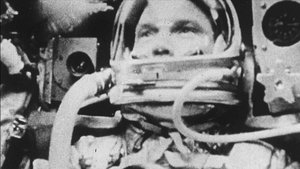
Man in Space
Horizon travels to the spacecraft center in Houston, Texas to study astronauts in space and how they react to being in space and the stresses of launching and re-entry.
Destination Mars / Editors in Conference"
Horizon looks at the possibilities of landing a man on the planet Mars. The Editors of two leading scientific magazines, Dennis Flanagan of the Scientific American, and Nigel Calder of the New Scientist, discuss with Gordon Rattray Taylor the problems of popularizing science and placing it in a social context.
Man meets Duck / The Picture Machines
Gordon Taylor meets with Konrad Lorenz, the inventor of ethology, and interviews him about his work on animal instinct and his theories about human instinct. The world knows all about the uncanny mathematical abilities of the computer. But what happens when these machines learn to draw?
Where must the Money Go? / Phantoms Incorporated
Horizon explores substitute 'phantoms' which are used in radiation studies, manned spaceflight experiments and accident research that gives valuable information on the limits of tolerance on the human body.
Genes in Action / Scientists and War
Dr. John Gurdon talks about the action of the chromosomes puffing when they undergo intense genetic activity. Sir Solly Zuckerman talks about his new book Scientists and War which outlines his views on the impact of science on affairs civil and military.
The Lonely Children
Horizon investigates the research conducted in England and America on the problems associated with autistic children.
Man of Science / 'Nature' Tomorrow
This episode of Horizon reports on the famous science fiction writer, H. G. Wells. An interview with John Maddox, the new editor of one of the world's most influential scientific journals, Nature, in which he discusses his ideas for bringing up-to-date the magazine's coverage of scientific events.
M.I.T.'s ABC / The Disturbed Child
Horizon reports on the the Massachusetts Institute of Technology. Many parents know that their child has a problem but do not have the necessary insight to deal with it. A psychiatrist uses drawings and paintings to reveal children's characters.
Ten Years in the Antarctic
Horizon looks at the scientific research being carried out in the Antarctic under the guidance the Scientific Committee for Antarctic Research (SCAR) which was formed in 1856.
The Athlete
Horizon investigates the stresses on athletes.
From Peenemunde to the Moon
Christopher Chataway presents a program on the development of the rocket, first as a weapon, and then for the American space program.
Sex-Change?
Doctors and psychologists talk about the problems inherent in the determination of sex.
The Structure of Life
This program shows the work of Ernst Chain, one of the discoverers of antibiotics, now a Professor of Biochemistry at the Imperial College in London.
The Wages of Science
The survival of Britain as an industrial power depends of science and on scientists. But are our scientists paid enough to attract them into the right jobs?
Sons of Cain
Horizon probes into whether aggressiveness is our birthright and can society live without violence?
When Is a Body Dead? / How to Win Friends and Influence People
Medical advances have made it possible for 'life' to be maintained in an unconscious patient who has irrevocable brain damage and who might also be dependent on artificial aids to circulation and respiration. Is it now meaningless to define 'death' as the cessation of a heart beat? Why do so many people have difficulty In communicating, or in simply getting-on with other people? Psychologists have now begun to analyse aspects of social behaviour in a way which they believe will lead to more pleasant and more effective human relationships.
How Best to Make a Man / How Best to Make a Scientist
In this episode, Horizon looks at a new school of mathematics and physics near Novosibirsk in Siberia, Russia. This school uses a competition held for Russian school children to qualify new students.
Dynamo - The Life of Michael Faraday
Horizon profiles the life of the greatest physical scientist: Michael Faraday. Crucial events of his scientific career in science are reconstructed.
Migraine
Horizon looks at some research recently carried out into the migraine headache and the means to provide treatment for it.
How Safe Is Surgery?
Horizon probes in the danger of germs and infection in the operating theater and the methods currently used to prevent contamination.
Sleep and Dreams
Joel, a healthy young American, is reduced to a restless neurotic state after being deprived of his dreams for three nights. Mr Bates, an eighty-four-year-old ex-milk man, has never dreamed in his life, or so he says until he is woken by scientists in the middle of a dream trip to New York.
The Shape of War to Come
Will the next major war be fought with biological and chemical weapons? What are the available weapons? What is the horror they can cause? Is there any moral justification for their use?
Memory
Horizon explores the part of the human brain devoted to memory.
Masters of the Desert
Horizon reports on the methods being used to irrigate the Negev Desert, making it fertile based on the methods of ancient civilizations.
Cancer - The Search for the Virus
In this the first of two programmes dealing with cancer, Horizon looks at the intensive search now going on to discover whether a virus is one of the causes of cancer in humans and at the implications of this search in the treatment for such killer diseases as leukemia.
Cancer - The Smoker's Gamble
Why is there doubt in so many people's minds about the relationship between lung cancer and smoking? Tonight's programme examines the latest scientific evidence in detail.
Science and the Supernatural
Horizon explores the work in the developmental field of Extra Sensory Perception (ESP).
Hypnosis
Horizon explores the misconceptions that people have about what hypnosis is and looks at the medical implications of what it can do.
The War of the Boffins
During the human struggles between the British and German air forces ... another conflict was going on step by step, month by month. This was a secret war whose battles were lost or won unknown to the public: and only with difficulty is it comprehended even now by those outside the smalt high scientific circles concerned.
Aspects of Alcohol
Horizon looks at a Scottish chemist's unusual application for whisky: a measure of radioactive carbon 14 used for determining how old an object is.
Lords of the Sea
Horizon looks into how man is learning to survive in the oceans.
Will Art Last?
In this episode, Horizon reports on new materials that are being used as art media by gaining inspiration from factory and industrial processes.
Air Safety: The Unknown Factor
Horizon investigates air navigation and flight safety.
The Life and Death of the Pine Processionary
Horizon reports on the problem of exterminating the pine processionary caterpillars infestation from the pine forests of Provence, Canada.
Koestler on Creativity
Arthur Koestler talks about the psychological theories of creativity and the role of the mind in science and art.
The World of Ted Serios
Horizon looks into the life of Ted Serios who claims to have psychic powers and to be able to project images onto film using only his thoughts.
Professor in Toyland
Prof. J. Sumner-Miller asks some questions for enquiring minds on walking, singing, swimming, and flying toys.
An Ingenious Man - Sir H. John Baker
Horizon reports on Prof. Sir John Baker who is a distinguished British engineer, tracing his career beginning from his early work on airships.
Man's Best Friend
This episode covers interviews with surgeons and research workers discussing the need for animal experimentation in medical work.
Once a Junkie
In England addicts get their heroin, and often cocaine, on the National Health Service: our system has prevented the growth of a drug-based criminal world, but Americans say that our system only worked when we did not have a serious addiction problem. Now we do. Does our present system make it too easy for the casual drug experimenter to become a hard-core addict? Is there anything we can learn from the American situation?
Towns, Traffic and Tomorrow
Horizon explores the problem of increasing traffic in Britain.
The Man Makers
In this episode, Horizon looks into the advances in medical science.
Man in Search of Himself
This episode presents the view by G. M. Carstairs, social psychiatrist, about the pleasures and problems of life in Britain in 1968.
Investigating Murder
Horizon looks into modern methods of crime investigation.
The Equation of Murder
Horizon follows reporter Paul Ferris as he examines the causes and motitives for murder.
The Lindemann Enigma
This is the story of the life and career of Winston Churchill's scientific advisor, Lord Cherwell, during World War II.
From Field to Factory
Horizon explores "factory farming" techniques for chickens and other livestock.
Comfort on Aging
In this episode, Dr. Alex Comfort looks at the scientific evidence for old age and the problems caused by ageing.
Experiments in War
Horizon investigates how science is used to enhance weapons of war, tactics, and strategy.
Medecine in Russia
In 1917, Russia had fewer than twenty doctors for every million of her people. Today, the figure is over 2,000: almost twice as many as in this country. The organisational changes that were necessary to build a Health Service in the country with the largest share of the earth's surface were vast. The resulting system is very different from ours.
African Medicine
In this episode, Horizon looks into controversial medicine practices in Nigeria.
The Broken Bridge
This episode by Horizon is about Irene Kassorlas, who's new treatment for autism has produced positive results with mute children.
Children Without Words
Horizon reports on speech and comprehension disorders in children, and how to educate them.
The Computer Revolution
Horizon explores how computers are changing our way of life.
Doctor's Dilemma
Horizon reports on the effects of the birth control pill on the body and how the pill can effect the changes in glucose metabolism.
In the Matter of Dr. Alfred Nobel
This is the fictional drama about the evidence for and against the charges that Dr. Alfred Noble misused his invention of dynamite.
Wheels Within Wheels
Horizon explores the possibility that our civilization as a whole can be viewed as a pattern based on the wheel.
Black Man, White Science
In this episode, Horizon investigates the study of science by african americans.
The Hidden World
In this episode, Horizon reports on the exploration and survey of the oceans of the world.
The Talgai Skull
Prof. N.W.G. MacIntosh investigates the origin of the Talgai Skull found in Australia in 1886.
Phantasmagoria or The Story of the Magic Lantern
In this episode of Horizon, Michael Balfour invites us to share in the mystery and magic of the "Magic Lantern".
Inside Every Fat Man
Horizon probes into the problems of obesity and investigates cures for obesity using diets and drugs.
If Only They Could Speak
A report by Horizon examining animal intelligence and looking at the reasons why no other animal has matched man in mental ability.
The Miraculous Wonder: The Human Eye
Horizon investigates the importance of the eye, diseases of the eye, and current research on sight.
The Years of the Locust
In this episode, Horizon reports on how in the last 2 years, the desert locust has been breeding in Southern Arabia by the Red Sea.
The Gifted Child
Horizon reports on the problems associated with raising and educating children of very high intelligence.
The Last of the Polymaths
This episode is a biography of the late professor J. B. S. Haldane whose life is described by his family, friends, and critics.
Music and the Mind
Horizon looks into music therapy used in the treatment of mental disorders.
Report on V.D.
This investigation by Horizon centers on the problems caused by venerial disease both in detection and cure.
Extra-Sensory Perception
In scientific circles extra-sensory perception is a subject which has never failed to arouse controversy and skepticism. Cecil King, having spent a lifetime in Fleet Street, discusses, with due caution, a subject which he believes might be of primary importance to scientists in the coming century.
The Drift from Science
This report by Horizon examines the reason for a fall in the percentage of school children doing science.
Powers of Persuasion
This episode of Horizon is about advertising, looking at how it works and the application of scientific methods to persuade us to buy.
The View from Space
Horizon looks into what man has seen and done during 10 years of space exploration.
The Unborn Patient
Horizon investigates new medical techniques to diagnose and treat unborn infants leading to a higher survival rate.
The Physicist in the Kitchen
Nicholas Kurti, Professor of Physics at the Clarendon Laboratory, Oxford, specializes in the field of low temperature science. He is acknowledged among his friends as an expert in the kitchen.
King Solomon's Garden
This episode of Horizon looks at the communication systems of animals.
Muck Today, Poison Tomorrow
Horizon investigates pollution problems in Britain with sewage and industrial wastes, and at the health risks associated with the pollution.
Shark
In this episode, Horizon examines our attempts to understand one of the oldest inhabitants of the sea, the shark.
Technology and Self-Determination
Sebastian Z. de Ferranti gives the Royal Society lecture for 1969 on technological development.
After Apollo
The US spent $40 billion to put man on the moon, yet the real objectives of the space program remain obscure.
Discovery
Horizon reports on the research being carried out in the fields of botany, astronomy, biochemistry, meteorology, and zoology.
Machines and People
The Honorable A. W. Benn addresses young art and technology students on the implications of increased technology.
Science on Safari
The Honorable A. W. Benn addresses young art and technology students on the implications of increased technology.
A True Madness
Schizophrenia is an unsolved mystery of modern medicine. Horizon looks at some of the possible explanations and their relevance not only to schizophrenics but to the mystery of the human mind.
Problems of Pain
In this episode, Horizon reports on the problems of pain, and the theory put forward that pain is closely connected with personality.
Four Fast Legs and a Nose
Horizon explores "man's best friend", the dog, and examines its origins and how its special relationship with men came about.
Father of the Man
Horizon investigates surveys being carried out on British children to test Freud's theories.
Master of the Microscope
In this episode, Roman Vishniac talks about his study of living things in their natural habitat as his life's work.
C.E.R.N.
Horizon reports on the research into high-energy physics carried on at C.E.R.N. laboratory located near Geneva, Switzerland.
Snap, Crackle and Bang
The props for this programme are pistols, muskets and, above all, explosives. For 30 years now these are what Colonel Brian Shaw, marksman and lecturer in chemistry, has been using in his now famous lecture on explosives. He gave it once again for Horizon before an invited audience at University College, London.
Cancer Now
A report on current research into cancer and the subsequent knowledge and problems it brings.
There's a Rhino in My Sugar
For some time now rhinos have been disturbing the workers in the Tanzanian sugar plantation and ripping open the plastic water pipes to get at the water. These incidents, and the hunting of the rhinos by helicopter, are typical of the increasing conflict between wildlife and man for land in East Africa.
Fit to Live?
Horizon investigates the limits of survival under extreme and normal environmental conditions.
Don't Cackle, Lay Eggs
Horizon reports on the development of the Dutch nation's continuing fight against the encroachment of the sea.
How Much Do You Drink?
Horizon investigates how drinking affects human behavior.
A Game of War
Horizon covers a simulated war game of a Middle East crisis, with different teams playing the roles of the major parties involved.
Bread
Horizon explores the problem of feeding the growing world population.
For the Safety of Mankind
Horizon investigate the dilemma of whether a scientist should put his loyalty to mankind before his loyalty to his country.
Just Another World
This episode of Horizon centers on the study of the moon rock samples brought back to the earth by the Apollo 11 flight to the moon.
Henry Royce, Mechanic
Horizon investigates the history of the life and work of Sir Henry Royce, co-founder of the firm Rolls Royce Royce.
A Disease of Our Time - Stress
This is the first part of a two-part episode on diseases afflicting people today. Horizon looks at the issue of stress on the body.
A Disease of Our Time - Heart Attacks
This is the second part of a two-part episode on diseases afflicting people today. Horizon looks at the causes of coronary heart disease and modern techniques of treatment and cure.
Sex and Sexuality
Horizon exams the current scientific research into human sexual behavior.
Whose Coast?
In this episode, Horizon reports on how much of the sea coast around Britain is becoming polluted.
A Much Wanted Child
This episode deals with the problems of infertility and showing the investigations being carried out.
The Expert Witness
Sir Bernard Spilsbury, a forensic pathologist, talks about the role of the scientific witness in the criminal courts.
After the Iron Age
A look at some of the work carried out in Britain into the development of new materials for industry.
Let the Therapy Fit the Crime
This episode of Horizon looks at the question of the treatment of criminals in Britain.
The World Outside
Horizon reports on the Mental Health Service in Britain.
In the Beginning was the Word
This episode surrounds the two channels of human communication - verbal and non-verbal.
The Drifting of the Continents
A Horizon investigation into the research done in Britain and the USA to support the 'Continental Drift' theory.
A Case of Priority
This episode of Horizon looks at the National Health Service of Britain and the enormous demands that are imposed on it.
The Fretful Elements
This report by Horizon looks into meteorological research in Britain and America.
One Man's Meat
An investigation by Horizon reveals information about the use of artificial additives and preservatives in the manufacture of modern processed foods.
Only Skin Deep
On this episode of Horizon, the science behind the cosmetic industry and the social and psychological importance of beauty and fragrance is revealed.
Wolves and Wolfmen
This a a report by Horizon on the research in the USA and Canada into the habits of the wolf in its natural surroundings and in captivity.
A Measure of Uncertainty
Horizon explores the use and role of statistics in modern society and how they are needed for planning.
The Manhunters
Horizon reveals new evidence found by archaeologists that have now traced our origins back to the extinct ape man of Africa.
Don't Get Sick in America
In this episode, Horizon reports on how the TV series "Man and Science Today" compares the British National Health System with the private health system in the USA.
Crown of Thorns
The population explosion of the Crown of Thorns starfish is investigated by Horizon.
Noah's Ark in Kensington
Horizon brings you the history and modern day functions of the Natural History museum in Kensington, Britain.
Virus
This is an episode on problems dealing with viral diseases such as measles.
Water, Water
Horizon looks at the work of scientists as they unravel the problems of providing us with water.
All Creatures Great and Small
In this story, Horizon investigates the issue of controversial animal experiments between anti-vivisectionists and scientists.
A Child for a Lifetime
Horizon reports on the future of 30,000 children in Britain that are mentally retarded.
Something for Our Children
Horizon reports on the work of the British Nature Conservancy and how scientists are trying to find out about nature.
Million Ton Tanker
This episode of Horizon reports on the revolution in the size of oil tankers showing present and future planned methods of construction.
The Insect War
Horizon looks at problems caused by the rapid reproduction rate of insects and their increasing resistance to pesticides.
The Savage Mind
Horizon reports on Professor Claude Levi-Strauss who has been studying and analyzing the so-called primitive man for more than 30 years.
Tanks
This episode of Horizon investigates the history of tanks in the last fifty years and the dominant role they have played in land warfare.
Mind the Machine
In this story, Horizon investigates the artificial intelligence of computers by watching a chess game.
Square Pegs
Horizon examines some of the techniques used by the boom industry of Management Selection.
Earthquakes, The City that Waits to Die
Horizon investigates the work of geologists and seismologists trying to predict the date of the next great earthquake in San Francisco, California.
The Man who Talks to Frogs
Horizon reports on some of the pure scientific research work carried out at the Smithsonian Tropical Research institute.
The Gargantuan Triumph of Science
This episode by Horizon is a dramatized reconstruction from original transcripts of the inquiry into the Tay Bridge disaster.
Wildlife - The Last Great Battle
In this episode, Horizon looks a the efforts of zoos to save animal species from extinction by breeding enough to ensure their survival in captivity
Great Ormond Street
In this episode, Horizon looks at the renowned British hospital for children, Great Ormond Street, and the Institute of Child Health.
A Bulldozer Through Heaven
Horizon explores the island of New Guinea and its cultural changes going on there.
Rumors of War
This episode of Horizon looks at the growing arsenal of nuclear weapons over the last 25 years and the effects it has on the arms race.
I'm Dependent - You're Addicted (I)
The first of a two-programme investigation in which Horizon and Man Alive have combined forces. This episode investigates the facts about drug abuse and experimental work undertaken in this area.
Kuru - To Tremble with Fear
Kuru is a unique disease of the people of New Guinea. Horizon goes with Prof. E. J. Field to find out why.
Due to a Lack of Interest, Tomorrow Has Been Canceled
Horizon interviews ecologists that claim that man is irrevocably destroying its habitat.
What Kind of Doctor?
Horizon investigates medical student training at the St. Thomas hospital in London, England.
A Nice Sort of Accident to Have
Horizon explores the causes, and looks for way to prevent car accidents
The Wood
This report by Horizon looks at the long term ecological study of the forest at Wytham Wood, Oxon, in England.
The Measure of Man
In 1971, Horizon reviews the life and work of Prof. Hans Eysnck, the most controversial psychologists of the time.
Three Score Years and Then?
This report by Horizon explores care for the aged, for both medical and welfare services in Britain.
Darwin's Bulldog
Horizon reports on the famous protagonist of "The Origin of Species," Thomas Henry Huxley.
The Secret
This episode of Horizon examines how cells organize to become complex organs, and bodies.
What Every Girl Should Know
At the moment, legal abortions in the UK are being performed at the rate of over 90,000 a year and it is considered that the number is likely to rise. But why are so many people not prepared to use contraceptives? Are the contraceptives themselves at fault or is it part of a deep-rooted attitude to sex? A drug is now being tested which makes it possible for a woman to procure her own abortion in the first few weeks of pregnancy.
Tastes of Foods to Come
Horizon reports on food technology now experimenting with meat substitutes.
Looking for a Happy Landing
Within 20 years vertical take-off airliners could be hovering over Hampstead and Dulwich before landing, one a minute, day and night, at a Thames-side V-port. Horizon looks at what could be one of the great environmental debates of the century to have, or not to have, aircraft flying in and out of city centres.
A Case of Depression
Horizon investigates how to treat depressive illneses.
The Total War Machine
This episode of Horizon reports on the development of the aircraft bomber throughout periods of war.
The Dinosaur Hunters
Horizon explores the field of palaeontology, the study of dinosaurs.
Your Country Needs You?
This episode of Horizon looks at Britain's civil defense program, and to see if it is adequate in the event of a nuclear war.
Rheumatism
Horizon investigates rheumatism, and looks at why this disease is under-researched.
If at First You Don't Succeed... You Don't Succeed
Can new born babies solve complex problems? Horizon works with psychologists to see how they measure this capacity.
One Liverpool or Two?
Do city planners in Liverpool have unrealistic expectations? Horizon looks into the development and planning process of Liverpool, England.
Rutherford / The Cavendish Today
This is a two part episode of Horizon. First, Horizon looks at the life of centenary Ernest Rutherford, followed by a report of the Cavendish Labratory in Cambridge, England.
The Fierce People
Horizon explores a primitive tribe of Yanomamo Indians living in southern Venezula.
The Men Who Painted Caves
This episode of Horizon looks in the ancient cave paintings found in France.
The Crab Nebula
This episode of Horizon reports on how the Crab Nebula was discovered, and continuing observation of the space encounter.
Can Venice Survive?
Horizon reports on the continuing problem of the city of Venice, Italy sinking into the sea.
Willingly to School?
This report by Horizon is about Prof. Hean Piaget and her child center education theory.
The Periscope War
Horizon presents the history of the submarines, from pre-World War I to today's nuclear powered submarines.
Patently Absurd
This episode of Horizon investigates strange new inventions.
The Missing Link
In this episode of Horizon, you find out how feasible it is to build a 35 mile long tunnel between Britain and France.
Navajo - The Last Red Indians
Horizon explores the American Navajo indian tribe of New Mexico, in the United States.
How Much Do You Smell?
Why do humans have such a poor sense of smell as compared to animals? Horizon investigates why.
The Parasite of Paradise
This story by Horizon reports on Malaria in the country of Gambia, in West Africa.
The Day it Rained Periwinkles
Horizon investigates reports of strange phenomena and about what the scientific theory is about these phenomena.
Are You Doing This for Me Doctor, or Am I Doing It for You?
Horizon explores if a doctor's treatment of the patient is always in the best interest of the patient.
How They Sold Doomsday
In this episode, Horizon looks the the ecological movement, and the resistance against the movement in Britain, and the USA.
For Love or Money?
In this report by Horizon, the effect of boring jobs on industrial relations is looked at, along with work and job satisfaction.
Whales, Dolphins and Men
Horizon looks at the life of whales and dolphins, and how they interact with man.
What Is Race?
Horizon investigates the various conceptions of "race" that have arisen since the 17th century.
The Man-Made Lakes in Africa
Horizon investigates the use of hydroelectric power in Africa, at Lake Kariba, Lake Volta, and Lake Nasser.
Survival in the Sahara
This episode of Horizon follows the expedition of two German naturalists exploring the Northwestern desert of the Sahara in Africa.
Mind Over Body
This story by Horizon is about American research into techniques for controlling bodily functions with the mind.
Out of Volcanoes
In this report, Horizon looks at the various aspects of volcanoes and explaining the views of some vulcanologists.
The Wizard Who Spat on the Floor
Horizon presents a study of Thomas Alva Edison and his achievements as an inventor.
Rail Crash
Horizon reviews the history of train accidents and the new safety precautions to prevent them.
Do You Dig National Parks?
Horizon investigates the threat to the Snowdonia National Park in Britain, from mining companies.
Sorry I Opened My Mouth
Horizon reports on modern research in the prevention of tooth decay.
The Way We Move
How do muscles contract and how are they are controlled from the brain through nerve fibers are the subjects of this Horizon episode.
The Life that Lives on Man
This episode of Horizon explores bacteria and other creatures that live on our skin and in our hair.
Sex Can Be a Problem
In this episode by Horizon, we take a look at sexual problems, particularly for impotence, frigidity, and premature ejaculation.
The Surgery of Violence
Horizon explores the development and techniques of brain surgery from the 1950's to present-day in Britain and the USA.
Hospital, 1922
Horizon reconstructs a day in the life of the old Charing Cross Hospital in Britain just fifty years ago.
When Polar Bears Swam in the Thames
This episode of Horizon looks the how the ice age physically shaped the British landscape.
The Making of the English Landscape
This episode of Horizon illustrates the ideas of Prof. W.G. Hoskins on the development of the English landscape from Iron Age times to the present.
Shadows of Bliss
Horizon reports that High Energy Physics shows a pattern of thought that challenges the very roots of commonplace belief.
The Billion-Dollar Marsh
This episode of Horizon is about the east coast marshes of America, called the "Wetlands" and the effects of urban development on the wildlife.
Do You Sincerely Want a Long Life?
Horizon investigates the research that is going into the ageing process to find out its causes and possible prevention.
The Making of a Natural History Film
This epidsode of Horizon reports on how a group of zoologists at Oxford Scientific Films in England makes films.
Fire
Horizon documents fire prevention, and fire fighting.
Alaskan Pipe-Dream
This episode of Horizon centers on the exploitation of oil in Alaska, and the effects of it on the Eskimoes and the local wildlife.
Their Life in Your Hands
Horizon reports on people suffering from kidney diseases and the current forms of treatment.
Navigating Europe
Horizon documents how in Europe, they are using water canals for industrial transport, as an alternative to roads.
Epidemic
Horizon examines sources of infection that have, and could still, cause epidemics in Britain.
Worlds in Collision
This episode of Horizon features Immanuel Velikovsky and his theories about the solar system.
The Military Necessity
Horizon examines the doctrines and military strategies of the rival alliances of NATO and the Warsaw Pact countries.
The Curtain of Silence
Horizon looks into the problem of deafness in Britain.
Crime Lab
A jewel robbery, a hit-and-run, and the Case of the Skeleton in the Sand Dunes illustrate the work of forensic scientists and the police they assist. How do they discover the characteristics of an individual bullet as it enters a body? How are blood stains identified or microscopic flakes of paint? How do voiceprints and lie-detectors work? The crime labs of Britain and America have different priorities and different techniques. Each can learn from the other. They also have different success rates. Britain's is currently better. But how long can we hold out against a rapidly rising tide of drugs and violence? What can we learn from American experience?
When the Breeding Has to Stop
How easy is it to get sterilized? Should there be abortion on demand? Do we need a free contraceptive service? Our average family size is 2.5. To avoid a social and population crisis it needs to be 2.1. Aberdeen, one of the few cities to have a fully comprehensive family planning service, has already successfully cut its birth rate. The Government plan to withdraw this kind of free service. But, in the light of Aberdeen's success, should the Government be made to reconsider?
Science Is Dead, Long Live Science
In this documentary by Horizon, we look at chemical warfare and the associated environmental problems that have given science a bad name.
...And Where Will the Children Play?
Horizon explores how to make the future livable and prevent the effects of urban sprawl.
Acupuncture: A Chinese Puzzle
Horizon explains acupuncture theories and examines its validity in modern medicine.
What Time Is Your Body?
Horizon illustrates the Circadian Cycle of your body clock as it relates to physical and mental efficiency.
Survival of the Weakest
In this episode, Horizon investigates the chances of survival and chances of a normal life for babies who are born underweight.
Red Sea Coral and the Crown of Thorns
This Horizon documentary shows the work of the Cambridge Coral Starfish Research Group off of Port Sudan in the Red Sea.
Lumbered... with Back-Ache!
In this report, Horizon studies the problem of backache and investigates some remarkable new spine research.
Airport
Horizon covers Heathrow Airport in England and in particular, the work which is being done to make it safe.
Do You Remember the Memory Man?
Horizon looks at the phenomena of memory and some recent discoveries about it made by scientists.
What a Waste!
Horizon investigates the various ways of dealing with the growing problem of garbage.
The Laws of the Land
In the episode, Horizon investigates modern intensive farming methods.
Do We Really Need the Railways?
Horizon takes a realistic look at the new ideas and technology threatening Britain's railway system.
The Telly of Tomorrow?
In this Horizon documentary, it deals with the expansion of television in Britain and the USA, especially with the growth of cable television.
How Does It Hurt?
In this episode of Horizon, you will find that many people suffer chronic pain and yet others cannot feel anything.
A Scientist Looks at Religion
This report by Horizon examines the work of Sir Alister Hardy who has set up a research unit to examine religious experience.
In Search of Konrad Lorenz
Horizon presents a portrait of Konrad Lorenz and a review of his career and personal interests.
Stretch Up Tall
This episode of Horizon takes a look at the medical and educational treatment of spastics in Britain.
Gilding the Lily
Horizon presents a documentary on the developments in botany resulting in new flowers and the mass production of plants from single cells.
The Black Holes of Gravity
In this episode of Horizon, Prof. John Taylor of the London University looks at the effects of gravity and the forces it exerts on the universe.
What's so Big About Us?
Horizon investigates the plight of the Pygmies, on the verge of extinction as a racial group.
The Steadfast Tin Soldier
This Horizon documentary is a biography of the Danish nuclear physicist, Nils Bohr, and his efforts to internationally control atomic energy.
Carry on Smoking
Horizon looks at the rise in the number of people who smoke and the real health risks.
Air Crash Detective
In this report, Horizon investigates why airplanes crash and shows accident investigators at work analyzing a film of an actual crash.
An Element of Mystery
This episode of Horizon documents the sources, uses, and properties of the element mercury and examines its role in modern society.
Digging Up the Future
Can we ever hope to wipe out diseases like influenza and small-pox? Will our weather get better - or worse? Is it possible to grow anything useful on large areas of moorland in this country? Diseases, climate and soil structure alter so slowly that patterns in them can only be found by studying how they've changed over hundreds and thousands of years. Dating methods, which slot all the changes into place, are the most important scientific tools for analyzing the past. And the news they give can advise - and warn - us about the future.
Kula, a Reason for Giving
Horizon reports on the inhabitants islands east of New Guinea who have evolved a system of intercommunication called the Kula.
A Matter of Self-Defense
This episode of Horizon explains how our body fights infections and cancers and brings us up-to-date on recent research in immunology.
Bird Brain - The Mystery of Bird Navigation
This episode of Horizon is about various experiments on migratory birds and homing pigeons to try and discover how they navigate.
Never Too Late to Learn
Horizon reports on the British Open University and how it operates.
The Great Fish Hunt
Horizon investigates how Britain has hunted fish in the past and how improved fish catching techniques have severely reduced fish stocks.
Pedal Power
This episode of Horizon is about the history of the bicycle and the possibility of it being able to ease the traffic problems in Britain.
The Writing on the Wall
In this episode, Horizon looks at connections between crime and poor housing design in the USA.
Where Did the Colorado Go?
Horizon investigates reports of abuse of the Colorado river in the USA.
The Future Goes Boom
Horizon examines the British Hudson Institute's methods and predictions for the future of economics.
Fusion: The Energy Promise
In this Horizon episode, we look at attempts by scientists to solve the energy crisis of future by building nuclear fusion reactors.
The First Ten Years
In this report, Prof. John Maynard Smith looks back at some of the subjects Horizon has presented since 1964.
This Yankee Dodge Beats Mesmerism Hollow
Horizon looks back at the discovery and the development of anesthesia.
The Hunting of the Quark
This Horizon episode is about the search for quarks, thought to be the substance of which electrons, protons, and neutrons are made of.
A Noah's Ark for Europe
Horizon investigates captive animal breeding to prevent extinction of animal species in the wild.
Bridges: When It Comes to the Crunch
Horizon reports on bridges in Britain...how safe are they?
Search for Life
Documentary about the origins of life which attempts to find out what happened in the one billion years before fossil evidence begins.
The Secrets of Sleep
Horizon investigates the subject of sleep in Britain and the USA.
Who Needs Skills?
In this episode of Horizon, you learn about transferring the basis of modern industry production from human skills to computer programmed machines.
Hills of Promise
In this report, Horizon presents the state of hill farming in Wales.
The Race for the Double Helix
This documentary of Horizon reports on the discovery of the structure of DNA in 1953 by Dr. Francis Crick and Prof. James Watson.
The Immigrant Doctors
In this episode, Horizon reports on the rising number of imigrant doctors working in the National Health System of Britain.
Mines, Minerals and Men
Horizon explores the technological and economic reasons for the mining revival in Britain.
What Price Steak?
Horizon reports on the beef crisis and rising prices.
Listen and Be Loyal
Horizon brings you a report by Tom Harrison on anti-nazi propaganda in Britain during World War II.
Adam or Eve?
This episode of Horizon investigates the role that hormones play in the stages of mammalian sexual development.
An Unholy Scramble
Horizon investigates some of the risks and problems involved in bringing oil from the North Sea ashore.
Do as You Are Told
This report by Horizon explores how far people are prepared to suppress their own moral scruples in the face of necessity to obey authority.
The First Signs of Washoe
Horizons reviews the scientific work of Americans in the field of research in communication with animals.
The Other Way
Horizon presents Dr. Schumacher's theory that use of modern technology could make the working week a creative experience.
The Greatest Advance Since the Wheel?
Sixty years ago a Dutch scientist discovered a phenomenon that overturned the electrical rule book. By cooling certain metals to incredibly low temperatures he found they could continue to carry an electric current for ever, even when the power supply was switched off. Today, developments of these metals - called superconductors-have led to trains that fly, magnets that could depollute rivers and machines that promise cheaper power.
Joey
This story by Horizon reconstructs the true life story of Joey Deacon.
The Neglected Harvest
Horizon investigates the developments and research in forestry which may now help to overcome shortage of timber.
How on Earth Did They Do That?
This documentary by Horizon reports on the development of cinematographic special effects from 1890's to date.
The Lysenko Affair
Horizon presents a dramatized documentary on the rise to power of Trofim Denisovich Lysenko, a young Ukrainian agriculturalist.
The Killer Dust
This investigative report by Horizon covers an investigation into the deaths of people who inhaled asbestos dust at Acre Mill, Yorkshire, England.
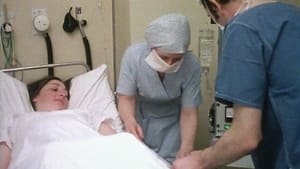
A Time to Be Born
Investigates the growing tendency in hospitals to induce childbirth by injecting hormones into mothers. The practice has become increasingly widespread in recent years, and this film asks if induction is desirable, necessary, and safe.
The Unsafe Sea
This episode of Horizon examines the problems of ship safety in the English Channel.
The Change of Life
Horizon investigates the symptoms of menopause and the various degrees in which it occurs.
Project Fido
This episode of Horizon shows the peril to man of the ever increasing dog population in the western world.
The Planets
By the end of 1974, Mars, Venus, Mercury and Jupiter had all been visited by spacecraft. For the first time scientists saw in sharp detail the continents, mountains, valleys and volcanoes of other worlds. Tonight's programme shows how these geological features give clues to the way the planets evolved; how they have helped scientists in their attempt to reach back 5,000 million years to understand the formation of the solar system itself.
The Long, Long Walkabout
This report by Horizon covers an investigation by a group of Australian scientists that looks into the origins and history of the Australian Aborigines.
The Overworked Miracle
This report by Horizon describes the resistance to antibiotics, fast growing in all countries, and the dangers it could mean for the future.
Not the Cheapest, But the Best
Horizon investigates the life and work of the great engineer, Isambard Kingdom Brunel.
A Spoonful of Roughage
Horizon explores the effect of fibre in diet on the diseases of western world.
Brain Poison
Horizon presents an investigation into the effects on health of lead in the urban atmosphere.
The Bulldog's Last Bark?
This is a Horizon report on the building of the British military deterrent from the first decision to make it in 1941 until the present state of lethargy.
Benjamin
This episode of Horizon follows the progress of Benjamin Pile, born on 22 November, 1974, at Oxford in Britain.
The McMaster Experiment
This report by Horizon covers an experiment at McMaster University Medical School, in Ontario, Canada.
The Glazed Outlook
Horizon investigates the attempts by the University of Newcastle in England to define and create an ideal living and working environment.
The Three Chord Trick
Horizon explores the psychology of music, as it explains why music has such a powerful emotive effect in every society.
The Cleanest Place in the World
This report by Horizon brings you scientists that are using Antarctica as a giant natural lab to study who has polluted Earth most; man or nature.
Strange Sleep
Horizon investigates the discovery of gaseous anaesthetic from 1840 until the early years of 20th century.
The Greatest Advance Since the Wheel?
Horizon reports on the history of superconductivity, from discovery, to the present.
How Do You Read?
In this documentary, Horizon reports on the reading process; how it works for the fluent, and how it should be taught.
The Sickly Sea
This episode of Horizon describes the various aspects of the pollution problem of the Mediterranean Sea.
Happy Catastrophe
In this Horizon episode, Rene Thom's mathematical discovery of the catastrophe theory is investigated.
To Die, to Live - The Survivors of Hiroshima
This documentary by Horizon commemorates the dropping of the A-bomb on Hiroshima, Japan on August 6, 1945.
Cannabis
Horizon takes a look at the history of cannabis and the research on the effects of smoking marijuana.
Meditation and the Mind
This is a report by Horizon on Transcendental Meditation, or TM, brought to the West by the Maharishi Mahesh Yogi.
The Trobriand Experiment
This documentary by Horizon is about the Trobriand islanders, whose culture is based on the Kula, a communication system of giving and receiving.
The Transplant Experience
Horizon investigates heart transplant research and techniques perfected and currently used by Dr. Norman Shumway in Britain.
Intimate Strangers
This episode of Horizon is about symbiosis - the close association between two or more species for their mutual benefit.
A Fair Share of What Little We Have
Horizon reports on the country of Tanzania, a country that spends only one dollar per person on health services, and more than half of all children born there die before the age of five.
The Incredible Machine
This episode of Horizon explores what actually happens inside our bodies using new optical techniques.
King Coal Revived
Horizon examines the projected expansion of the coal mining industry.
A Question of Trust
In this episode of Horizon, we look at the need for confidence in the doctor to patient relationship.
The Case of the Bermuda Triangle
Horizon investigates the mysterious Bermuda Triangle.
The Lords of the Labyrinth
Horizon traces back the origins and development of the pre-Incan Chimu civilization of Peru.
Inside the Shark
This documentary by Horizon takes a look at the shark, the supreme predator of the sea.
The Chemical Dream
Horizon reports on enzymes and the way they are being put on work in the industry and medicine fields.
The Edelin Affair
This is a Horizon reconstruction of the trial of Dr. Kenneth Edelin who was arrested after performing an abortion in 1973.
The World of Margaret Mead
This Horizon reports is about Margaret Mead, who at age 74, is one of America's most influential social scientists.
The Pathway from Madness
Horizon investigates the developments in and the treatment of schizophrenia.
Geronimo's Children
This report by Horizon investigates the aggressive and oppressive history of the Mescalero and Chiricuhua Apache Indians of New Mexico in the USA.
The Vision of the Blind
This Horizon documentary investigates the ways that the blind and partially blind are aided.
A Lesson for Teachers
Horizon explores the comparative research study into progressive versus formal primary school teaching in the UK.
Why Did Stuart Die?
This episode of Horizon delves in the research into the causes for, and the methods of eradicating 'cot deaths' in Britain.
The Children of Peru
Horizon looks at food production in Peru today.
Dying
This is a Horizon documentary on how a widow faces the last day of her husband's life and the story of three other people who know they only have a short time to live.
A Home Like Ours... A Story of Four Children
Horizon investigates a local authority residential home in Wandsworth, Britain, for emotionally disturbed children.
What's Wrong with the Sun?
In the episode, Horizon explores the history of man's understanding of the sun's structure and observations in recent years.
The Bull's Eye War
Horizon looks at today's precision guided weapons.
The Hot-Blooded Dinosaurs
Horizon makes an investigation into claims by a group of scientists who theorize that dinosaurs were not actaully cold-blooded reptiles, but hot-blooded, like mammals.
Billion Dollar Bubble
This is an investigative report by Horizon that shows how the Equity Funding Corp. of America produced two billion dollars worth of phoney insurance.
The Selfish Gene
This Horizon documentary explores animal behavior. Animals do not act for the good of their own species, rather for the preservation of their own genes.
A Child of Our Own
This episode of Horizon is about infertility and the state of British scientific research in this area.
Secrets of a Coral Island
Horizon reports on Pacific Ocean fishermen who are famous for their extraordinary fishing skills. They catch fish with a kite and a tassel of spiders webs.
The Long Valley
This is a Horizon documentary about six people who have each lost someone very close, as they describe their progress through grief.
Half-Way to 1984
Horizon looks at new developments in computer technology that have made mass surveillance possible, and also its political misuse.
The Mystery of King Arthur and His Round Table
This Horizon episode is about the actual King Arthur's Round Table, which hangs in the Hall of Winchester Castle, Hants, Britain.
A Smile for a Crocodile
Horizon documents the life of crocodiles and alligators, and their breeding and exploitation.
The Pill for the People
Horizon traces the history of the oral contraceptive pill through the last 60 years as told by its pioneers.
The Ape That Stood Up
Horizon looks at how recent excavations in Africa have changed the accepted ideas of man's origins and age.
The Human Animal
Horizon investigates Sociobiology, which is a study of human social behaviour based on zoological research into animal behaviour.
The Guinea Pig and the Law
In this episode, Horizon explores how animal experiments are carried out in Britain.
Hunters of the Seal
Horizon presents a story that depicts an astonishingly harsh way of life of the Netsilik Eskimos whose whole life is based on seal hunting.
The Red Planet
This story by Horizon traces the efforts of astronomers and scientists through history to prove the existence of life on Mars.
One of Nature's Hotels
Horizon looks at an ecological study of the Ythan estuary in Scotland.
Dawn of the Solar Age
In this episode, Horizon investigates research into solar energy in the USA, Japan, and the UK.
Genetic Roulette
Horizon explores the debate on human genetic engineering.
The Amazing Doctor Newton
BBC television documentary which explores, using live-action dramatisation, the life's work of Sir Isaac Newton, emphasising his sources of inspiration.
The Trouble with Medicine
In this episode, Horizon looks at how, despite the high costs of the National Health System of Britain, more money doesn't mean better health.
Silent Speech
This Horizon report is about Prof. Hubert Montagner and his study of non-verbal communication in young children, along with his findings.
The Green Machine
Horizon makes an investigation into plant biology.
The River That Came Clean
This is a report by Horizon on the successful clean-up of the River Thames in Britain.
Blueprints in the Bloodstream
This Horizon episode reports on research by scientists into identifying a system of markers, such as tissue types on blood cells, which indicate the human being's vulnerability to a whole range of diseases like multiple sclerosis and diabetes, and the possibilities this presents for preventive medicine.
40 Years of Murder
Horizon presents a profile on one of the UK's leading pathologists, Keith Simpson.
The Cry for Help
This Horizon episode examines the growing British problem of attempted suicide by an overdose of drugs.
The Sunspot Mystery
Horizon presents evidence that links the drought cycle with the number of magnetically-hyperactive sunspots.
The Rhine's Revenge
Horizon presents the story of how the river Rhine has defended itself against progress.
Icarus' Children
Horizon presents a report on the prize offered to the first person who could fly a prescribed figure of eight course.
The Healing Nightmare
This episode of Horizon is a dramatized reconstruction of breakdown of Carl Gustav Jung on the road to insanity.
The Great Wine Revolution
Horizon explores a new science-based revolution in the production of wine.
Living Machines
Horizon investigates how biologists and engineers are pooling their ideas to understand how nature's machines work.
A Land for All Reasons
In this episode, Horizon examines the need for an objective approach to land management in Britain.
I Don't Want to Be a Burden
Horizon explores community and residential services available to the elderly in South Hampton, England.
Zero G
Horizon presents a report on zero gravity and the effects of weightlessness in spacecraft on humans.
The Message in the Rocks
Develops the theory that four and a half thousand million years ago the earth was formed thanks to the explosion of a huge star which provided the rocks, the minerals and the radioactivity from which life developed. These theories are based partly on analysis of a meteorite which dropped near a village in Mexico at the beginning of the seventies.
The Eddystone Lights
Horizon reports on last three attempts to build a lighthouse on the Eddystone Rocks, near Plymouth.
Light of the 21st Century
Horizon presents a documentary on the development of the Light Amplification by Stimulated Emission of Radiation device, or more commonly know as the Laser.
The New Breadline
Horizon investigates the reasons for poverty in Britain today, now with seven million on at the poverty line.
Now the Chips Are Down
About the applications and implications for the future, particularly the effects on the labour market, of microprocessors.
Explosions in the Mind
In this episode, Horizon explores the after effects of a stroke when there is a sudden stoppage of blood to the human brain.
One Small Step
Horizon investigates the race to the moon between the USA and Russia and questions the motives behind the space race.
The Tsetse Trap
This episode of Horizon is about the tsetse fly which rules most of Africa and why much of the fertile land can't in Africa can't be used because of the dangerous insect.
A Whisper From Space
Horizon explores the history of evidence used to support the Big Bang Theory of the creation of the universe.
Prisoners of Hope
In this episode, Horizon explains some of the research in multiple sclerosis and how the lives of MS sufferers are affected.
On a Different Track
Horizon presents a brief history of the French railways and the policy behind their future direction.
Careering into Science
This documentary by Horizon is about six school children taking 'O' levels exams and inter science in Britain.
Cashing in on the Ocean
Horizon looks at the implications of exploiting Manganese nodules which are scattered over the seabed.
Bags of Life
Horizon investigates the composition and structure of the membrane that surround individual cells.
Innocent Slaughter?
In this documentary, Horizon examines all sides of the Canadian Harpseal hunt issue and asks if it is really necessary.
The Beersheva Experiment
Horizon explores an experimental medical school in Israel where students are trained primarily to care for people.
Divers Do It Deeper
Horizon explores the years of research that have enabled divers to go to greater and greater ocean depth.
The Big Sleep
In this story, Horizon takes a look at the world's leading hibernation research projects.
The Vital Spark
In this episode, Horizon examines the current developments in electrotherapy.
The Red Deer of Rhum
Horizon takes a look at the changing behaviour of individual animals in a herd of red deer on the Isle of Rhum.
The Forever Fuel
Horizon presents an investigation into the potential and problems of using hydrogen as an alternative to existing fuels.
In Search of Pegasus
In this program, Horizon looks at the effort and money spent on the horse to produce the perfect specimen.
The Keys of Paradise
Horizon follows the discovery of a chemical in the brain which has morphine-like properties.
Sweet Solutions
Horizon presents the history and research into the uses of sugar.
Bronze Age Blast-Off
In this documentary by Horizon, you are shown a revolution in archaeological dating has shown that metal technology was invented in Europe.
The Real Bionic Man
Horizon explores the current state of research into the development of artificial replacements for various parts of the body.
A Mediterranean Prospect
Horizon reports about the attempts to bring about cooperation between the Mediterranean countries to combat pollution of their seas.
Elements of Risk
In this episode, Horizon looks at Britain's methods and plans for nuclear waste management and disposal of the fuel elements.
Mr. Ludwig's Tropical Dreamland
Horizon presents a documentary that shows how part of the Amazon river area around the Rio Jari was developed with rice and forestry.
Where Nothing Happens Twice
This is a Horizon documentary about Liam Hudson, noted psychologist at Brunel University as he challenges modern psychologists.
Journey Through the Human Body
Horizon examines the work of Dr. Lennart Nilsson who has filmed the complete arterial system of the human body.
The Fight to Be Male
This episode of Horizon looks at the recent scientific research into how humans become male or female.
The Robots Are Coming
This Horizon documentary is about the increasing use of robots in industry, and the robot's abilities and weaknesses.
Mexican Oil Dance
Horizon explores the effect of the Mexican oil boom on the country itself and world energy situation.
Tracks on the Oregon Trail
Horizon investigates the environmental protection program going on in the state of Oregon in the USA. Oregon is the first state to clean up it's environment.
The Race to Reshape Cars
In this episode, Horizon reports on the need to consider more aerodynamic designs for cars to improve fuel economy.
Dragnet for Diabetes
Horizon presents a report on the research into diabetes to determine its causes, controlling measures, and the prevention of complications.
The Lost Waters of the Nile
Horizon takes a trip down the Jonglei Canal which is under construction in Sudan and reports on the changes the new canal will bring to the country, and the rest of the world.
Survival of the Fastest
This Horizon documentary describes the complete history and design of motorcycles which have significantly evolved over the past 80 years.
A Touch of Sensitivity
This report by Horizon is about current research into the physical and psychological effects of touch, and the effects of touch deprivation.
A Treasury of Trees
Horizon investigates how the British landscape is changing its appearance with native trees being replaced by imported species.
Darkness Visible
Horizon examines the development of the relatively new science of x-ray astronomy.
Uranium Goes Critical
This Horizon episode is all about Uranium; its history, the use of uranium for nuclear energy, the dangers of uranium, and the scarcity of the mineral.
The Fat in the Fire
Horizon explores current research into the causes and cure for obesity.
Decade
In this episode by Horizon, G. R. Taylor presents his personal view of science based on previous Horizon episode clips from the 1970's.
The Ghost Of The Amoco Cadiz
Documentary examination of the causes and conditions of the sinking of the Amoco Cadiz oil-tanker, in 1978.
You Are Old, Father William
Documentary examination on the process of ageing and some things that can be done about the problems of senility in old people.
Cleared for Take-Off
Documentary which looks at the danger points in flying an airliner on a routine flight from Gatwick to Los Angeles. Danger points are identified and we see research into airtraffic control, aircraft design, the role of the stewardess, avoiding mid-air collisions, electronic flight desks, whirlwind vortices and a new fuel additive that may virtually eliminate the instant conflagrations.
A Sporting Chance
Documentary on the ways in which athletes from different countries prepare for the Olympic Games and the artificial methods of improving performance, drugs and physiological methods
The Cancer Detectives of Lin Xian
Documentary film on cancer research in the remote Chinese valley of Lin Xian where the population suffers more than 100 times the incidence of oesophagal cancer than normal.
The Big If...
About Interferon, a drug made from human blood cells, thought to be capable of controlling viruses and cancer
Cash from Trash
Explores the potential in recycling rubbish in terms of energy and other resources
Encounter with Jupiter
Documentary on the space voyages of Nasa robot space craft Voyager 1 & 2 and their photographic records of the planet Jupiter.
Portrait of a Poison
Documentary report on the mounting evidence of the horrifying effects of the use of dioxin as a defoliant in Vietnam and as a herbicide in domestic use on both humans and all other living beings.
Magnet Earth
Looks at what is known about the earth's magnetic field, how it affects the world's organisms and in particular at recent research in this field.
Goodbye Gutenberg
Documentary on the "information revolution" the advances made in the methods of electronic storage and display of information, and the effects of these advances on democracy, language, national boundaries, bureaucracy and privacy.
Invasion of the Virions
Investigates various virus infections ranging from smallpox and rabies down to influenza and the common cold. The way they function and the reasons the body builds up resistance to some and not to others.
Beyond the Milky Way
Astronomers are seen at work in the UK, Arizona, Hawaii, New Mexico and Australia, describing their discoveries about the galaxies beyond the Milky Way.
Little Boxes
Documentary about industrial design and the effect it has on the look of everyday life. Dieter Rams, Tom Woolfe, Etore Sottsass and Raymond Loewy are among the designers talking about their work .
The Other Kenya
Looks at the contrasts in Kenya between the tourist image and the hardship caused by development. In particular, considers the lives of three family groups native to the country and the poverty they are forced to live in by the Kenyan economy geared to the West.
Moving Still
The new perspectives which can be gained on the natural world through time-lapse and high-speed photography. Includes footage of droplets of water merging in mid-air, a bullet spiralling up its barrel toward you, a wet dog shaking its fur, flowers bursting open, starfish scurrying on the sea floor, and spark plugs spreading their fire.
The Way Out
Documentary about London Transport and the decline in its services over the year s. It receives less subsidy than an comparable transport system in the world, but would more GLC aid improve the service?
The Dead Sea Lives
Explains, within a historical context, how Israel and Jordan are trying to make use of the Dead Sea. Its mineral-rich waters are being harnessed by scientists and engineers to produce such diverse products as protein, potash and cheap energy .
Once in a Million Years
Documentary on nuclear energy and the efforts of scientists to contain and control the high risk factors involved with plutonium and uranium.
Smoker's Luck
Documentary about smoking and about the secondary effects of it. Britain leads the world in smoking deaths at 200 per day. The film looks at prognosis of deat h and at the chances of those who give up smoking of dying of the effects.
Behind the Horoscope
Documentary looking at the scientific facts about the growing cult of Astrology. In this report, Horizon looks at the way astrology has evolved and examines statistical evidence to evaluate its credibility.
The Mondragon Experiment
Documentary on the twenty-five year old experimental industrial set-up in the Spanish city of Mondragon where most of the factories and laboratories are co-operativetively owned and run by a workers committee.
The Spike
Documentary about epilepsy, showing epileptic fits as they occur and explaining what the onlooker should and should not do. Sufferers describe their experiences of the disease and consultant neurologist and psychiatrist, Dr. Peter Fenwick, offers a scientific interpretation.
The Slatemakers
Documentary on the slatemaking industry of North Wales, now a dying craft, and the people involved with it.
Anatomy of a Volcano
Chronicles the efforts of geologists throughout the summer of 1980 to study the recently erupted volcano Mt. Saint Helens in Washington State, USA.
Spend and Prosper
Horizon presents a portrait of the renowned economist John Maynard Keynes, Cambridge Don, and Bloomsbury intellectual.
A Whole New Medicine
This episode of Horizon is about holistic medicine, health for the whole person, which uses unorthodox therapies.
The Qualyub Project
Horizon explores the research of Egyptian doctors in trying to control bilharzia, a disease caused by parasitic worms.
No One Will Take Me Seriously
Horizon investigates the reports about a number of scientists who do not conform to contemporary scientific theories.
Living with Dying
Horizon investigates the care given to the terminally ill by hospices.
A Is for Atom, B Is for Bomb
In this episode, Horizon presents a portrait of Dr. Edward Teller, whose opinions about nuclear war are highly controversial.
Who Will Deliver Your Baby?
Horizon reports on the changing role of the community midwife in Britain as more births take place in hospital.
West of Bangalore
A group of scientists are trying to solve public utility problems in Mysore, India.
Gentlemen, Lift Your Skirts
Horizon examines the design of Formula One racing cars with a particular reference to the aerodynamic 'skirt'.
Hello Universe!
Horizon explores probabilities of whether we have any intelligent neighbors in space.
Voices from Silent Hands
Horizon presents a documentary on deaf children and their struggle to learn the sign language.
Did Darwin Get It Wrong?
In this episode, Horizon explores the new evolutionary theory that there are sudden, vs. gradual, evolutionary changes from one species to another.
East of Bombay
This show is a Horizon documentary about the training by two doctors from India, Rajnikant and Mabelle Arole, who are trying to combat the curable diseases. These diseases are common killers in Indian communities. Also, a report on Salubai, one of these native health workers and her work at Kamkhed in Western India.
Resolution on Saturn - The Rings
Horizon presents a two part documentary on NASA's unmanned Voyager 1 spacecraft and the data it has sent back from the planets Jupiter and Saturn.
Resolution on Saturn - The Moons
Horizon presents the second episode of a two part documentary on NASA's unmanned Voyager 1 spacecraft and the data it has sent back from the planets Jupiter and Saturn.
Heads I Win, Tails You Lose
In this documentary on nuclear energy, Horizon looks at three experts with regard to the prospect of a nuclear power station sited for construction near where they live.
The Hunt for the Legion Killer
Horizon investigates Legionnaires disease and the research being carried out in the USA to try find a cause and cure.
Breaking in Children
In this story, Horizon follows the efforts of two mothers who attempt gain control over their very disobedient children.
The Grid
Horizon presents a followup episode of Gentlemen, Lift Up Your Skirts, covering the Formula One racing season while investigating the way the William's racing team fought the fierce competition of the French and Italian racings teams by finding ways around new rulings to make their cars first on the grid.
Butterflies or Barley?
Horizon reports on the conflict between the farmers and the conservationists over the English countryside.
Science for the People
Horizon presents a two part documentary looking at the science and technology inside the Soviet Union. In this episode, we look at why the Russians might need to import a chemical processing plant from the UK and computers from the USA when they have a quarter of the world's scientists and still give science and research the highest priority.
The Race to Ruin
This is the second part of the Horizon documentary on the Soviet Union. In this report, we examine the basis for the space arms race between USA and USSR. Are the US efforts for the extensive space defense system to match the Russians based on a misconception of the USSR war effort from space?
Death of the Dinosaurs
Horizon investigates theories about the mystery of why the dinosaurs disappeared 65 million years ago.
The Pleasure of Finding Things Out
Richard Feymann was one of the most brilliant theoretical physicists and original thinkers or the 20th century. He rebuilt the theory of quantum electrodynamics, and it was for this work that he won the Nobel Prize in 1965. In this documentary he talks about his motivations to be a scientist and a teacher of science.
The Cornucopia
Horizon explores the Common Agricultural Policy of the EEC that produces mountains of food. We look at the position which many European farmers occupy in western European economies which leads to the creation of overproduction of agricultural products. Do they need to reform the policy?
A Race Against Time
Horizon reports on the efforts of the British Advanced Passenger Train (APT) engineering team trying to prepare the new APT for its first run.
Painting by Numbers
Horizon presents a documentary on the advances of computer graphics and its multiple uses in simulating reality in industry and science. It looks at the manipulation of 3-D images to paint, animate, design, and test scientific hypothesis.
The Secret of the Snake
Profile of the snake, which presents a close-up look at how it kills and digests it's prey. Also shows how snake venom could be used in the treatment of many human ailments.
Finding a Voice
An examination of computer-based communication aids for the severely speech impaired. Follows the trip to America of Dick Boydell, a cerebral palsy sufferer without the power of speech. At the Artificial Language Research Laboratory in Michigan, he tries out some of the machines developed the re to help him find his own voice.
The Sea Beyond the Dunes
Documentary which looks at the wildlife of Pleasant Bay in New England marshland s of the Eastern USA, and their habitat.
Whatever Happened to the Energy Crisis?
Horizon explores what might happen when fossil fuel sources are depleted.
Notes of a Biology Watcher
Horizon documents how every one of us is owned and operated by other individuals; by hordes of hidden organisms.
The Cline Affair
Documentary on the first recorded instance of genetic engineering being carried out on a human, when in 1980, Dr. Martin Cline from Los Angeles operated on a 21 year old Israeli girl in Jerusalem to renew her defective blood system by implanting human genes. The programme examines the difficult ethical and moral questions surrounding the field of genetic manipulation and looks at the future of gene therapy.
The Million Murdering Death
Documentary which looks at the way in which disease in the world fights back against modern scientific methods of controlling it, looking at the example of the eradication of Malaria from Sri Lanka, and recent measures to eradicate it again
Shots in the Dark
An examination of the use of Depo-Provera in the Third World. The contraceptive is injected and prevents pregnancy for three months, but it is banned in the U.S. because of the risk of cancer. Looks at its use in Thailand.
The Victims
Documentary which looks at the psychological effects of kidnapping and imprisonment on the victims,based on the psychological characteristics shown by former concentration camp victims 30 years after the end of their ordeal.
The Future - Made in Japan?
Examines the prospects for Japanese economic supremacy in the 1990s and asks whether Japan will be able to compete in the development of new technologies or whether it will continue to look to the West for technological innovation. Also considers whether the Japanese education system stifles creativity.
The Private Face of Medicine
Documentary which looks at the boom in private medicine in GB and at the effects of this on the National Health Service in the country.
The Fatal Bargain
Documentary which looks at the outbreak of a new disease in Spain in 1981 which has affected 17,000 people, killing 300, and the confusion which remains as to its causes. Although adulterated olive oil sold by unscrupulous businessmen is thought to be partly to blame, no-one seems sure to what extent.
The Miracle of Life
Documentary which shows the human reproductive cycle from conception to birth, through the use of microscopic cameras within the human body.
The Case of the UFOs
Documentary which looks at the phenomenon of the Unidentified Flying Object and the possible explanations behind their sighting and observation by mankind.
A Killing Rain
Documentary about acid rain. The effects of various forms of pollution caused by processes of everyday life, including the contamination of rain by the burning of coal and oil. Written by Jeremy Taylor.
Intimate Relations
A look at current research into the causes and effects of divorce in the Western world.
The Scientist and the Baby
Documentary which looks at the great advances in the performance of ante-natal operations on the human foetus and the implications of these technical facilities for patient and health services and allocation of resources to this sort of medicine.
Brave New Babies?
Oxford moral philosopher Jonathan Glover introduces some of the new developments in genetic engineering, looks at the future possibilities of human genetic engineering and outlines the ethical questions raised by these new techniques.
The Professor of Surgery
An informal portrait of Prof. Ian McColl at work in Guy's Hospital, London, and in Kent. He discusses what makes a good surgeon; how he teaches his students to talk to their future patients; and how much a patient should be told about what is going to happen in the operating theatre.
The Chopper
Traces the evolution of the helicopter, using rare archive footage of early pioneering flights. Also examines the latest research within the industry, and, with the aid of graphics, produces a glimpse of the helicopter of the future
The State of the Planet
Documentary on the discussions at the second UN Environment Conference,in London in 1982,illustrating the points made in the debates on the possible future of the planet.
The Mysterious Mr. Tesla
Documentary about the little known Yugoslav-American scientist Nikola Tesla, whose experiments with electricity and wireless foreshadowed the discoveries of Edison and Marconi. Some of his most spectacular experiments are recreated by the programme's presenter Robert Syme.
Sizewell Under Pressure
Horizon investigates if Britain should build a United States designed nuclear power station that uses a pressurized water reactor at its core.
The Tropical Time Machine
Horizon presents a report by Dr. Alison Jolly who discusses the country of Madagascar, just off of the west coast of Africa. Madagascar's ecology and conservation programs are in conflict with most third world economies.
The Geneva Event
Horizon brings you a report about the discovery of two new, and unimaginably short-lived, subatomic particles called "W" and "Z".
How Much Can You Drink?
Horizon examines some of the effects that moderate amounts of alcohol can have on the body.
Talking Turtle
In the Horizon documentary, we look new ways of using computers in classroom and to what effect computers in our schools will have in future.
What Little Girls are Made of
Horizon investigates the way girls and boys were taught science and related subjects at schools.
British Science - On the Wrong Track?
Horizon reports on the state of scientific research in Britain and the past blunders of the National Research Development Council.
The Great Plains Massacre
In this Horizon documentary, we look back at the event surrounding the near extermination of the North American bison (buffalo) in the 1880's.
Hard Rock
The Horizon episode is about the Carsington Aqueduct Scheme in Derbyshire, England, and the massive excavation problems encountered during construction.
Better Mind the Computer
Horizon presents a look at the current research into artificial computer intelligence.
Madness on Trial
Horizon looks at the mental problem of schizophrenia and how madness is medically diagnosed.
Sixty Minutes to Meltdown
In this episode, Horizon investigates the nuclear accident which took place in the United States at the Three Mile Island nuclear power plant during March 1979.
Killer in the Village
In this report, Horizon looks at the spread of the AIDS virus in the United States and their search for the cause and cure of the deadly disease.
The Case of ESP
n this documentary, Horizon investigates the power of the mind for psychic phenomena; telepathy, clairvoyance, precognition, and psychokinesis.
The Artificial Heart
Horizon investigates the current research into development and use of an artificial heart.
Dr. Priestley and the Breath of Life
This report by Horizon examines the experiments of Joseph Priestly on blood and oxygen in photosynthesis.
Professor Hawking's Universe
This episode of Horizon features Prof. Stephen Hawking and how he copes with his severe disability, his scientific career, and his relationship with his students.
The Cruel Choice
Horizon presents a discussion on the use of animals for experiments.
A Child's Guide to Languages
Looks at different ways of teaching a foreign language and contrasts them with the way babies and young children pick up their native language, without formal teaching.
China's Child
Horizon examines how the government of China presents the "one child per family" population policy to the people.
The Earthquake Connection
Horizon investigates today's research into earthquakes and the usefulness of the findings.
Prisoner or Patient?
Horizon presents this documentary on how Britain deals with its mentally ill criminal offenders.
Cancer: The Pattern in the Genes
In this report, Horizon outlines the latest research into cancer with specific reference to oncogenes.
The Academy
Horizon follows group of men and women going through basic training in Federal Bureau of Investigation (FBI) methods at the Academy in the United States.
The Intelligence Man
Sir Cyril Burt died in 1971, the most eminent psychologist of his age. Within two years the most bitter and disturbing scientific controversy since Piltdown Man saw Burt accused of lifelong faking and manipulation of phoney data. How and why was Burt allowed to get away with this?
Microworld!
Horizon looks at the research advances in physics and technology of microelectronics.
A New Green Revolution?
This episode of Horizon looks at the role of scientists in agriculture throughout the Third World countries.
Spies in the Wires
Horizon examines the various ways of committing computer fraud and at the efforts to prevent it and preserve our privacy.
Valley of the Inca
In this documentary, Horizon examines the work at an archaeological project in the Cusichaca Valley, Peru.
The Conquest of Parasites
Horizon presents this report on parasites, their life styles, and the diseases they cause in Third World countries.
Reflections on a River
Horizon investigates the life for various civilizations along the river Waveney in east Angola.
A Normal Face
Horizon presents a report on current research and trends in facial reconstructive surgery.
Prisoners of Incest
In this documentary, Horizon reconstructs a therapy session where a man imprisoned for incest meets his family for first time in two and one half years.
Signs of the Apes, Songs of the Whales
Horizon investigates the linguistic potential of non-human species.
Professor Bonner and the Slime Moulds
In the documentary, Horizon reports on the life of slime moulds and how they provides clues to cell differentiation.
The Mind of a Murderer: The Case of the Hillside Strangler
Horizon presents the first of a two-part documentary about Kenneth Bianchi, the Los Angeles Hillside Strangler, who was convicted of the murder of 12 women even though his defence was that he had no memory of the crimes.
The Mind of a Murderer: The Mask of Madness
Horizon presents the second part of a two-part documentary about Kenneth Bianchi, the Los Angeles Hillside Strangler, who was convicted of the murder of 12 women even though his defence was that he had no memory of the crimes.
A Cruel Inheritance
Horizon reports on new medical techniques to diagnose the inherited diseases; sickle cell anaemia and cystic fibrosis.
The Malvern Link
Horizon investigates the military bias of British scientific industries and the possible consequences if the bias continues.
Contented Cows and Other Animals
Horizon explores the behavioural patterns of sheep, cows, chickens, and pigs under both natural and intensive farming conditions.
Picking Winners
Horizon reports on the decline in the amount of gambling leading to a severe reductions in money to fund the scientific research in Britain.
The Brain Puzzle
Horizon documents the current medical research into finding new ways of repairing damage to the brain and the central nervous system.
Global Village
Horizon examines the concept and implications of a global village in Third World countries.
Ivan
In this documentary, Horizon spends a week with a victim of Parkinson's disease and how he has to use considerable muscular effort in order to cope with day-to-day life.
A Mathematical Mystery Tour
Horizon attempts to explain some of the theories proposed by pure mathematicians over the ages.
Supercharged
Horizon presents a chronological history of the development of the racing car during the 15 years prior to World War II.
Colourful Notions
Documentary about colour perception based on the theories of Dr. Edwin Land, which oppose the long-held three-receptor theory of colour vision
A World of Their Own
Horizon takes a look at consultant psychiatrists.
Decoding Danebury
Horizon looks at the way modern archaeologists extract information from a site dig.
A Mission to Heal
This Horizon episode is about a hospital in the African country of Kenya where the medical staff tells of a new approach to health care among the Pokot tribe.
Mystery of the Left Hand
In this episode, Horizon explores the characteristics of left-handed people.
The Theatre of War
Horizon examines new military technology which will come to dominate the battlefields of the future.
The Careful Predator
This episode of Horizon is about the controversial policy in African nation of Zimbabwe of encouraging villagers to allow wild animals back onto their land.
What Einstein Never Knew
This documentary by Horizon attempts to explain the advances in physics in the search for the ultimate equation that explains the meaning of life, the universe, and everything else in existence.
Eurekaaargh!
Horizon brings you a report by Robert Symes who offers ten golden guidelines on how to be a successful inventor.
Careering On
This is a Horizon follow-up report on the careers of seven British teenagers studying Science 'O' levels back in 1978.
How to Film the Impossible
This episode of Horizon looks at how the world's best special effects technicians create some of Hollywood's most spectacular film scenes.
The Food Allergy War
Horizon investigates how food allergy has developed from the 1950's to the present.
The Goddess of the Earth
Horizon examines a hypothesis that life itself manipulates the planet to enhance it's own survival.
IRAS - The Supercooled Eye
This Horizon documentary examines the Infra-Red Astronomical Satellite (IRAS) which has detected evidence of planetary systems around distant stars.
A Prize Discovery
Horizon reports on the current medical treatment of Malaria and Leukemia.
The Wrong Stuff
Eighty per cent of all crashes are caused by 'human error'. Finding out what that means in terms of human behaviour has been called the last great frontier in aviation safety.
Are You a Racist?
Horizon presents a documentary about how white racists and black victims of racism volunteered to spend time in an isolated house living and talking about their prejudices.
Genesis
This Horizon episode is about the discovery of a molecular key which may literally unlock the mystery of life for all creatures.
Bitter Cold
Horizon presents a documentary on scientists who take themselves to Antarctica in 1980 to act as physical and mental guinea pigs.
The Mould, the Myth and the Microbe
Horizon explores the myth about the discovery of the antibiotic penicillin.
Outbreak: The Microbe Masters the Mould
In this episode, Horizon explores the question of when antibiotics were first developed it seemed infectious disease might be eliminated, so what has gone wrong?
Science...Fiction?
Horizon investigates the truths of science and it's theories.
The Children of Eve
Horizon explores at the latest discoveries about just where modern man came from.
The New Face of Leprosy
This episode of Horizon documents leprosy in the USA and India with a focus on medical developments for it's cure and control.
Hi-Tech à la Française
Horizon investigates the remarkable technological transformation of France over the last 25 years.
In the Wake of HMS Sheffield
Will the new strategies and weapons introduced because of the Falklands war be a match for the next generation of weapons? Horizon presents this documentary to answer that question.
AIDS: A Strange and Deadly Virus
Horizon looks at the virus that causes AIDS and the research into vaccines and drugs being developed to counteract the devastating disease of the immune system.
The Case of the Frozen Addict
In this documentary, Horizon reports on how doctors in America found that addicts using designer drugs developed Parkinson's Disease-like symptoms.
Nice Guys Finish First
In the interview by Horizon, Richard Dawkins discusses selfishness and cooperation, arguing that evolution often favours co-operative behaviour, and focusing especially on the tit for tat strategy of the prisoner's dilemma game.
The Men Who Bottled a Cow
This is an interesting Horizon presentation on decoys that look and smell like cows to the tsetse fly who carry a disease fatal to farm animals.
Twice Five Plus the Wings of a Bird
Horizon researches how we acquire mathematical abilities in the first place.
What Makes an Animal Smart?
This report by Horizon takes a look at the instinctive side of intelligence in animals that shows us that we owe more to instinct than we may care to think.
A Handful of Sugar with a Pinch of Salt
Horizon presents a simple, but effective, cure for diarrea in young children; sugar and salt.
Uranus Encounter
In this episode, Horizon brings you Voyager's encounter with Uranus and the mysteries that are being relayed back to the scientists.
Who Built Stonehenge?
Horizon presents an interview with Prof. C. Renfrew as he questions the accepted wisdom about the origins of Stonehenge in England.
Battered Baby: From Generation to Generation
This is the first part of a two-part series on battered children.
Battered Baby: Breaking the Chain
This is the second part of a two-part series on battered children.
Doctors to Be
In a unique project, Horizon follows a group of medical students into the next century.
The Twenty-Five Hour Clock
Report on research into biological body clocks, which can effect emotional and physical health and well-being.
The Search for the Disappeared
Report on how forensic scientists ae identifying individual victims amongst the people murdered by Argentina's military juntas, by examination and genetic testing of their remains.
The Blind Watchmaker
In this interview by Horizon, zoologist Richard Dawkins investigates an attack on evolution by scientific creationists, based on the book of the same name by the famous zoologist.
Riding the Stack
Astronauts and space shuttle designers talk about the risks of space flight, in the light of the space shuttle disaster of January 1986.
Bruno Bettelheim: The Man Who Cared for Children
Two part documentary on psychologist Bruno Bettelheim and his work with emotionally disturbed children.
Bruno Bettelheim: A Sense of Surviving
Two part documentary on psychologist Bruno Bettelheim and his work with emotionally disturbed children.
Energy from Outer Space
Report on exploration into releasing energy sources which came from outer space during the formation of the earth, 4,500 million years ago, and have lain dormant under the earth's crust. In Sweden a five mile deep drill hole was made to unleash this energy.
The Return of the Osprey
Documentary on the Osprey in north east America, where its natural habitat was being damaged by the use of DDT, but after some conservation work the Osprey is returning to the area.
Can AIDS Be Stopped?
Report on the development of the AIDS virus, and current research into vaccines to combat the disease.
Police Stress: The John Wayne Syndrome
Documentary on the increasing pressure put on the British police resulting in stress and psychological disorders, and also on the work of Dr. Douglas Duckworth, a psychologist at Leeds University who has worked with the police on these problems.
To Engineer Is Human
Engineer Henry Petroski explains why engineering can never be an exact science and looks at examples of engineering failures.
The Magma Chamber
Report on the research into volcanoes by British scientists Professor Geoff Brow n and Dr. Hazel Rymer, who have developed a technique of exploring the magma chambers of volcanoes and predicting when they will erupt.
Broken Images
Report on two sufferers of visual agnosia. The condition affects their ability to impose order on the visual world, even though they are not blind, but it does reveal a great deal about normal perception.
Trial Babies
Report on the different tests done on pregnant women to detect abnormalities in the foetus, with investigation of why these tests are not available in all pregnancies.
After Chernobyl - Closer to Home
Report on the safety of UK nuclear power stations, following the accident at Chernobyl in the USSR in 1986. The programme focuses on the nuclear installation at Hartlepool on Teeside, which has the smallest evacuation zone in the western world.
Making Sex Pay
James Gould, Professor of Biology at Princeton University, lectures on the mating habits of animals and humans.
The Anthropic Principle
Discussion of the Anthropic Principle, a scientific theory for man's place in th e Universe.
Aircrash: The Burning Issue
Report on the need for improved safety features on airplanes in particular the desirability of smoke hoods, plus an interview with a survivor of the 1985 Manchester aircrash.
The Riddle of the Joints
Report on research into rheumatoid arthritis.
To Catch a Falling Star
Report on the future and commercial benefit of research into astronomy conducted by the Royal Greenwich Observatory and other scientific institutions in Great Britain.
In the Light of New Information
Report on the evolution of laser light technology for communication in the 21st century, with a dramatised account of the effect of the technology on our daily lives.
Janice's Choice
Janice Blenkharn's mother died of Huntington's Chorea, which any child of a victim has a 50-50 chance of inheriting. Janice is faced with the choice of having a test, developed after research in South America, to see if she has this incurable genetic disease.
The Transpanted Brain
This episode of Horizon looks at a new approach that holds hope for the treatment of Parkinson's Disease.
Death of a Star
Horizon documents the first sighting of a star in supernova at its initial stages. The study of the spacial event provides fascinating insight into the life of our own universe.
Playing With Madness
In the report by Horizon, they looks at manic depression and how is now known that it has a strong genetic component.
The Canal in the Jungle
This episode of the Horizon explores the Panama Canal, now a billion dollar commercial sea crossroad between continents. The future of the canal is in danger because of damage to rain forests.
Death of the Working Classes
Horizon investigates how those who are born into a working class family are at greater risk of dying early than if born a child of the professional classes.
The Greenhouse Effect
This documentary report by Horizon examines the devastating effects of the Greenhouse Effect (earth's temperature rising) and how man is causing it.
Struggling for Control
This is a Horizon report on Britain's air traffic control capabilities and the use of outdated and unreliable equipment.
Thinking
Explores the limits of digital computers and artificial intelligence. Includes the views of John Searle, a philosopher at the University of California who refutes the claims for 'thinking' machines.
Patients on Trial
Horizon looks at the experimental treatment of four cancer patients in the USA who have volunteered to try the LAK/Interleuken 2 treatment.
Purple Warrior - Rules of Engagement
This is part one of a two-part series by Horizon reporting on a military exercise code named Purple Warrior which is designed to test lessons learned during the Falklands war.
Purple Warrior - Limited War
This is part two of a two-part series by Horizon reporting on a military exercise code named Purple Warrior which is designed to test lessons learned during the Falklands war.
The Heart of Another
Horizon looks at the progress of two heart disease patients at Montreal's Royal Victoria Hospital in Britain.
Easter Islands - The Secret
This is part one of a two-part Horizon series about the mystery of Easter Island, the stone statues, and the civilization that erected them.
Easter Islands - The Story
This is part two of a two-part Horizon series about the mystery of Easter Island, the stone statues, and the civilization that erected them.
Doctors to Be - Trial by Interview
Horizon presents part one of a three-part series on the education of doctors in Britain. In this episode, we look at the ordeal of an interview faced by two potential students applying to St. Mary's Medical School.
Doctors to Be - The Knowledge
Horizon presents part two of a three-part series on the education of doctors in Britain. In this episode, we examine the first two years of education at St. Mary's Medical School and at the exams that have to be passed.
Doctors to Be - Welcome to the Real World
Horizon presents part three of a three-part series on the education of doctors in Britain. In this episode, a group of medical students are followed from the beginning of their third year of medical education up to the point where they meet patients for the first time.
Cancer at Bay
Horizon investigates if changes in lifestyle could reduce the risks of cancer.
Traces of Murder
In this documentary, Horizon explores how to solve murder cases with the help of new technology.
The Hope of Progress
Horizon interviews the scientist and Nobel prize winner, Peter Medawar.
A Newsday Revolution
This report by Horizon covers how the electronic revolution in television news affects the way it is gathered, edited, and presented.
A Good Test?
Horizon investigates the use of psychological techniques in job recruitment and career development.
Superconductor - The Race for the Prize
This Horizon episode presents the breakthroughs in superconductivity research in several countries.
Believe Me
Horizon brings you a report on Myalgic Encephalomyelitis which is a neurological disease that has been puzzling doctors for more than 30 years.
The Quest for Tannu Tuva
Richard Feynman was not only an iconoclastic and influential theoretical physicist and Nobel laureate but also an explorer at heart. Feynman through video recordings and comments from his friend and drumming partner Ralph Leighton tell the extraordinary story of their enchantment with Tuva, a strange and distant land in the centre of Asia. While few Westerners knew about Tuva, Feynman discovered its existence from the unique postage stamps issued there in the early 20th century. He was intrigued by the unusual name of its capital, Kyzyl, and resolved to travel to the remote, mountainous land. However, the Soviets, who controlled access, were mistrustful, unconvinced that he was interested only in the scenery. They obstructed his plans throughout 13 years. The majority of the scenes are extended narratives by Feynman. There is included a delightful extended discussion and demonstration of Feyman's bongo playing. Feynman explains how he used a phrase book of the Tuva language to write and express an interest in visiting there. The proposed trip took years to arrange. The programme never does get to show Feyman in Tuva; he died of abdominal cancer a few days after the recorded interview, at age 69 in February 1988. The story is interspersed with earlier recorded conversations by Feynman that add his perspectives on the nature of physics. So, this is not a travel documentary at all; rather it is another fascinating insight into the exciting personality of Richard Feynman. "You have no responsibility to live up to what other people think you ought to accomplish." - Richard Feynman (1918-1988).
The Book of Man
Horizon looks again at the Human Genome Project which aims to decipher or sequence all genes.
The Poison that Waits
Horizon reports on the abnormally high incidence of and the early onset of diseases such as senile dementia and Parkinson's disease on the island of Guam in the Pacific. Scientists have now linked the diseases to a poison in the native cycad fruit.
Perils of the Deep
In this episode, Horizon presents evidence that even diving in relatively shallow waters can cause serious long term damage to the brain and spinal cord.
Smart Weapons
This documentary by Horizon demonstrates how smart Weapons use computers to destroy targets, that until now, were only able to be threatened by nuclear weapons.
Wasting the Alps
Horizon looks at the damaging effects of pollution and tourism on the Swiss Alps in Europe.
In the Last Resort
Horizon answers the question: What are the alternatives for the elderly in Britain who can't live at home, or in a rest home or nursing home, or part of a sheltered accommodation?
Gaze in Wonder
Horizon brings you an interview with Prof. Eric Laithwaite who presents an engineer's personal view of nature and how new inventions already exist in nature.
In My Lifetime?
In this episode, Horizon presents an investigation into the state of medical research in neurological disorders and the issues with its funding in Britain.
Concerto
This documentary by Horizon investigates new technology applied to music.
Black Schizophrenia
Horizon covers the story of the Nottingham psychiatrists who study the human race to see who is mostly likely to develop schizophrenia.
Trial in the Jungle
This Horizon report covers the Tasaday, a remote Philippine tribe apparently living in the stone age, who are now seen as a hoax. How did they do it?
Who Will Make Me Better?
Horizon explores three types of alternative medicine; homoeopathy, acupuncture, and diagnosing food allergies by testing your toes.
A Wonderful Life
Horizon presents a biography of the philosopher Ludwig Wittgenstein who lived from 1889 to 1951.
Why Buildings Make You Sick
This is a Horizon documentary about an investigation into the so-called "sick building syndrome" where occupants contract illnesses because of the environment within the building.
Jubilee
How valid have been Horizon's criticisms of scientific orthodoxy and to what effect have the programs had?
Crash
Horizon investigates how many of the tragedies on our roads in Britain could be avoided by the introduction of technical and legislative changes.
The New Sixth Sense
Horizon follows J. Hooper, a diabetic, as she explores various aspects of biosensor technology.
Clive Sinclair: The Anatomy of an Inventor
Horizon presents a profile of noted inventor Clive Sinclair with his family and colleagues reminiscing and analysing his successes and failures.
Newpin: A Lifetime
In this story, Horizon explores how the destructive patterns of child abuse and depression can be broken by concentrating on the mothers of young children.
Time of Darkness
In this Horizon episode, we look at the effects on the climate from volcanic eruptions.
Oil Spill
After the Exxon Valdez oil spill in 1989, Horizon looks at tanker design and the technology used for dealing with major oil slicks.
Medicine 2000
Horizon reports on medical developments in Britain which could mean by the year 2000, health care will be very different.
Food Irradiation: Would You Buy It?
Horizon examines the history of research into irradiated food.
From Earth to Miranda
In this Horizon documentary, we look at how NASA launched the Voyager space probes to explore the planets of the outer solar system.
Encounter With Neptune
This report by Horizon presents the Voyager space probe close up encounter with the planet Neptune.
Guess What's Coming to Dinner?
Horizon looks at the potential implications of genetically engineering plants.
The First 14 Days
Horizon brings you a documentary on embryology - the branch of biology that studies the formation and early development of living organisms from the moment of conception.
The 10,000 Year Test
Horizon reports on how America has chosen to bury all of its most lethal radioactive waste under Yucca mountain in the state of Nevada.
Hurricane!
Horizon explores the inside of Hurricane Gilbert as it neared Jamaica on a direct course for the United States.
The Britannic Greenhouse
Horizon investigates how British scientists have begun to experiment to predict the effects of a changing climate from Greenhouse gases.
Cold Fusion
This story by Horizon investigates cold fusion
The Quake of '89 - The Final Warning?
Horizon presents the real story of seismic neglect and the failure of the San Francisco city government to protect its citizens.
The Sharpest Shot of the Universe
In this episode, Horizon looks at the Hubble space telescope, hailed as the greatest advance in astronomy since Galileo.
The Company of Ants and Bees
What can we learn from insects? Professor James Gould explains on Horizon that the human society may be able to predict their own future based on the society structure of ants and bees.
The Intelligent Island
This Horizon documentary looks at the radical transformations in the Singapore society as its technology extends into monitoring, logging, and linking up all businesses, information, and aspects of life on computer systems. The country's ultimate plan is to link the entire population electronically through the world's most advanced videotext system called Teleview. The report raises the question of what type of society this may create and also the political implications of such a system.
Legacy of a Volcano
Horizon looks at the area around Mt. St. Helens 10 years after the volcanic eruption that devastated more 500 square kilometres of forest land in just minutes.
Do Cows Make You Mad?
This episode of Horizon is about BSE transmitted in cattle feed and causing the fatal Creutzfeldt-Jakob syndrome in humans.
The Child Mothers
Horizon investigates how teenage pregnancy is now posing massive health and social problems in many societies.
Signs of Life
Horizon examines the possibility of scientists, either intentionally or unintentionally, creating living forms which could enjoy an independent existence, initially confined to computers and telephone networks, and in the form of computer viruses.
AIDS: A Quest for a Cure
Horizon investigates new breakthroughs in the scientific study, analysis, and reproduction of cells and their compounds, which may lead to the development of a cure for the AIDS virus.
Sudden Death
Documentary considering the nature of sudden death, the effects of coronary heart disease and the part they play.
Keen as Mustard
This Horizon episode tells the story of the top secret experiments carried out to test the effects of mustard gas.
Smokers Can Harm Your Health
Horizon investigates the case against passive smoking and reveals new evidence of its danger.
Coming In from the Cold
Horizon reports on the new arms verification industry emerging due to the new arms control treaties.
Small Problems with the Mirror
Horizon follows astronomer's efforts to rescue the Hubble space telescope and restore its original planned performance.
Two Weeks to Save the Earth
Looks at the work of Earthwatch, and some of the many people who spend their holidays contributing to learning about the planet by helping on prehistoric digs, recording fish noises, tracking rodents, measuring grass an leaves and counting insects in places all over the world, often suffering much discomfort and boredom.
California Dreaming
This Horizon documentary presents the US auto industry's response to clean-up the air in Los Angeles, California by the year 2007.
The Day the Earth Melted
This episode of Horizon examines 20 years of research which has led to a new theory on how the earth's crust was made.
The Curse of Karash
Looks at the phenomenon of the outbreaks of a lethal kidney disease amongst groups of people scattered around an area of the Balkans, covering Yugoslavia, Romania and Bulgaria, over the past 30 years.It considers the attempts and theories of scientists from all these countries over the years to find the cause of the disease.
Playing at Noah
This Horizon interview presents Dr. Ulysses Seal who believes the "frozen zoo" concept is the best way to save vanishing species for the future generations.
Cashing in on Paradise
This Horizon episode considers the pros and cons of "ecotourism" and the effects of tourism on the environment. The coral reefs of areas of Belize are suffering already from the effects tourists coming to the area. Rain forests and ape sanctuary areas employing the local community are also becoming a danger to the delicate environments.
The Terracotta Time Machine
This episode of Horizon explores the Natural History Museum and its philosophy, both past and present. We look at some of the recent innovations that have been introduced in the past few years. The recent director of the museum, Dr. Neil Chalmers, justifies his policies, restructuring, and the academics. The scientists, who are adversely affected by the policies, air their own worries and concerns.
Measuring the Roof of the World
Horizon examines the problems and cartography involved in mapping mountains such as Mount Everest. They follow the history of of mapping from those surveys conducted by mountaineering expeditions and early explorers, to modern mapping techniques using planes and satellites. Horizon also considers the startling news that K2 may actually be the world's tallest mountain according to recent satellite calculations.
The First Americans
Horizon looks at archaeologist's new theories surrounding the population of the New World over 11,000 years ago
Inside Chernobyl's Sarcophagus
Documentary following the clean-up operation at Chernobyl and the elite team of Soviet scientists working in areas of radiation that would be considered lethal in the West, whilst they hunt for missing fuel, uranium and plutonium, anxious that these could cause a second accident.
Colonising Cyberspace
Horizon presents a documentary on how virtual reality can make humans feel as if they are present in the computer simulated artificial world. What is the future of all this powerful, seductive technology?
Emerging Viruses
In this report, Horizon follows a group of eminent scientists who believe we have become too complacent about infectious diseases.
Camelford - A Bitter Aftertaste
Horizon explores the Camelford disaster, in which aluminium sulphate was accidentally added to drinking water in Cornwall in 1988.
Of Big Bangs, Stick Men and Galactic Holes
Several astronomers and scientists explore the concepts of "hot/cold dark space" and whether or not the "Big Bang" theory is actually correct, as well as considering the structures of galaxies.
Food For Thought
This story by Horizon looks at the expanding and controversial area of "smart drugs".
The Long Road to the West
In this Horizon episode, we look at the problems facing the Carl Zeiss optics company of Jena and other companies in the scientific sector of the former Eastern block countries. Following the reunification of Germany and the end of the Cold War, harsh economic conditions and the lack of scientific progress over the preceding decades in particular are explored.
Half Hearted About Semi-Skimmed
Horizon examines the social and scientific issues around the cholesterol debate.
T-Rex Exposed
Considers some of the different theories surrounding the Tyrannosaurus Rex dinosaur, and other members of the same family, and shows how calculations about size, speed, weight, etc. are made from skeletons, some of them recently discovered in Montana. Scientists also use the latest x-ray/scanning techniques to examine skulls and bones for information.
The Shadow of Breast Cancer
Horizon presents a new study that has highlighted the case of breast cancer.
Pest Wars
Horizon examines the advantages and disadvantages of biological pest control.
Molecules With Sunglasses
About the original discovery in 1985 of a third form of solid carbon, named Buckminsterfullerene after the architect who invented geodesic domes. The two scientists who discovered the material glimpsed it for brief seconds only in their lasers but neither they nor other scientists subsequently could make the substance last long enough in the laser to prove their theory. Then in 1990, a couple of physicists with an arc-welder in a bell-jar found they could make as much Buckminsterfullerene as they liked, and industrial applications opened up, with talk of new polymers, molecular ball-bearings, lubricants and super- conductors. Meanwhile, the original discoverers were turning back to the fundamental questions surrounding the discovery, such as how and why does it form; does it exist in space or is it the solution to one of the great mysteries of the universe.
In Search of the Noble Savage
Horizon explores the ecological track record of the North American Indians.
Malaria: Battle of the Merozoites
In this episode, Horizon look at attempts to persuade major respected organizations to do controlled trials on a synthetic malaria vaccine.
The Black Sun
Horizon follows five teams of scientists on the island of Mauna Kea in Hawaii as they wait for a solar eclipse.
Hitler's Bomb
Horizon investigates how in 1939, the Nazis led the race for the atomic bomb. Did scientific errors rob Hitler of a victory over the allies?
An Expensive Theology
This episode of Horizon looks at Britain's science spending and how it is falling behind it's competitors.
The Strange Life and Death of Dr. Turing
Horizon presents the life and work of mathematician Dr. Alan Turing.
Hot Jam in the Doughnut
This episode of Horizon is about how nuclear fusion has been heralded as the power of the future with the promise of clean affordable energy.
A Diet for a Lifetime
Horizon presents a story about what a women eats before and during pregnancy can determine the diseases her children may suffer from later in their life.
Before Babel
Horizon explores the development of languages all over the world and attempts to reconstruct the first spoken words.
The Man Who Moved the Mountains
In this report, Horizon presents that scientific observations have shown that the landscape is constantly moving.
Iceman
Horizon reports on the investigation into a well-preserved human corpse found frozen in an Alpine glacier.
Taking the Credit
Horizon investigates the claims by rival American and French scientists as to who first discovered the HIV virus.
Fast Life in the Food Chain
In this story, Horizon presents an investigation into the research to make livestock and poultry grow bigger and stronger.
Dodging Doomsday
Horizon brings you this report to explain when animal communities exceed carrying capacities of their environments, they crash spectacularly. Will this also happen to humans?
A Question of Sport...
Horizon presents the current evidence of a massive sporting fraud in the former Eastern Germany that has now been uncovered. The evidence shows that the East German Olympic success through the 1980's was due in part to the sophisticated use of drugs, a practice which the East German state endorsed.
Genes R Us
This Horizon program looks at the stereotyped image of the scientist.
Awakening the Frozen Addicts
Horizons presents a report on a daring Swedish operation that transplants foetal tissue into the brains of Parkinson's disease sufferers.
Cheating Time
Horizon investigates the current benefits and disadvantages of Hormone Replacement Therapy (HRT).
TB - The Forgotten Plague
This Horizon episode is about the new and terrible threat from tuberculosis which kills more people than any other infection.
No Ordinary Genius (1)
This is the first part of a two-part Horizon series presenting a portrait of Richard Feynman, the American Nobel Prize winning physicist.
No Ordinary Genius (2)
This is the second part of a two-part Horizon series presenting a portrait of Richard Feynman, the American Nobel Prize winning physicist.
Mars Alive
This Horizon episode attempts to answer the question if it will be possible to 'terraform' Mars by creating a new atmosphere, and then adding water and plants to make the planet habitable.
Suggers, Fruggers and Data-Muggers
Horizon investigates how market research, opinion polls, TV ratings, and consumer surveys have got it disastrously wrong. Commercial decisions depend increasingly on this information, but just how good is that information?
The Pyramid Builders
This Horizon documentary looks at how the ancient Egyptians built the pyramids without the use of the wheel, ramps, or levers.
Here Be Monsters
This documentary by Horizon looks at how the Hubble space telescope is uncovering evidence of black holes in our distant galaxies.
Iceman (Update)
This is a Horizon update to the story of the Stone Age man found frozen in an Alpine glacier in 1991.
Whatever Happened to Star Wars
Horizon shows how American scientists struggled to fulfil the dreams which challenged fundamental scientific laws.
Resurrecting the Dead Sea Scrolls
In this episode, Horizon examines the latest scientific evidence about the Dead Sea Scrolls.
Dante Goes to Hell
Horizon presents the story of a robot named Dante, who goes into an active volcano in Antarctica to find out if volcanoes contribute to the ozone hole in our atmosphere.
Ghosts in the Dinosaur Graveyard
Follows a team of archaeologists led by Michael Novacek as they try to retrace the steps of an expedition launched by the American Museum of Natural History in the 1920's. The original expedition sought the origins of humanity but instead came across a virtual graveyard of the dinosaurs.
The New Alchemists
Horizon reports on scientists who are planning smart aircraft wings and smart buildings that can sense earthquakes.
Allergic to the 20th Century
In this episode, Horizon examines Asthma, the illness that is the most common condition of the developed world.
Wot U Looking At?
Horizon looks at causes of violence and asks psychologists to interview men and boys with a record of violence.
The Electronic Frontier
In this story, Horizon explores the endless stream of digital information available on demand to the public, but do we need, or even want it?
A Vital Poison
Horizon describes how researchers discovered that a lethal gas, called nitric oxide, was behind some of the most basic functions of our bodies.
Chimp Talk
This documentary by Horizon looks back into the 1980's where the work of pioneer researchers trying to determine if chimpanzees could understand language was attacked as charlatanism. Now the public opinion has moved back in favour of the idea that apes can indeed talk to us. The program looks at the latest developments in the chimpanzee language laboratories in America.
Life is Impossible
Horizon investigates how life began on Earth. Did it evolve on land surfaces on Earth, in the sea, or in space?
Small Arms, Soft Targets
Horizon brings you the international campaign to frame the laws of war by limiting the design and use of weapons aimed at "soft targets".
The Last Mammoth
This Horizon documentary explores theories about the reasons for the extinction of mammoths including those which survived on the Island of Wrangel.
The Man Who Made Up His Mind
This is a Horizon episode that attempts to answer the question, "What is a mind?" and how does your brain create it? Gerald Edelman thinks he has the answer.
Genie
Horizon brings you the story about a 13 year old girl who had lived most of her life tied up in the back room of her parent's house since the time she was born.
Death Wish - The Untold Story
In this report by Horizon, we look at a type of cancer which cured itself. The cancer cells were killing themselves and finding out why may revolutionize future cancer treatment.
Air Crash - The Deadly Puzzle
Horizon reports on a team investigating the mysterious disappearance of an airliner in 1992 that was flying over the Panamanian jungle.
Hunt for the Doomsday Asteroid
In this documentary, Horizon tries to answer the question if "Star Wars" technology could be used to destroy meteors big enough to threaten life on earth.
Hubble Vision
This Horizon episode follows the rescue and repair mission carried out by the shuttle astronauts on the Hubble Space Telescope.
Some Like iit Hot
Horizon explores scientific discoveries made in extraordinary ways.
Too Close to the Sun
Horizon examines the continuing, bitter controversy over the claim that nuclear fusion has been produced in a test tube.
Sir Walter's Journey
In this episode, Horizon presents Professor Sir Walter Bodmer who searches for a new history of Britain, one that is written in their genes.
After the Flood
This episode of Horizon investigates the flooding of the Mississippi river in the USA and a massive flood in Bangladesh.
Against The Clock
Horizon explores how the demands of a 24-hour culture pushes people too far and the many accidents caused by fatigue.
The Blueprints of Genocide
This Horizon documentary investigates newly discovered documents in Moscow from 1945 about German concentration camps.
Ulcer Wars
Horizon reports on a new discovery where stomach ulcers caused by Bacterium Helicobacter Pylori are treatable with antibiotics.
Deaf Whale, Dead Whale
Horizon investigates how mankind is now polluting the world's oceans with extreme noise caused by many sources such explosions and super tankers.
Whispers of Creation
Horizon explores the creative process that caused ripples in the universe after the "Big Bang". Three teams of scientists attempt practical experiments to test abstract theories of cosmology.
The Predator
Horizon presents a documentary on the Partula, a Polynesian tree snail.
Close Encounters
Horizon investigates some alleged reports of alien abductions.
Orange Sherbet Kisses
Horizon presents a documentary on Synaesthesia which is an unusual disorder of perception in which barriers between the senses dissolve.
Designer Wines
Horizon brings you Reports from Europe, America, and Australia on how wine making differs and asks whether the traditional and troubled European wine industry will have to change its methods to compete with those wines from the new world.
Tibet - The Ice Mother
Horizon presents a documentary on the ideas of Maureen Raymo's thesis on what triggered the last ice age.
Russia's Deep Secrets
Horizon follows an expedition from Russia's most advanced oceanographic exploration ship on a mission to clean-up and prevent radioactive contamination of the ocean by one of Russia's sunken nuclear submarines.
Bones of Contention
This episode of Horizon explores collections of the bones of thousands of Native American Indians in museums and universities across the United States.
Siamese Twins
Horizon presents the story of a pair of Siamese twins and the surgery they underwent to try and separate them.
Too Big Too Soon?
Horizon investigates whether the human growth hormone is really the new wonder drug of the 21st century.
Farewell Fantastic Venus
Horizon brings you the recent discovery of the real Venus as space probes, like the Magellan, shattered previous existing concerning its geology.
Exodus
Horizon follows the a six month study of the world's first Environmental Impact Assessment team as they study the implications for the environment for major environmental events such as in Tanzania, when in April last year, nearly half a million people set up home in the refugee camp of Benaco.
The Betrayers
Horizon has uncovered disturbing evidence of the fabrication of scientific research results.
Icon Earth
This Horizon episode is about the Earth as an icon.
The I-Bomb
Horizon presents this documentary on how national power is moving into the hands of those who control information.
Foetal Attraction
This episode of Horizon reveals the results of research that could explain the major reasons for so many complications during pregnancy.
Cracks in the Crust
Horizon tries to answer the question, "Has the dream of earthquake prediction finally been shattered?"
Hearing Voices
Horizon explores the phenomenon often regarded as the first sign of madness - hearing voices. The report describes how the work of a leading Dutch professor of psychiatry, Marius Romme, has influenced psychologists and psychiatrists in Britain to rethink their current definitions of madness.
Liar
Horizon presents a documentary that reveals the role played by deception in society and the effort by science to weed out the truth and the controversy over the accuracy of the polygraph test.
The Human Laboratory
Horizon investigates the controversial research into some birth control contraceptives.
Nanotopia
This episode of Horizon is about the future of micro-technology. In 1959, noted American physicist Richard Feynman offered a $1000 prize to anyone who could build an electronic motor no larger than half a millimetre on any side. He awarded the prize within eight months. Today, some scientists predict the imminent development of molecular computers the size of specks of dust. This program examines that and other technical possibilities, as it takes viewers on a guided tour of the cutting-edge laboratories of nanotechnology. There, scientists working on similarly astounding projects offer their predictions about future technological developments. Discussions include how nature provides scientific inspiration. Detailed scientific models and sophisticated computer graphics illustrate how these new micro-technologies will work.
Hunt for the Doomsday Asteroid (Update)
Horizon presents an update on the story about asteroids colliding with Earth some day.
A Code In The Nose
Horizon looks at an attempt to crack the mystery of smell by designing a molecule whose odour can be detected.
AIDS: Behind Closed Doors
This report by Horizon brings you the latest research into the battle agains the AIDS virus.
The Runaway Mountain
Horizon presents the story of the search for an explanation of how rock can flow like water.
The Butchers of Boxgrove
Investigates the case of the "Boxgrove Man". Follows archaeologist Mark Roberts who tries to piece together the history of the first Englishman, from a shin bone nearly 500,000 years old, discovered in Boxgrove in Sussex.
Fermat's Last Theorem
Tells the story of mathematician Andrew Wiles who has made it his life's work to solve the puzzle of Fermat's last theorem that has baffled minds for three centuries.
A Miracle for Cancer ?
Examines the latest research aimed at conquering cancer. Includes research into vaccines for prostate cancer and skin cancer.
Nature's Numbers
Follows a group of biologists Conservation International who take a pragmatic approach to what species can be saved.They travel to the Bolivian rainforest to assess missing species.
The Gene Race
Follows two teams of researchers, in Britain and USA as they use radically different genetic techniques in the race to find an effective treatment against cystic fibrosis.
Masters of the Ionosphere
Recounts the history of scientific attempts from Marconi onwards to understand the atmospheric layer, known as the ionosphere. Discusses interest shown by the US Military in the region which has led to the establishment of HAARP (High Altitude Auroral Research Project) which will beam energy directly into the ionosphere.
Assault on the Male (revisited)
Are changes in modern living increasing levels of oestrogen and threatening males of different species, from alligators to humans?
Death by Design
In this Horizon documentary, we look at the notion that each cell in our body is programmed to die. Understanding this concept has major implications for research into disease.
The Planet Hunters
Follows astronomers from Manchester, Switzerland and California as they search for planets with liquid water on them, the prerequisite for life
Inside Chernobyl's Sarcophagus (Update)
In this episode of Horizon, which is a follow-up to the 1991 documentary, we follow a group of soviet scientists on a suicide mission as they search for the missing nuclear fuel inside the remains of the nuclear reactor 4.
Fallout from Chernobyl
Reports on the work by scientists Dr Keith Baverstock and Sir Dillwyn Williams to confirm that the outbreak of thyroid cancer in children in Belarus and the Ukraine was due to the Chernobyl disaster.
TV is Dead, Long Live TV
In this documentary, Horizon compares the future of television with the years of experimentation before the first BBC broadcasts in 1936.
Aliens from Mars
An investigation into claims that life once existed on Mars. NASA scientists and their critics discuss the fossils discovered in a small meteoric rock in Antarctica earlier in 1996.
Living Death
Looks at new treatments for patients in a persistent vegetative state. Focuses on the case of Geoffrey Wildsmith who was misdiagnosed as being PVS. He had awoken from his coma but was totally paralysed and unable to communicate. After two years he was transferred and it was found he could communicate by using a buzzer connected to a highly sensitive pressure-switch.
The Time Lords
An investigation into claims by researchers that time travel is not only theoretically possible but is already happening.
Noah's Flood
Follows the work of geologists Bill Ryan and Walter Pitman, who for twenty five years have been investigating evidence for the location of the biblical flood and Noah's Ark.
Psychedelic Science
Horizon reports on the resurgence in research on psychedelic drugs in the 1990's.
Fat Cats, Thin Mice
In this documentary, Horizon investigates obesity in Britain, following a woman, Heather Osborne, who weighs 322 pounds. We watch her progress through a stomach stapling operation and explore reports on a so-called fat free fat and two new drugs which have been marketed as the ultimate cure for obesity.
Shipwreck
Horizon follows the investigations into the origins of a 16th century shipwreck discovered off of the coast of the Channel Islands.
Genius of the Jet
This episode of Horizon presents a profile of the inventor Sir Frank Whittle and his idea for the first jet engine which changed the nature of air travel.
Smallpox on Death Row
In this episode, Horizon reports on the last lab samples of smallpox destined to be destroyed. But do we still have much to learn from this virus?
Silent Children, New Language
In this episode, Horizon investigates an amazing new sign language developed solely by deaf children and explores if we copy language from what surrounds us.
Turned On by Danger
Horizon reports on a radical new theory by Professor Polly Matzinger about the human body's immune system.
A Perfect Oil Spill
Horizon investigates the real impact that oil pollution has on our environment during a 12 month study.
The Great Balloon Race
Horizon reports on the technical and logistical struggles of teams trying for the first time to circumnavigate the earth by balloon.
Crater of Death
Horizon investigates the theory that a comet impact in the Gulf of Mexico was responsible for the mass extinction of the dinosaurs.
Mind Over Body
Horizon reports on how mainstream science is now looking at whether the brain can affect the immune system.
Out of Asia
In this episode, Horizon presents new findings about the dates for the arrival of people in Australia and the invention of art.
The Virus that Cures
Horizon presents a documentary about scientists who now believe that viruses that can kill bacteria, known as bacteriophage, might win the fight against super-germs.
The Man Who Lost his Body
Looks at Ian Waterman, who at 19 caught a virus that destroyed half of his nervous system and who, in spite of medical assertions that he would never walk, feed or move again, managed by sheer will-power to get back some mobility. Examines the question of how far the brain can over-ride disease or physical problems.
Dawn of the Clone Age
This Horizon documentary is about how and why, a sheep named Dolly, became the first cloned copy of an adult mammal.
Saddam's Secrets
After the 1991 Gulf War, a UN Special Commission was set up to go into war-torn Iraq, seek out Saddam Hussein's weapons of mass destruction and destroy or disable them. This remarkable Horizon follows the tension of the inspectors' every move as they track down secret military bases, Scud missile launchers, the infamous super-gun barrels, decaying chemical weapons dumps, and the remains of the nuclear research establishment, cunningly hidden amongst debris and the innocent-looking rubble of post-war reconstruction. At each stage in the cat-and-mouse game with the Iraqi security forces, the UN team had to draw on cunning and courage to force their way into secret locations. Day by day, they recorded their progress on video, and charted the tensions of diplomatic stand-offs as the world was twice drawn close to another violent confrontation in the Gulf. The courage of the UN team, drawn from scientists from all over the world, is graphically revealed as they attempt to gauge the lethal nature of rusting canisters of poison gas, at Saddam's decaying chemical weapons store. After the immediate rush of successes, the inspectors' work became a steady process of attrition - grinding on against the stonewalling of their hosts. "The weapons programme is like layers of an onion. Every now and then, Saddam would allow us to peel one back, but there is always more underneath." But five years on, the inspectors had still not tracked down proof of the darkest of Saddam's secrets: his biological weapons programme. However, painstaking detective work revealed that huge quantities of the media needed for growing biological organisms had been imported, and Iraq finally admitted to having substantial biological weapons, which are cheaper and more simple to produce than nuclear and chemical weapons, yet have the same destructive power. Gradually the inspectors got close to the labs and animal testing stations where the lethal toxins had been produced. In addition to the most common biological warfare organisms, anthrax and botulinus, Iraq developed and tested strains of viruses never before adopted for weapons purposes. This was part of an ongoing international biological arms race to design novel weapons using gene-splicing or fibroviruses such as Ebola, Hanta fever and others.
Dr Miller and the Islanders
Horizon presents a documentary with Jonathan Miller who sets out for the Torres Strait, near Australia, to retrace the footsteps of the first British anthropological expedition 100 years ago. The expedition laid the foundations of modern anthropology's aims, ethos, and rules.
The Rainmaker
Horizon presents the scientist, Graeme Mather, whose claims to be able to cause rainfall, are tested in Mexico with his reputation at stake.
Hopeful Monsters
In this documentary, Horizon reports on the genetic research of biologist Mike Levine, whose discovery of a mutant fruit fly led to cures for illnesses as diverse as Parkinson's disease and skin cancer.
The Limits to Birth
Horizon examines how much further we can and should go in our treatment of those born too soon in Britain.
Overkill
Horizon presents the story from Celtic ritual and forensic science with startling conclusions that emerge about the subject and the nature of the evidence itself.
The Curse of Vesuvius
In this story, Horizon looks at the communities that live directly below the shadow of the volcano called Mount Vesuvius.
Mir Mortals
This documentary by Horizon presents the story of the four Russian men who orbited earth last year on board the ill-fated Mir space station.
The Computer that Ate Hollywood
Horizon presents this documentary on how special effects have evolved during the last century of films.
Magic Bullet
Horizon brings the story of a 40 year struggle to bring 'Antisense' into being and it's current trials with incurable cancer patients.
The Gulf War Jigsaw
Horizon examines claims that measures to protect American and NATO troops against chemical and biological weapons may have backfired.
Sexual Chemistry
Horizon series on the emergence of the new sex drug Viagra for men.
Chimps on Death Row
Horizon explores the history of experimentation with chimpanzees, our closest living relatives.
Dinosaurs in Your Garden
Horizon tells the story of maverick scientist John Ostrom and his theory that birds are really just dinosaurs with feathers. Thirty years later, a revolution in palaeontology has proven him correct. Horizon looks at the compelling and recent evidence that shows how modern birds fine-tuned their unique design for flight. It also confirms that Velociraptor dinosaur is more closely related to the sparrow than it is to the crocodile.
Mosquito!
Horizon investigates how science is fighting against the mosquito-spread disease Malaria.
The Life and Times of Life and Time
Horizon follows the work of various scientists attempting to turn back the biological clock.
Thalidomide: A Necessary Evil
Horizon presents an investigation into how Thalidomide is being used to treat leprosy, AIDS, and cancer with encouraging results.
Beyond a Joke
In this program, Horizon reveals how laughter and play are crucial to the development of the brain, and how some scientists are recommending play as an alternative to drugs in helping to treat hyperactive youngsters.
From Here to Infinity
Horizon examines how observations of supernova in distant parts of the universe has provided evidence of the accelerating expansion of the universe. This new evidence suggests the existence of a new type energy in space which may have significant implications for the ultimate fate of the universe.
Pandemic
Horizon looks at the knowledge gained following the Spanish Flu Pandemic of 1918.
Elephants or Ivory
In this episode, Horizon reports from Africa on the effect that rising elephant numbers are having on humans and the natural environment.
Electric Heart
Horizon presents a documentary looking at the United States heart specialist, Michael DeBakey, and his work and research into making miniature pumps which could help make permanent artificial hearts in the future.
Sudden Death
In this Horizon documentary, we present Alfred Steinschneider's theory on cot death where gaps in breathing could be responsible for the death of many infants.
New Star in Orbit
In this report, Horizon explores the arguments for and against the building of the Space Station Freedom and will it ever justify it's huge cost.
New Asteroid Danger
Horizon presents this documentary by scientists who have calculated that the Earth will be hit by a small asteroid within 50 years. How will this effect our planet?
Skeleton Key
In this report, Horizon investigates the rare disease called Fibrodysplasia Ossificans Progressiva, which causes muscles and ligaments to turn into solid bone. This disease causes severe disfigurement and suffering, and often-time death. We look at the research by scientists trying to find out the causes of the disease and how to find a cure.
Wings of Angels
Dramatisation of biologist David Lack's struggle to reconcile scientific evidence for evolution with his belief in God.
Mistaken Identity
Horizon presents a documentary about Multiple Personality Disorder (MPD) where in the 1980's, it suddenly became the talk of the town. Tens of thousands of Americans were diagnosed with an illness that was previously unheard of. A trigger for this sudden was the release of a film, "Sybil". Telling the dramatic story of a woman diagnosed with Multiple Personality Disorder, the film was shown across America making Sybil a household name.
Volcanoes of the Deep
Could giant volcanic 'chimneys' on the ocean floor unlock the secret of how life began on Earth?
Anatomy of an Avalanche
Horizon reports on a February 1999 catastrophic avalanche at Galtür in Austria that claimed 31 lives. Over the next six months, Horizon followed a team of scientists as they pieced together the extraordinary chain of events that led to the disaster. The scientists' investigations into the extreme forces of nature responsible for the tragedy are making people re-evaluate their calculations about avalanches.
The Midas Formula
Horizon presents the extraordinary story of a beautiful mathematical formula that changed the world, the financial markets, and indeed capitalism itself. It could do the unthinkable - it took the risk out of playing the money-markets. To its inventors it brought the Nobel Prize for economics. To those who used it, it brought great wealth. But this glittering tale would end in tragedy.
Blood and Flowers: In Search of the Aztecs
The Aztecs are regarded as the most bloodthirsty of the Central American peoples, but they were also one of the most sophisticated. DrTony Spawforth discovers how, on arriving in Mexico, they created a new and brutal mythology from the relics of an earlier civilisation.
Breath of Life
In this moving film Horizon follows the Loughran family in their fight to save the life of their daughter Sheila who suffers from cystic fibrosis. They lost their youngest daughter Ann to the disease in 1974 at the age of 15, and now as the health of their third daughter Sheila deteriorates, they must face the prospect of losing a second child. The current shortage of donor organs means that Sheila's only hope of survival is a rare and controversial operation that requires her two surviving siblings to undergo an arduous and potentially fatal operation. An X-ray of Shelia's lungs Cystic fibrosis (CF) is the most common genetic disease in this country and it is incurable. The lungs of people with cystic fibrosis become covered with a sticky mucus making them extremely susceptible to bacterial infection. Over time these infections badly scar the lungs, until eventually they stop functioning. The defective CF gene is harmless when only a single copy of the gene is inherited. However, both the Loughran parents carry the gene, giving any child they may have a 25% chance of being born with cystic fibrosis. In fact two of their four children were born with the condition. Horizon joins the family at a time when Sheila's health has deteriorated to such an extent that she requires oxygen 24 hours a day and has only months to live. Although on the waiting list for a donor lung, with 50% of patients dying while waiting to receive a transplant, Sheila's chances are not good. The family has become aware of a controversial new operation, pioneered in the UK by Professor Sir Magdi Yacoub at Harefield Hospital. The technique, known as Living Donor Lung Transplantation, would involve removing Sheila's diseased lungs and, in an extraordinary three-way operation, replacing them with a lobe from one of the lungs of each her two siblings. There have been six of these groundbreaking operations carried out in this country. However, only three patients have lived longer than a month. There is a clear moral dilemma - with such a low success rate, is it ethical to put the lives of two healthy people at risk? Even if the operation is initially successful it may only give Sheila five more years to live, by which time her new lungs are likely to fail again. Damian Loughran Sheila's brother and sister, Damian and Josephine, feel compelled to do anything they can to save their dying sister. They undergo stringent tests before being certain that they are compatible donors and fit for surgery. They will have to face the risk of haemorrhaging and infection, both of which could potentially be fatal. After the operation both donors will be left with a 20-25% permanent loss of lung function. Despite these dangers, Damian and Josephine remain determined to proceed. As all three of their children are wheeled in for the 12-hour operation, Mary and Harry Loughran's emotion is apparent. A day later, Sheila is breathing with her new lungs, but it is not long before complications arise. She is unable to absorb food and develops an abscess on her lung. Sheila is kept under sedation and so is unaware of these complications. Sadly, three weeks after the operation, Sheila loses her fight for life.
The Lost City of Nasca
On a barren desert in South America lies one of the greatest archaeological puzzles in the world. Etched in the surface of the desert pampa sand are hundreds of straight lines, geometric shapes and pictures of animals and birds - and their patterns are only clearly visible from the air. They were built by a people called the Nasca - but why and how they created these wonders of the world has defied explanation. On the pampa, south of the Nasca Lines, archaeologists have now uncovered the lost city of the line-builders, Cahuachi. It was built nearly two thousand years ago and was mysteriously abandoned 500 years later. New discoveries at Cahuachi are at last beginning to give us insight into the Nasca people and to unravel the mystery of the Nasca Lines. Distorted heads The Lines were first spotted when commercial airlines began flying across the Peruvian desert in the 1920's. Passengers reported seeing 'primitive landing strips' on the ground below. No one knew who had built them or indeed why. Since their discovery, the Nasca Lines have inspired fantastic explanations. SpiderPerhaps most famously, the Austrian writer Erich von Danikken claimed that they were evidence that the earth had been visited by extra-terrestrials. The lines, he said, were runways for their spacecraft. Scientific study began in the 1940s with the arrival of a German mathematician and astronomer called Maria Reiche. She lived at Nazca until her death in 1998 and was known as the Lady of the Lines. Reiche believed that the lines were a sophisticated astronomical calendar. However, in 1965, astronomer Gerald Hawkins came to Nazca and used computers to check Reiche's theory. Hawkins could find no correlation between the lines and the stars. Giuseppe Orefici Italian archaeologist Giuseppe Orefici has been excavating the immense Cahuachi site for the last 17 years. Every year he brings a team of specialists to South America for three, intensive months of excavation. Horizon joined Orefici and his team in the hot, windy months of 1998 and this is a fascinating record of their extraordinary finds. Woven clothCahuachi is emerging as a treasure trove of the Nasca culture. As Orefici and his team excavate, discoveries of paintings on preserved pottery, and the ancient technique of weaving that the Nasca people developed, have given an insight into how the lines may have been made, and what they might have been used for, more than 1500 years ago. MummyMost exciting is the discovery of human remains. Stunningly preserved in the dry soil of the Peruvian desert are the mummified bodies of the Nasca themselves. Orefici's colleagues Brian Harrison and Andrea Drusini carry out modern autopsies on these remarkable finds, and reveal the strange world and rituals of the Nasca people. CahuachiOriginally believed to have been a military stronghold, Cahuachi is now reckoned to be a place of ritual and ceremony, and Orefici's stunning new evidence confirms this idea. Cahuachi is now revealed to have been abandoned after a series of natural disasters destroyed the city. But before they left it, the Nasca people covered the city in the arid pampa sand where, until recently, it has remained a barely visible mound in the desert.
The Diamond Makers
There is something so special about diamonds, and they are so valuable, that people have always been prepared to go to the most extraordinary lengths to find them. But how would we feel about the uniqueness of diamonds if it was possible to make one in a laboratory, just like the real thing, down to the nearest atom? In the last few years there has been a scientific race to do exactly this: to manufacture the perfect gem diamond. Today the dream is close to becoming reality. Science has finally found a way to replicate in a few days something that nature has taken millions of years to produce - diamonds. These man-made diamonds are so close to the real thing, that they have the same atomic structure as natural diamonds. Even the most sophisticated machines are finding it hard to tell the difference. More importantly, these diamonds can be made and sold at a profit. Synthetic diamond press: This is the story of the race to produce man-made gem diamonds, from the first faltering steps 50 years ago, to today's 'New Alchemists' in Russia who are using the latest science and technology to produce perfect synthetic diamonds in an array of colours and sizes. And it is the story of how this leap in diamond-making technology has forced De Beers to develop ever-more sophisticated detection equipment, trying to spot the synthetics, while the physical distinction between real and man-made diamonds becomes more and more blurred. Today there are alarm bells ringing at De Beers in Johannesburg. De Beers controls the world diamond trade. By buying up most of the world's uncut diamonds, the company can regulate supply to select dealers, increasing it in good years and reducing it in bad, to keep prices high. Every year 3 billion pounds worth of rough diamonds are distributed around the world for cutting and polishing. The diamond market survives on public confidence. Already De Beers spends a fortune trying to detect synthetic gems, and teach wholesalers and graders what the molecular differences are. But imagine if these synthetics had exactly the same properties as real diamonds, each atom in place, every manufacturing flaw removed, leaving something indistinguishable from the real thing. They would be undetectable. What would a real diamond be then? To many, the difference would be purely psychological. And so what would happen to public confidence in the natural diamond market? Man made diamonds: According to the new alchemists, this is all just about to happen.
Supervolcanoes
Hidden deep beneath the Earth's surface lie one of the most destructive and yet least-understood natural phenomena in the world - supervolcanoes. Only a handful exist in the world but when one erupts it will be unlike any volcano we have ever witnessed. The explosion will be heard around the world. The sky will darken, black rain will fall, and the Earth will be plunged into the equivalent of a nuclear winter. Normal volcanoes are formed by a column of magma - molten rock - rising from deep within the Earth, erupting on the surface, and hardening in layers down the sides. This forms the familiar cone shaped mountain we associate with volcanoes. Supervolcanoes, however, begin life when magma rises from the mantle to create a boiling reservoir in the Earth's crust. This chamber increases to an enormous size, building up colossal pressure until it finally erupts. The last supervolcano to erupt was Toba 74,000 years ago in Sumatra. Ten thousand times bigger than Mt St Helens, it created a global catastrophe dramatically affecting life on Earth. Scientists know that another one is due - they just don't know when... or where. Yellowstone National Park: It is little known that lying underneath one of America's areas of outstanding natural beauty - Yellowstone Park - is one of the largest supervolcanoes in the world. Scientists have revealed that it has been on a regular eruption cycle of 600,000 years. The last eruption was 640,000 years ago... so the next is overdue. And the sleeping giant is breathing: volcanologists have been tracking the movement of magma under the park and have calculated that in parts of Yellowstone the ground has risen over seventy centimetres this century. Is this just the harmless movement of lava, flowing from one part of the reservoir to another? Or does it presage something much more sinister, a pressurised build-up of molten lava? Scientists have very few answers, but they do know that the impact of a Yellowstone eruption is terrifying to comprehend. Huge areas of the USA would be destroyed, the US economy would probably collapse, and thousands might die. And it would devastate the planet. Climatologists now know that Toba blasted so much ash and sulphur dioxide into the stratosphere that it blocked out the sun, causing the Earth's temperature to plummet. Some geneticists now believe that this had a catastrophic effect on human life, possibly reducing the population on Earth to just a few thousand people. Mankind was pushed to the edge of extinction... and it could happen again.
Miracle In Orbit
When and how did space and time begin? The birth of the Universe is one of the biggest mysteries in astronomy. It has perplexed the best scientific minds for centuries. Decades before space travel was possible, astronomers dreamed of putting a telescope into orbit to try and answer these fundamental questions. It wasn't until the 1970s, when space flight had become a reality, that NASA resolved to build just such a space telescope. They named it Hubble. This was one of the most ambitious missions ever conceived. The technical challenges were enormous and it took 12 years to design and build. Travelling at seventeen thousand miles an hour, the Hubble Telescope would take pictures of the furthest reaches of space, transmitting them 400 miles back to Earth. In April 1990 the Hubble Space Telescope was launched. But just weeks later, disaster struck - the $2 billion telescope had a fatal flaw in its main mirror. This was not just a disaster for NASA; it was a national scandal. Hubble had to be saved; scientists and engineers began to search desperately for a solution to the problem. Plans for an adventurous repair mission began to take shape but it was two years before work could be carried out. It took astronauts five gruelling space-walks to carefully replace the instruments and patch up the telescope. But nobody knew if Hubble would be able to deliver on any of its original promises. Finally, the miracle happened. An unexpected avalanche of data from Hubble confirmed that the telescope was fixed. At last it began to solve the most fundamental puzzles of the Universe. Hubble has given us breathtaking images of the birth of stars; it has found black holes swallowing matter at the centre of galaxies; and last year the Hubble Telescope resolved the most fundamental question in astronomy - the age of the Universe. At last, half a century of scientific endeavour was rewarded. Horizon marks the 10th anniversary of the launch of the Hubble Space Telescope by tracing the extraordinary tale of triumph, disaster and eventual success of this unique window into the Universe.
Complete Obsession - Body Dysmorphia
What happens when a completely healthy person wants their leg amputated? Gregg is 55 and does not feel physically whole. This is despite the fact that he is physically healthy and able-bodied. Gregg believes he is incomplete with two legs and it has been his life-long struggle to get doctors to agree that removing one of his legs is the right thing for him. He isn't delusional. He knows what he is asking for and knows it is strange. But he cannot help his feelings. Gregg suffers from a rare but genuine psychological disorder - a form of body dysmorphia. And Gregg is not alone. Although Body Dysmorphia is rare, a worldwide network of sufferers is growing and demanding treatment. It affects both men and women and each person has a precise sense of which limb or limbs they want removed. Cases were cited a hundred years ago but still very little is known about the disorder. No one knows what causes it and very few psychiatrists have even encountered patients with the disorder. All that the patients seem to have in common is a strong memory of the first amputee they saw. They also report that the feelings started in childhood. However, the profession is now being forced to respond and devise methods of treatment. If not treated, it has been reported that suffers can go to extreme lengths to remove the unwanted limbs themselves. Some have even committed suicide. The difficulty with the condition is that the conventional methods for treating psychological problems, drugs and therapy, do not seem to be effective. The only treatment that does seem to be effective is surgery - actually removing the limb. The idea of using surgery is highly controversial and has divided the medical community. Some physicians consider it much too drastic a measure, possibly conflicting with their Hippocratic oath, not to cause harm. Others believe that it is the only way to free the patient of their obsession, 'curing' them of their psychological problem. At the present time, there is only one surgeon in Britain who has been prepared to perform such operations and who has publicly defended his decision. He has operated on two patients, both of who claim to be delighted with their new body-image and now free to get on with the rest of their lives. There are many other patients who seek similar treatment. Horizon 'Complete Obsession' follows a year in the lives of people who are body dysmorphic and are determined to have their limbs surgically removed. It follows the process they go through to try and achieve their goal.
Is GM Safe?
Some people see GM food as a ground-breaking scientific idea that could help to end world hunger and reduce global pollution. Others see it purely as 'Frankenstein foods' on 21st century menus, bringing health and environmental disasters. But what are the real scientific facts behind the newspaper headlines? Scientists can manipulate the genetic code of life to produce plants with new characteristics never seen in nature. They can isolate any one gene from any organism like an animal or bacterium, and insert it into a completely unrelated species like a plant. The possibilities are almost endless - Scientists can insert a gene from a bacterium into a grape to make it resistant to viruses. Or they can engineer maize that resists drought or potatoes that resist pests, so farmers can use less pesticides on their crops. For thousands of years we have been tampering with the genes of plants by traditional breeding. But there's a key difference here - with traditional plant breeding genes cross within the same species. But GM allows plant breeders to break the species barrier. And for critics this is fundamentally unnatural. The fear is that the proteins produced by these foreign genes might be dangerous. Either because the protein itself is poisonous or because it might alter the chemistry of the plant so that the plant becomes toxic. Detailed tests are performed on the plants to discover if they are substantially biologically and chemically the same as before modification and if they have become toxic or allergenic. Critics believe that no amount of testing can ensure that GM crops are completely safe. They believe that there is too much we don't understand about the complex genetic make-up of living organisms. And that even though there is little evidence so far, there may be a risk that genetic modification could cause effects so unexpected that they will be missed by all the tests biotech scientists carry out. In contrast genetic engineers claim their work is safer and more predictable because they are moving just one or two specific genes, and they can more easily test the effects. But those who campaign against GM have another fear: that the genes from the engineered plant will spread throughout the plant world, creating new strains of superweed and superbug we cannot control. Horizon explores the key elements of scientific facts to try to answer the ultimate question: do the dangers of GM foods outweigh their benefits?
Planet Hunters
If extra-terrestrials do exist they must have a home. Horizon tells the story of the race to find out where in the Universe this might be. The answer, for scientists across the world, lies in the hunt for planets around distant stars. Stars which are trillions of miles away from our own solar system. But the history of the planet hunters is littered with failure. Centuries of searching had thrown up nothing. It was time for the new style planet hunters to step in. However, it is only in the last ten years that these scientists have had the technology to succeed. Even now looking for these distant planets is far from straightforward. The planets themselves are so faint that they cannot be seen, even by the most powerful telescopes ever built. Instead the astronomers must devise ingenious ways to search for clues to their presence. They examine stars just like our own Sun, across the galaxy, for any give-away characteristics that might indicate that they too have planets circling around them. A Swiss team finally struck gold in 1995 - convinced they'd detected a star that must have its own planet. Their discovery was the first of its kind but not the last. Other teams started to get lucky and suddenly it seemed like there were stars with planets everywhere. But the scientific community soon became restless. All they had done so far was detect the presence of alien planets - without seeing one, it was impossible to work out what the planet was like. If these planets really did exist it was time the scientists caught a glimpse of one of them. Only then would they be able to learn about the planet - its surface and its atmosphere. And only then would they know whether it could sustain life as we know it. Horizon follows the trials and tribulations of the planet hunters and shares in the triumph of the Scottish team who, just a few months ago, became the first to achieve the ultimate goal - to capture the image of an alien planet. It is orbiting another star, 55 light years away from Earth. The question is - how similar is this planet to our own and could it be home to alien life? Horizon uncovers the answers.
Moon Children
A handful of children around the world cannot tolerate the sun. Any exposure leads rapidly to skin cancer. They must either play indoors during daylight or be protected from head to toe in UV-proof suits. These children suffer from a strange and rare genetically-inherited disease, xeroderma pigmentosum, or XP, which means that within seconds of the sun's rays touching their skin, they are in danger of developing skin cancer. Sun Children with XP are missing the crucial gene that repairs damage to DNA and so exposure to any carcinogen - UV light, or even cigarette smoke - is lethal. Unless, they are thoroughly protected they will die from cancer at an early age. There is no cure. But these tragic children may may lead the way to new and better cancer treatment. Through studying XP sufferers, scientists have reached a whole new understanding of the genetic basis of cancer. They can now predict why one in three people will succumb to cancer. Scientists have discovered how the body survives damage and repairs itself and as a result of this, developed a radical new approach to treating cancer. Horizon explores the story of one family, where 5 out of 7 siblings suffer from XP, and how they provide the final proof that genes and DNA repair are linked to cancer. It follows an intricate 40-year scientific detective story from the discovery of DNA, through the chance findings of the cells of the XP families that led to the unexpected insight that DNA is capable of repairing itself and that the failure of this repair system underlies most cancers. After years of research, this insight is finally beginning to revolutionise medicine. Now a new concept in cancer drug therapy is just beginning medical trials based on the knowledge gained from children suffering from XP.
Mega-tsunami: Wave of Destruction
Scattered across the world’s oceans are a handful of rare geological time-bombs. Once unleashed they create an extraordinary phenomenon, a gigantic tidal wave, far bigger than any normal tsunami, able to cross oceans and ravage countries on the other side of the world. Only recently have scientists realised the next episode is likely to begin at the Canary Islands, off North Africa, where a wall of water will one day be created which will race across the entire Atlantic ocean at the speed of a jet airliner to devastate the east coast of the United States. America will have been struck by a mega-tsunami. Back in 1953 two geologists travelled to a remote bay in Alaska looking for oil. They gradually realised that in the past the bay had been struck by huge waves, and wondered what could have possibly caused them. Five years later, they got their answer. In 1958 there was a landslide, in which a towering cliff collapsed into the bay, creating a wave half a kilometre high, higher than any skyscraper on Earth. The true destructive potential of landslide-generated tsunami, which scientists named "Mega-tsunami", suddenly began to be appreciated. If a modest-sized landslide in Alaska could create a wave of this size, what havoc could a really huge landslide cause? Scientists now realise that the greatest danger comes from large volcanic islands, which are particularly prone to these massive landslides. Geologists began to look for evidence of past landslides on the sea bed, and what they saw astonished them. The sea floor around Hawaii, for instance, was covered with the remains of millions of years’ worth of ancient landslides, colossal in size. But huge landslides and the mega-tsunami that they cause are extremely rare - the last one happened 4,000 years ago on the island of Réunion. The growing concern is that the ideal conditions for just such a landslide - and consequent mega-tsunami - now exist on the island of La Palma in the Canaries. In 1949 the southern volcano on the island erupted. During the eruption an enormous crack appeared across one side of the volcano, as the western half slipped a few metres towards the Atlantic before stopping in its tracks. Although the volcano presents no danger while it is quiescent, scientists believe the western flank will give way completely during some future eruption on the summit of the volcano. In other words, any time in the next few thousand years a huge section of southern La Palma, weighing 500 thousand million tonnes, will fall into the Atlantic ocean. What will happen when the volcano on La Palma collapses? Scientists predict that it will generate a wave that will be almost inconceivably destructive, far bigger than anything ever witnessed in modern times. It will surge across the entire Atlantic in a matter of hours, engulfing the whole US east coast, sweeping away everything in its path up to 20km inland. Boston would be hit first, followed by New York, then all the way down the coast to Miami and the Caribbean.
Conjoined Twins
Conjoined twins are among the rarest of human beings. There are probably fewer than a dozen adult pairs living in the world today. Only a few hundred pairs of conjoined twins are born in the whole world each year - they appear about once in every 100,000 births - but more than half of them are stillborn, and one in three live for only a few days. Of those who survive, a very small number will be selected for separation surgery. But as there are few hospitals with the skills and experience to perform this kind of surgery, separation is still a very unusual event. The harrowing decisions which surgeons have to make when faced with conjoined twins have been highlighted by the recent case in Manchester, England. Separating conjoined twins is not only technically challenging; it can involves life and death decisions about whether one twin should be sacrificed in the hope of saving the other. But "sacrifice surgery" has a poor record of success, and the Manchester case is the latest round in an international debate about the value of separation operations. The confidence of the surgeons, who believe that separation is essential, is challenged by medical historian, Dr Alice Dreger of Michigan State University. She argues that twins themselves might take a different view - if they were ever given a chance to express it. Horizon interviews two pairs of adult conjoined twins - Lori and Reba Schappell in Pennsylvania and Masha and Dasha Krivoshlyapova in Moscow. Lori and Reba are joined at the head; Masha and Dasha are joined in their lower body. They say that they prefer their conjoined lives, despite the problems and challenges, rather than face the risks of separation surgery. Lori and Reba live independent lives in their own apartment in Pennsylvania; Lori enjoys working with computers and Reba is developing a career as a country singer. Masha and Dasha had a difficult childhood; they were subjected to medical experimentation when they were very young and hidden away from the public. Since the end of the communist era they have been able to tell their story. Their autobiography is being written by a British journalist, Juliet Butler. Horizon also follows surgeons at the Red Cross Children's Hospital in Cape Town, Africa as they plan to separate eight month old twins, Stella and Esther Alphonce. The baby girls are joined at the hip, and the surgeons have little doubt that they can and should be separated, even though the operation carries risks of disability for the twins. Historically conjoined twins who were not, or could not be separated have lived successful lives, even if this involved putting themselves on public display. The original Siamese twins, Chang and Eng Bunker, were joined by a narrow strip of flesh and could easily be separated today. Like Millie and Christine McCoy, who also lived in the USA in the middle of the last century, they earned fame and fortune touring the world. But life for conjoined twins has never been easy, Millie and Christine were kidnapped and sold several times in their childhood. The British conjoined twin sisters, Violet and Daisy Hilton, provoked a scandal in the USA when one of them tried to get married. They did eventually marry, but they were never separated. The tragedy for conjoined twins who spend their lives together is that they inevitably die together too. When one twin dies, the heart of the other twin keeps pumping until he or she is drained of blood. Is this another reason why twins should be separated when they are young? There are no simple answers, because every pair of twins is unique.
The Lost World of Lake Vostok
It sometimes seems as if our planet has no secrets left - but deep beneath the great Antarctic ice sheet scientists have made an astonishing discovery. They’ve found one of the largest lakes in the world. It’s very existence defies belief. Scientists are desperate to get into the lake because its extreme environment may be home to unique flora and fauna, never seen before, and NASA are excited by what it could teach us about extraterrestrial life. But 4 kilometres of ice stand between the lake and the surface, and breaking this seal without contaminating the most pristine body of water on the planet is possibly one of the greatest challenges science faces in the 21st century.
Vanished: The Plane that Disappeared
On August 2nd 1947, a British civilian version of the wartime Lancaster bomber took off from Buenos Aires airport on a scheduled flight to Santiago. There were 5 crew and 6 passengers on board the plane - named "Stardust". But Stardust never made it to Santiago. Instead it vanished when it was apparently just a few minutes from touchdown. One final strange Morse code radio message - "STENDEC" - was sent, but after that nothing more was heard from the plane. Despite a massive search of the Andes mountains no trace of the plane was ever found. For 53 years the families of those who disappeared have not known what happened to their loved ones. But earlier this year the plane suddenly reappeared on a glacier high up in the Andes, more than 50 km’s from the area where the plane was last reported.
The Secret Treasures of Zeugma
In the summer of 2000, one of the great frontier cities of the Roman Empire, the city of Zeugma, all but disappeared from the face of the Earth under the flood waters of a dam. In a bid to modernise, the Turkish government has embarked on one of the most ambitious engineering projects in the world, building a series of dams on the Euphrates over the past twenty years. Almost every dam threatens ancient remains that lie below in one of the most archaeologically rich regions of the world. The completion of the Birecik dam, featured in this film, has flooded the valley where Zeugma is buried. The city on the flat plain has entirely disappeared and the waters have now risen to cover 30% of the city on the hillside. Horizon tells the story of the archaeologists' fifth and final visit, struggling to save what they could before the dam waters rose. It witnesses the uncovering of some of the most beautiful examples of Roman art ever found. The team’s discoveries at Zeugma caused an international outcry and further excavations were hurriedly put together. Since 1995, French archaeologists Pierre Leriche and Catherine Abadie-Reynal have taken up the challenge to save what they can from the city before the dam is finished. The archaeologists have two main tasks - to uncover the history of this desperately under-excavated region of Turkey and to remove what treasures they could from the site before they were lost forever. On this, their final excavation, they had to work against the clock: they only had a permit to dig for six weeks Zeugma was founded by one of Alexander the Great’s generals, Seleucia Nicator, and prospered under later Roman rule. It became one of the major cities of the Roman eastern frontier with a garrison of over 6,000 soldiers. The city’s bridge across the Euphrates made it one of the most critical trading cities in the region, on the silk routes to the East. The archaeologists know that the city contains vital clues to the history of the region. Previously looted exquisite mosaics have hinted at the treasures of its past that must be buried somewhere in the vast site. The part of the old city on the Euphrates flood plain, Apamea, was the first to go. But the archaeologists didn’t stand a chance of excavating it in such a short amount of time. So using a technology originally developed for finding oil and mineral deposits, they instead generated a picture of the buried city just as it lies below ground. They discovered a preserved ancient Greek city, laid out in a perfect grid. Meanwhile, in the remains of a Roman villa across the river, the archaeologists had an extraordinary stroke of luck. With only five days left on the excavation permit, Catherine Abadie-Reynal unearthed a masterpiece: a beautiful Roman mosaic floor. The discovery caused an international outcry and hit the headlines across the world. The archaeologists were granted more days to excavate, but they could not stem the tide of the dam project. With time running out, they uncovered more stunning mosaics in the villa. They were dug out from the site and sent to a local museum at Gaziantep - just in time. By mid June 2000, the newly uncovered fourteen room villa disappeared underwater. By October, the level of the water finally settled to form a vast, still lake in the valley. All excavations at the site ceased. There's recently been a move by the Turkish government to declare Zeugma a site of special archaeological interest. The remainder of the ancient city on the hillside could, in theory, still be explored. The dam will not only erase much of Zeugma from history. It will also displace 30,000 people, mostly Kurds, from the villages they have lived in for generations. For many, the loss of Zeugma is a tragedy.
Valley of Life or Death
At the heart of the AIDS epidemic in Africa, there is a deadly mystery that has puzzled scientists for years. There are groups of people who are four times less likely to get HIV than other people, sometimes living just yards away, across a single valley - people with apparently similar behaviour and lifestyle. Scientists realised that if they could understand why these people are so much less vulnerable to the HIV virus, it might lead to an answer that could save millions of lives. And after 15 years of detective work it turns out there may be a remarkably simple answer: the high risk areas for HIV coincide with tribes who are uncircumcised. In Africa, it seems a man is much more likely to get HIV if he is uncircumcised. In Kaoma, Western Zambia, a young boy is on his way to the sacred Mukondaa - the tribal circumcision ground. Around him the tribal elders are gathered, dressed in their ceremonial garb, and vivid masks. But the young boy himself is an outsider, not from this tribe, and none of his relatives or ancestors have ever been circumcised. In fact, his parents are only prepared to break the taboo of their own tribe because they believe that circumcision could save his life by protecting him from AIDS. At first sight this belief seems like the kind of superstition to which desperate people often turn in times of plague. But now there is scientific evidence that suggests these people could well be right. There have now been twenty seven statistical studies that show a big difference in HIV infection between circumcised and uncircumcised men. For example, among the uncircumcised people of Kisumu in Western Kenya, a man is three times as likely to get AIDS than his circumcised neighbours. Among truck drivers in Mombasa the difference is four-fold. Horizon travels across Africa, tracing the work of scientists who have unearthed the statistical data behind this correlation. At the same time microbiologists have been battling to understand the complex and insidious virus, and their work indicates that the foreskin may be a key entry point for HIV. The logical conclusion for these scientists is that if you remove the foreskin, you begin to protect the man. No-one believes that circumcision can protect completely - the evidence so far only indicates that it reduces the risk of infection by HIV, and then only during heterosexual sex. Unquestionably, condoms are still the best protection. But in the many countries where the use of condoms is minimal, it seems that circumcision might help to reduce the spread of AIDS. In the absence of a vaccine for AIDS, and the lack of condom use in the developing world, should governments think the unthinkable and encourage the circumcision of young boys in non-circumcising tribes as a public policy? Opposing this idea are the voices of tribal elders who are loath to change tribal traditions that have existed for generations, and a fierce Western anti-circumcision lobby which believes that circumcision is a form of mutilation and violates basic human rights.
Extreme Dinosaurs
Amazing new discoveries in South America are revolutionising what we thought we knew about the dinosaur world. It now seems that South America was home to both the largest meat-eater - so new it's still without a name - and the largest herbivore - the enormous long-necked Argentinasaurus. And what's more, these dinosaurs lived at the same time in the same place. So it's possible that like in a science fiction movie, in this prehistoric world these two giants of their kind fought each other in a spectacular clash of the Titans. Horizon follows the scientists to Argentina as they unearth one of these giants - a brand new species of dinosaur; the biggest carnivore ever discovered. Not yet named, this new creature is even bigger than T. rex, the so-called 'king' of the carnivores. The new giant South American predator had a skull bigger than a man that was full of serrated, knife-like teeth and long powerful jaw muscles. They could dissect their prey with almost surgical precision. But even this formidable killing machine couldn't alone have taken on the massive long-neck, Argentinasaurus, which was the height of a five-storey building. It must have hunted in a pack. The problem is, the mega-meat-eaters have always been assumed to have been solitary creatures. The evidence shows that they lived and hunted alone. If they weren't pack hunters, then they would never have attacked Argentinasaurus. So it looked like the idea of a mighty battle between these two giants was simply science fiction. But extraordinary new clues are proving otherwise. Palaeontologist Phil Currie had long suspected that the giant carnivores might indeed have hunted in packs and he set out to find the proof. Only now after many years' work have Currie and his team unearthed the clues that are beginning to convince other palaeontologists that the huge carnivorous dinosaurs hunted in groups. With the help of his colleague Rodolfo Coria, Currie has discovered not one but two fossil bone-beds showing packs of massive carnivorous dinosaurs that have lain buried for millions of years. Each pack - one found in the badlands of Alberta, Canada and the other in Patagonia, Argentina - contains a whole range of individuals, from young through to fully mature adults indicating that they lived alongside in a herd. He's convinced that these dinosaurs were buried together because they were living together. These new finds are good evidence that these creatures really did hunt as a team. And that means a ferocious pack of enormous carnivorous dinosaurs roaming the lands of South America may indeed have taken on a huge Argentinasaurus in a fight to the death. So it may not just be science fiction - the Clash of the Titans could have happened after all.
Supermassive Black Holes
In June 2000, astronomers made an extraordinary discovery. One that promises to solve one of the biggest problems in cosmology - how and why galaxies are created. Incredibly, the answer involves the most weird, destructive and terrifying objects in the Universe - supermassive black holes. Scientists are beginning to believe that these forces of pure destruction actually help trigger the birth of galaxies and therefore are at the heart of the creation of stars, planets and all life. Supermassive black holes are so extraordinary that until recently, many people doubted that they existed at all. The idea of giant black holes the size of the Solar System seemed more like science fiction that reality - such monsters would be so powerful that they could destroy the very fabric of the Universe. But in the last five years a series of discoveries has changed our understanding of supermassive black holes and galaxies forever. Using the powerful Hubble Space Telescope, scientists have been scanning nearby galaxies, searching for these giant black holes. It's a difficult job - by their very nature black holes swallow light - so can never be seen. So what scientists have been looking for is the effect of their massive gravity, hurling stars around them at immense speed. What they've found is more extraordinary than anyone could ever have imagined; not just evidence that these vast destructive monsters exist… but so far they're in every single galaxy toward which they have turned their telescopes. These giant agents of destruction appear to be common throughout the Universe. Scientists now think supermassive black holes are a fundamental part of what a galaxy actually is. Lurking at the heart of every single galaxy is a giant black hole of apocalyptic proportions - and that includes our own galaxy, the Milky Way. Astronomer Andrea Ghez has been studying the heart of the Milky Way for the last five years. What she's discovered is irrefutable evidence for a giant black hole, 3 billion times the size of our own sun. A black hole that could destroy the entire Solar System. And as Horizon was filming in July 2000, Ghez got some terrifying images - of the giant monster sucking up gas and stars at the galaxy heart. So what is this giant monster doing at the heart of our galaxy? What effect will this giant black hole 25,000 light years away have on us and the rest of the galaxy around it? These are questions that have been puzzling astronomers for the last few years - and in June, two separate groups of scientists found evidence that points to a startling answer. Rather than being destructive parasites, it seems that supermassive black holes may be essential in the very creation of the galaxies they live in. Exactly how our galaxy was created has mystified astronomers and physicists for years. Although there have been many theories, there's little evidence to explain how the gas in the early Universe condensed to form the galaxy we see today. Now scientists realise they've been missing a vital ingredient - a supermassive black hole. The immense gravity of a giant black hole might trigger the gas to collapse in the first place. By churning up the gas around it, a giant black hole would trigger the birth of stars, planets and life itself. Despite being the most destructive thing in the Universe, scientists now think our supermassive black hole could be crucial in creating the galaxy as we know it. The supermassive black hole in our own galaxy may be the reason we exist, but recent work suggests it may also be our end. At present Earth is so far away from the black hole that it can't affect us, but physicist John Dubinski thinks all that could change. In January 2000 he graphically simulated the final fate of our galaxy. In 3 billion years we will collide with the next door galaxy, Andromeda. The resulting apocalypse will force the Earth and our Solar System out of orbit. Dubinski has calculated a worrying 50:50 chance that we'll be sent hurtling in towards the black hole at the centre of this maelstrom. This would be fatal for the Earth.
The Boy who was Turned into a Girl
In 1965 in the Canadian town of Winnipeg, Janet Reimer gave birth to twin boys - Bruce and Brian. Six months later a bungled circumcision left Bruce without a penis. Based on a radical new theory of gender development the decision was taken to raise Bruce as a girl. In 1967 Bruce became Brenda and for the next three decades this case would be at the heart of one of the most controversial theories in the history of science. The man behind this work was world-renowned psychologist Dr John Money. In the 1950s Dr Money developed a theory that revolutionised our understanding of gender. Money believed that what he called our 'gender identity' - what makes us think, feel and behave as boys or girls - is not fully formed by the time of birth. While we may have some innate sense of being a boy or a girl, for up to two years after birth, our brains are, in effect, malleable and we can be taught to grow up as either a boy or girl by how we are raised - by the toys we are given, the guidance we receive from adults and the clothes we are given to wear. This became known as the 'theory of gender neutrality'. Dr Money had reached this conclusion by working with a rare group of individuals born with ambiguous genitals - people known as intersexuals or hermaphrodites. Dr Money studied groups of intersex children, and concluded that these children could be brought up as either boys or girls regardless of their genetic or physical sex. The legacy of Dr Money's work was a revolution in the treatment of 'intersex'. From the 1950s to the present day many intersex children born with a tiny penis are reassigned as female even if they are actually genetically male. But not everyone agreed with Dr Money's theories. Since the 1950s a small group of scientists including Dr Milton Diamond have questioned John Money's work. Diamond believed that our sex is already defined in our brains before we are born. He was convinced that the power of our genes and hormones was so strong that no amount of nurturing could override them. But John Money's theory had already become firmly accepted around the world and the most dramatic confirmation of the theory came from one particular case - the case of Bruce Reimer. Bruce was a normal boy, not an intersex child, and yet the decision was made to turn this boy who had lost his penis, into a girl. Under the guidance of Dr Money and his team at Johns Hopkins University this baby boy was surgically changed into a girl. After surgeons at Hopkins had castrated baby Bruce, he became baby Brenda. The family were instructed how to bring up Brenda as a normal little girl. According to Dr Money's theory she would grow up believing herself to be female and would go on to live a normal happy life as a woman. It seemed the ultimate test that nurture could override nature. Thirty years after Bruce became Brenda, the impact of this extraordinary story continues. After almost 14 years living as a female, Brenda Reimer reverted to her true biological sex - the case of the boy who was turned into a girl had failed. Brenda took the name David and for the last twenty years he has lived anonymously in his hometown of Winnipeg. For almost all this time no one knew the outcome of John Money's celebrated case. But now that David has gone public, the case is being widely discussed once again and its impact on John Money's theory of gender development and the treatment of intersex children is being hotly debated.
Atlantis Reborn Again
Horizon puts Graham Hancock's controversial theories about the past to the test, dissecting his evidence for a lost civilisation. Graham Hancock offers various pieces of evidence to support his theory. He claims that the mysterious lost civilisation left its mark in ancient monuments, which he calculates were built to mirror certain constellations of stars. His hugely popular ideas have attracted such a wide audience that they stand to replace the conventional view of the past, which is based on scientific evidence that the civilisations of the ancient world were developed independently, by different peoples, on different continents.
The Mystery of the Miami Circle
Builders in Miami, Florida unearth a ring of holes. The State then pays $27million to preserve either a Native American village or remnants of a 1950s sewerage system.
The Missing Link
A trail from Greenland to Britain via Latvia offers new evidence into how evolution could have seen aquatic life form legs and walk.
Killer Algae
A tropical seaweed that escaped from an aquarium is endangering sea life in the Mediterranean and has gone on to infect the California coast.
Ecstasy and Agony
Tim Lawrence was an all-action stuntman until hit by Parkinson's Disease. Horizon follows his hopes of a more normal lifestyle using Ecstasy - a class A illegal drug.
Snowball Earth
The controversial theory that for millions of years the Earth was plunged into catastrophe - entirely smothered in ice up to one kilometre thick.
Taming the Problem Child
Two disruptive children are followed through a controversial treatment regime.
The Mystery of the Persian Mummy
In November 2000, the international press reported an amazing find: a mummy, which was claimed to be that of an ancient Persian princess, over 2,600 years old. She was encased in a carved stone coffin, inside a wooden sarcophagus and was wearing an exquisite golden crown and mask. Her cloth-bound body was dressed with golden artefacts, with an inscription on her breastplate that read, "I am the daughter of the great King Xerxes, I am Rhodugune." All the internal organs had been taken out of her body, in the same way that the ancient Egyptians mummified their dead. It was the find of a lifetime, one of the most magnificent ancient treasures ever to be unearthed in the area. When the curator from the Karachi National Museum, Dr Asma Ibrahim, began her investigations into the mummy, a different story began to emerge. Horizon follows the story as forensic experts all over the globe analyse the mummy and her magnificent trappings and discover that she is an elaborate fake with a terrible secret. The mummy was found in a house in the desert region of Pakistan during a police raid, after a tip-off that it was to be illegally sold on the antiquities black market for $20m, and smuggled out of Pakistan. The Persian princess was immediately hailed as a major archaeological discovery. In fact, no Persian mummy had ever been found before, let alone a royal mummy. Mummification to preserve bodies had always been thought to be unique to the ancient Egyptians. However, there were some strange puzzles about this beautiful princess. The inscriptions on the mummy's breastplate had some grammatical errors. And there were peculiarities in the way she had been mummified. Several detailed operations common to Egyptian mummifications had been omitted. So it began to look like the mummy was not the princess she was supposed to be; perhaps she was a more ordinary ancient mummy dressed up to be a Persian princess by forgers trying to increase her value. As scientists investigated more closely, it became clear that this mummy had an even darker history. Computerised tomography (CT) scans and X-ray photographs of the body inside the mummy revealed that this was no ancient corpse but a woman who had died in the recent past, and that her neck was broken. An autopsy confirmed that this woman may indeed have been murdered to provide a body for the fakers to mummify - a body they intended to pass off as an ancient mummy for millions of dollars on the international art black market. And, finally there is evidence to suggest that they have done this not once but three times, raising the spectre of a mummy factory and the terrifying thought of yet more victims.
The Ape that Took Over the World
In 2001, scientists announced an amazing discovery: the oldest skull of a human ancestor ever found. The 3 million year old fossil was remarkably complete, and unlike any previous fossil find. Its discovery - by a team led by Meave Leakey of the famous Leakey fossil-hunting family - has revolutionised our understanding of how humans evolved. The great mystery of our evolution is how an ape could have evolved into the extraordinary creature that is a human being. There has never been another animal like us on the planet. And yet ten million years ago there was no sign that humans would take over the world. Instead the Earth was dominated by the apes. More than 50 different species of ape roamed the world - ten million years ago Earth really was the planet of the apes. Three million years later, most had vanished. In their place came something clearly related to the apes, but also completely different: human beings! For years scientists searched for the first key characteristic which had allowed us to make the huge leap from ape to amazing human. At first they thought the development of our big brains was decisive. They even found the fossil that seemed to prove it, until along came the famous three million year old fossilised skeleton Lucy. This quashed the big brain theory, because here was a human ancestor which clearly walked on two legs, just as we do, but had the tiny brain of an ape. It seemed that the development of walking on two legs (bipedalism) was the first key human characteristic, the thing that set us on the road to becoming human. Lucy soon became even more important. She seemed to defy the laws of evolution. Normally a major evolutionary adaptation like walking on two legs is followed by what scientists call an adaptive radiation. Many related species quickly evolve from an initial evolutionary innovation. It gives a very bushy evolutionary family tree, with many different but related species. Scientists knew that the human branch of the family tree had begun about six or seven million years ago, when the planet of the apes ended. And yet there was no sign of an adaptive radiation. The family tree showed just a straight line leading from the planet of the apes through to Lucy. All that has changed with Meave Leakey's spectacular new discovery, named Kenyanthropus platyops or, less formally, Flat-faced Man. Her find is the same age as Lucy's species, but also completely different. It's proof that there were two different bipedal human ancestors living at the same time, more than three million years ago. And it's the first sign of the adaptive radiation that the theory of evolution says should have followed the planet of the apes.
Life Blood
Matthew Farrow was born with a rare and fatal blood disease, Fanconi's anaemia. His family and doctors thought he was going to die. Instead, aged just five, he became the first person in the world to be given a radical new treatment that few believed would work. It saved his life. The treatment was remarkably simple. A small quantity of blood taken from a newborn baby's umbilical cord and placenta was infused into him. Thanks to this cord blood, Matthew Farrow is now a healthy teenager and the treatment he helped to pioneer is giving hope to hundreds of critically ill children around the world. Cord blood contains a large number of blood stem cells, the mysterious factory cells that make all the red and white blood cells our body needs. Stem cells can rebuild a sick child's blood system in just a few weeks, by producing healthy new blood cells. Until Matthew's case, babies' umbilical cords and placentas were just thrown away at birth. Established medical thought said the only source of blood stem cells was the bone marrow and the only treatment for children with advanced blood cancers was a bone marrow transplant. One in three affected children cannot find a suitable bone marrow donor, and there was a desperate need for an alternative. The first doctors to suggest cord blood as an answer were dismissed as dreamers. But pioneering work over the last twenty years, mainly in America, has shown that the tiny quantity of blood contained in a newborn's umbilical cord and placenta is rich in the crucial stem cells. It is now being used to help to treat a broad range of blood cancers and serious genetic blood diseases. However, even its advocates admit that cord blood is no miracle cure. Cord blood is a significant medical breakthrough, but it cannot save everyone who is treated with it. This powerful and moving film follows patients and their doctors as they go through this arduous new treatment. Not all patients survive the transplant. However, for some patients this treatment is a lifeline when there is no option of a bone marrow transplant. Since 1990, over a thousand lives have been saved by this new treatment.
The Death Star
Out in deepest space lurks a force of almost unimaginable power. Explosions of extraordinary violence, are blasting through the Universe every day. If one ever struck our Solar System it would destroy our Sun and all the planets. For years no one could work out what was causing these awesome explosions. Now scientists think they have identified the culprit. It's the most extreme object ever found in the Universe; they have christened it a 'hypernova'.
Cloning the First Human
Doctors Panayiotis Zavos and Severino Antinori claim they are ready to embark on the greatest human experiment of our age. They say they will attempt to clone a human being before the year is out. Most people think the objections to this are ethical - human cloning would create many moral dilemmas. There is another question that few ever ask: is the science actually ready yet for cloning healthy humans? Horizon follows the latest research, which has led many scientists to believe that Zavos and Antinori's plans to clone the first human could end in tragedy. The programme also meets couples like Matthew and Desiree Racquer who think cloning offers them the only way to raise a child who is truly their own. For decades, cloning remained within the realms of science fiction. The idea that instead of combining a sperm and an egg, a new human could be made from a single cell taken from an adult, seemed completely absurd. But that all changed in February 1997, when the Roslin Institute introduced the world to Dolly the sheep - the first animal cloned from an adult. Ever since Dolly, scientists have been continuing to experiment with cloning animals. So far, they have succeeded in cloning sheep, cattle, pigs, goats and mice, fuelling the belief that humans could be next. But even Dolly's creator, Professor Ian Wilmut, is concerned that beneath the veneer of success lies a disturbing reality. Most cloning attempts on animals so far have resulted in failed implantation or abnormal foetuses. Of the animals born alive, some soon die of catastrophic organ failure. Others appear to be healthy for weeks or even months, then die suddenly, sometimes from bizarre new illnesses which do not occur in nature. Years of painstaking work are only now revealing some vital clues to what is going wrong. Horizon talks to the scientists who have uncovered new evidence, suggesting that the process of cloning itself causes subtle errors in the way genes function. These random errors may be like a time bomb inside every clone, causing some of the strange - often fatal - problems. There's no reason to think cloned human babies would fare any better. According to embryologist Dr Susan Avery, death might be the best outcome for many human clones. If they survived, they would suffer from catastrophic illnesses that modern medicine is powerless to prevent or cure. Dr Zavos claims that these problems are the result of the still unsophisticated methods being used by animal researchers. Using advanced in vitro fertilisation ('test tube baby') techniques, he claims that he will strive to make human cloning safer than natural reproduction. Now though, it seems that some IVF procedures themselves are being investigated for possible harmful effects on the long term health of children. Professor Gerald Schatten of the University of Pittsburgh reveals evidence of these risks, which could be magnified in cloning. Most reproductive specialists believe that the danger to any human born by cloning is enormous. But the would-be human cloners are determined to clone a human baby. If they proceed, they may be courting tragedy.
Helike - The Real Atlantis
On a winter night in 373 BC, the classical Greek city of Helike was destroyed by a massive earthquake and tidal wave. The entire city and all its inhabitants were lost beneath the sea. What has bewitched archaeologists about Helike is that it was engulfed just when ancient Greece was reaching its height; when the philosophy and art that inspired the western world for thousands of years were invented. Its destruction was one of the most appalling tragedies of the classical world and most probably the reality behind the myth of Atlantis. But now, unlike Atlantis, a team of archaeologists may have found Helike - a lost city from the heyday of Greek civilisation. If it is as well preserved as everyone hopes, Helike could be a time capsule from this crucial time in human development. For centuries there had been just no sign of it. All archaeologists had to guide them were obscure and often contradictory ancient texts. So, despite numerous expeditions trawling the waters off the coast of Greece and vast amounts of money and technology thrown at the problem, no one could find anything except two small coins, unearthed over a hundred years ago. Then, in 1988 Dora Katsonopoulou and Steven Soter took up the challenge. Dora had grown up with the legend from childhood and was determined to find the archaeological treasure on her doorstep. Together they went back to basics and re-examined the ancient texts. These said that Helike had sunk into a poros, which everyone had taken to mean Gulf of Corinthe. But Dora thought that a poros could also be an inland lagoon. If she was right, the lost city which had inspired Atlantis might not be under the sea, as everyone thought, but somewhere inland. Studying the geology of the region, earthquake expert Iain Stewart argues that a large earthquake could well cause an inland lagoon. Small recent earthquakes in the region have caused ground liquefaction - a terrifying phenomenon where the ground literally turns to water beneath your feet. If the same had happened on a much larger scale then the whole city could have been plunged downwards, taking much of the city below sea level. But the earthquake in 373 BC could also have had a second more devastating effect. As well as liquifaction recent earthquakes have caused chunks of coastline to fall into the sea. If this happened on a large scale underwater landslides could cause a large wave, or tsunami. This would race across the Gulf of Corinthe, ricochet off the opposite bank and come charging back again, to crash over the sunken plain and fill in the lagoon. Dora's theory makes sense, except for one thing. There is no lagoon in the region today. There is, though, a trail of clues that explains what could have happened. An ancient bridge that is strangely nowhere near water shows how river sediment coming down from the mountains changes the shape of the plain - over hundreds of years the lagoon would have silted up, hiding the lost city beneath solid ground. A host of boreholes drilled into the plain and a remote cave with the legend attached to it have helped pinpoint where the now underground city might lie. Slowly Dora and Steven have pieced it all together, but there have been several false starts along the way. The first lot of ruins they found were Roman - a settlement built hundreds of years after Helike's disappearance to honour the famous lost city. Next they found ruins that turned out to be prehistoric - an early bronze age settlement built 2,500 years before Helike. It wasn't until 2001 that Dora and Steven at last got their breakthrough. Whilst Horizon was filming, the team uncovered ruins from classical Greece. Securely dated by coins and pottery, the team are convinced they have at last found the city they've been looking for. It will take years to uncover Helike's riches, but for the first time in thousands of years, we have glimpses of the lost city that inspired Atlantis.
Volcano Hell
It began with a ghastly tragedy. In 1985 the massive Colombian volcano Nevado del Ruiz erupted, melting a glacier and sending a vast landslide of mud down on the people asleep in the town of Armero below. Twenty thousand died. In the aftermath science was set a challenge: to make sure such a catastrophe never happened again, by finding a way of accurately predicting when a volcano will erupt. Now, at last, it seems that one scientist may have met that challenge. Anyone can tell when a volcano becomes active. You can see it and you can smell it. But a volcano can be active for years without erupting. For those living nearby, there is no way they will abandon their homes and livelihoods just because of a few rumblings. The only way to persuade them to seek safety is to predict an eruption almost to the day, leaving just enough time for an evacuation. Scientists threw themselves at the problem, but there just seemed to be no way to make sense of the violent forces at work inside a volcano. Then along came Bernard Chouet. He is different from other volcanologists. His training lay in the complex equations and theories of physics, and he believed the answer had to lie in analysing the mysterious patterns drawn by seismographs. These measure the tremors caused by active volcanoes. Previous attempts to use these tremors to predict eruptions had proved fruitless. No one could find any correlation between the squiggles on the graph paper and the timing of eruptions. So Chouet locked himself away for five years and then emerged claiming he had found the answer. The key, he said, were seismic signals called long period events. These strange shapes had baffled volcanologists for years. Chouet said they were made by molten magma resonating - that is coming under pressure - inside the volcano. The more long period events there were, then the nearer the volcano was to exploding. Chouet could use the long period events to predict an eruption to within days. But another scientist was working on a completely different method. Stanley Williams could not be more different from Chouet. Where Chouet crunched numbers and looked at graphs, Williams climbed into craters and got up close; because he believed the best clue to when a volcano would erupt was to measure how much gas it was belching out. In 1993 the two methods came head to head. A conference was held at the foot of another Colombian volcano, Galeras. The highlight was to be a trip into the crater. Williams's gas readings indicated the volcano was safe. Chouet's long period events suggested the volcano might blow. After some debate, Williams led a team of volcanologists up the mountain. Suddenly Galeras exploded, killing six scientists and three tourists. Williams himself survived but was maimed for life. Since that day on Galeras, Chouet's methods have commanded wide respect and have been increasingly used around the world. In a dramatic demonstration last year Mexican scientists used Chouet's method to predict an eruption of the mighty volcano Popocatepetl. Tens of thousands of people were safely evacuated just before the biggest eruption of the volcano for a thousand years. No one was hurt.
Fatbusters
There is a new epidemic sweeping the world. It's been silently growing over the last few decades - only now is it reaching dramatic proportions. If current trends continue, more than one quarter of British adults will have this disease by the year 2010. This new epidemic is obesity. Scientists have recently made significant discoveries, which could lead to a drug treatment for obesity. In the meantime, until the drugs are developed, what should we do to keep off the pounds? One thing is certain. Willpower alone won't stop the epidemic of obesity; however, new research suggests there may be an easier way to fight the flab than joining the gym. Meet the Padded Lilies, a troupe of obese water ballet dancers who insist it is impossible to change our natural weight. They say they are born with a slow metabolic rate that has made them fat. But scientists now know that fat people actually have a faster metabolic rate. The Padded Lilies' suspicion that there is something wrong with their biology may well be true... but not in the way they thought. In 1994, research into a fat mouse was the starting point for a revolution in the science of obesity. The obese mouse was missing a hormone called leptin, which turns off the feelings of hunger. Wall Street went mad and the patent for leptin was purchased by a biotechnology company for millions of dollars. It seemed that at last a quick fix for obesity had been found. However, researchers quickly discovered that fat people had lots of leptin. There seemed to be no connection between the fat mice and obesity in humans. Then four years ago at Cambridge University, a young researcher, examined the blood of two young children who were so obese they could hardly walk and were confined to wheelchairs. She discovered these children, just like the mouse, didn't have the genetic information to make leptin and so could not suppress their appetites. She had for the first time ever identified human beings who were obese because of a genetic error and not because they didn't have the willpower to control their desire for food. In the last few years, research into obesity has snowballed and scientists around the world have begun to explore the area of genetic human obesity. Dr John Clapham is tackling the problem of obesity from another angle, by speeding up metabolism. Based in a top secret lab he has genetically manipulated a mouse that we all want to be. It can eat huge amounts of food yet, because it has an unnaturally high metabolism, it can't put on weight. This cutting edge science could lead to another target for the battle against obesity. However, we don't yet have this miracle treatment, so what can we do in the meantime? Dr James Levine has come up with an extraordinary idea. His study suggests there may be a way to shed those pounds without taking drugs or even joining a gym. He has found that people who fidget find it very difficult to put on weight. So we don't necessarily need exercise, we simply need to up the pace of our lives; walk rather than drive, climb the stairs rather than take the lift, don't sit still: fidget. All this should help us keep the calories at bay.
The Lost Pyramids of Caral
The magnificent ancient city of pyramids at Caral in Peru hit the headlines in 2001. The site is a thousand years older than the earliest known civilisation in the Americas and, at 2,627 BC, is as old as the pyramids of Egypt. Many now believe it is the fabled missing link of archaeology - a 'mother city'. If so, then these extraordinary findings could finally answer one of the great questions of archaeology: why did humans become civilised? For over a century, archaeologists have been searching for what they call a mother city. Civilisation began in only six areas of the world: Egypt, Mesopotamia, India, China, Peru and Central America. In each of these regions people moved from small family units to build cities of thousands of people. They crossed the historic divide, one of the great moments in human history. Why? To find the answer archaeologists needed to find a mother city - the first stage of city-building. They couldn't find one anywhere. Everywhere this first stage seemed destroyed or built over. And so, instead, scientists developed a number of theories. Some said it was because of the development of trade, others that it was irrigation. Some even today believe it was all because of aliens. Gradually an uneasy consensus emerged. The key force common to all civilisations was warfare. The theory was that only the fear of war could motivate people to give up the simple life and form complex societies. To prove it, archaeologists still had to find a city from that very first stage of civilisation. If it showed signs of warfare, then the theory had to be true. When archaeologist Ruth Shady discovered her 5,000 year old city of pyramids in the Peruvian desert, all eyes were on the New World. Ruth's extraordinary city, known as Caral, is so much older than anything else in South America that it is a clear candidate to be the mother city. It also is in pristine condition. Nothing has been built on it at all. Instead laid out before the world is an elaborate complex of pyramids, temples, an amphitheatre and ordinary houses. Crucially, there is not the faintest trace of warfare at Caral; no battlements, no weapons, no mutilated bodies. Instead, Ruth's findings suggest it was a gentle society, built on commerce and pleasure. In one of the pyramids they uncovered beautiful flutes made from condor and pelican bones. They have also found evidence of a culture that took drugs and perhaps aphrodisiacs. Most stunning of all, they have found the remains of a baby, lovingly wrapped and buried with a precious necklace made of stone beads.
Death of the Iceman
In September 1991 two hikers made a sensational discovery - a frozen body high in the mountains, near the border between Austria and Italy. It turned out to be 5,300 years old, the oldest frozen mummy ever found. Named Ötzi the Iceman after the Ötztal area where he was found, he became a worldwide sensation. The body was taken to Austria where scientists soon got to work on him. They analysed his bone density to find out how old he was (in his 40s, an advanced age for the time) and examined his wonderfully preserved belongings. The cause of his death remained a mystery. Now archaeologists are being joined by forensic scientists to investigate this unique case and new research has revealed a shocking answer. The investigation into Ötzi's death started at the scene of discovery. By examining photos which had been taken at the site, Austrian archaeologist Konrad Spindler worked out the layout. He was particularly intrigued by the position of the Iceman's copper axe, which was found propped up against a rock. He believed that this must have been placed in that position by Ötzi himself which meant that everything at the site had been preserved in the position it was when Ötzi died. His body was slumped face down on the ground, his cap lay nearby just as if it had fallen from his head. Scientists also wanted to know when he died so they examined the ice in which he'd been found. This contained pollen that they could identify as coming from autumn-flowering plants, so they concluded that Ötzi had died in the autumn. Together, this evidence implied that the Iceman might have got caught in a storm and died of hypothermia. Then the scientists looked inside the iceman using X-rays and CAT (Computer Assisted Tomography) scans. They saw what looked like unhealed rib fractures. So Spindler came up with what he called his disaster theory. He believed Ötzi was a shepherd who, one autumn, was returning to his home village with his animals. When he got there he became involved in some kind of argument or battle. He suffered a severe injury to his chest, fracturing his ribs, but managed to escape. He fled into the mountains and made it to the top, but by then he was exhausted from his injuries. He lay down to rest in a sheltered gully where he died of hypothermia and was buried in ice. The theory seemed to make sense, but it would not go unchallenged for long. In 1998, Ötzi was transferred to Italy since the body had actually been found just inside the Italian border. There the iceman was placed on display in a specially built museum in the town of Bolzano. To put the finishing touch to their display, the museum contacted forensic pathologist Peter Vanezis to reconstruct Ötzi's face, based on the shape of the skull. Vanezis normally works from the skull itself, but in this case, of course, that was impossible. So using the 3D CAT scan data and a rapid prototyping machine, the Austrian team created a detailed life-size replica of the Iceman's skull and gave this to Vanezis. He then used a laser to scan the skull into his facial reconstruction system. This measures the proportions of the skull and shapes a generic face to match. This allowed him to recreate Ötzi's face at last. Vanezis also wanted to look again at the theory of Ötzi's death, to question assumptions that the archaeologists had made. More and more evidence was questioning the disaster theory. An examination of the contents of Ötzi's intestine found hop hornbeam pollen. This pollen was incredibly well preserved - the cell contents still intact. This could only mean that it had been consumed very soon after the flowering of the plant just before the Iceman died. And since the hop hornbeam only flowers between March and June he must have actually died in spring. Also, evidence from the body and objects showed that the site had melted at least once and so things weren't necessarily in the same position. And finally, new examinations of the ribs showed that they hadn't been fractured before death - but been bent out of shape after death. Scientists seemed to be back to square one. IIt seemed his death might be shrouded in mystery forever. Then in June 2001, his new custodians, the Italians, decided to X-ray the body again. A local hospital radiologist noticed what looked like a foreign object near the shoulder, a shadow in the shape of an arrow. When they looked at its density they found it was denser than bone, it was the same density as flint. They'd discovered a stone arrowhead embedded in Ötzi's shoulder, which had been missed despite 10 years of intensive study. Now scientists can tell a new story of the Iceman's death. Ötzi was attacked and managed to flee. As he ran he was shot in the back with an arrow. He pulled out the arrow shaft but the head remained stuck in his shoulder. He reached the top of the mountains but was now exhausted and weakened from bleeding. He could go no further, lay down and died. Although this story fits the latest results, there are still many unanswered questions. Scientists hope soon to conduct an autopsy to remove the arrowhead and only then will we be able to say for certain what killed Ötzi. The Iceman may still be hiding more secrets.
Parallel Universes
Everything you're about to read here seems impossible and insane, beyond science fiction. Yet it's all true. Scientists now believe there may really be a parallel universe - in fact, there may be an infinite number of parallel universes, and we just happen to live in one of them. These other universes contain space, time and strange forms of exotic matter. Some of them may even contain you, in a slightly different form. Astonishingly, scientists believe that these parallel universes exist less than one millimetre away from us. In fact, our gravity is just a weak signal leaking out of another universe into ours. For years parallel universes were a staple of the Twilight Zone. Science fiction writers loved to speculate on the possible other universes which might exist. In one, they said, Elvis Presley might still be alive or in another the British Empire might still be going strong. Serious scientists dismissed all this speculation as absurd. But now it seems the speculation wasn't absurd enough. Parallel universes really do exist and they are much stranger than even the science fiction writers dared to imagine. It all started when superstring theory, hyperspace and dark matter made physicists realise that the three dimensions we thought described the Universe weren't enough. There are actually 11 dimensions. By the time they had finished they'd come to the conclusion that our Universe is just one bubble among an infinite number of membranous bubbles which ripple as they wobble through the eleventh dimension. Now imagine what might happen if two such bubble universes touched. Neil Turok from Cambridge, Burt Ovrut from the University of Pennsylvania and Paul Steinhardt from Princeton believe that has happened. The result? A very big bang indeed and a new universe was born - our Universe. The idea has shocked the scientific community; it turns the conventional Big Bang theory on its head. It may well be that the Big Bang wasn't really the beginning of everything after all. Time and space all existed before it. In fact Big Bangs may happen all the time. Of course this extraordinary story about the origin of our Universe has one alarming implication. If a collision started our Universe, could it happen again? Anything is possible in this extra-dimensional cosmos. Perhaps out there in space there is another universe heading directly towards us - it may only be a matter of time before we collide.
The Dinosaur that Fooled the World
In the mid 1800s, when Charles Darwin published his theory of evolution, one species of animal remained a mystery; where did birds fit on his evolutionary tree? Several years later his friend and colleague, Thomas Henry Huxley, came up with an answer. Huxley had recently examined a new fossil from southern Germany called Archaeopteryx which was causing considerable excitement in palaeontological circles. There were clear signs of feathers and it was obvious this was the earliest fossil evidence of a bird ever found. Huxley noticed something else as well. To him it looked as though the skeleton bore a striking similarity to that of a family of meat eating dinosaurs known as therapods. In the 1860s, on the basis of this observation, he announced a new theory; birds must have evolved from dinosaurs. The theory ignited what was to become one of the biggest controversies in palaeontology. Could Huxley possibly be right; how could a large, land-bound creature like a dinosaur have ever evolved into something as light and sleek as a bird? Many questioned the accuracy of Huxley's observations and ever since there has been a search for further fossil evidence to confirm the theory; a transitional animal which would incontrovertibly show how, in one creature, birds had evolved from dinosaurs. It has become one of the big missing links in palaeontology. In Spring 1999, at the Tucson Gem and Fossil Fair in Arizona, an American collector came across a new Chinese fossil which seemed to be just this transitional animal. It had the head and upper body of a bird but the tail of a dinosaur. It was called Archaeoraptor or 'ancient hunter'. Throughout the 1990s a number of important fossils emerged from China showing an apparent relationship between dinosaurs and birds. Practically all come from a region in the north of the country called Liaoning, one of the richest fossil areas in the world. Here, 130 million years ago, volcanic eruptions buried a wetland once teeming in wildlife. Many of the fossils have been magnificently preserved in the fine silt; some even have the remains of soft tissue attached to them. It was here, in 1996, that Chinese scientists found a creature they called Sinosauropteryx, an animal which bore many similarities to a dinosaur but appeared to have been covered in a feathery like coat. Two years later a joint Chinese/American team found an even more striking creature; a dinosaur like animal with very clear feathers which they called Caudipteryx. Other similar feathered dinosaurs followed, including in 1999, an important specimen called Sinornithosurus. Yet to those who questioned the relationship between dinosaurs and birds, these fabulous finds raised as many questions as they answered. Were the feather-like markings really signs of feathers, or were they something else? And were the skeletons really those of dinosaurs or were they, in fact, the skeletons of new, as yet unidentified, birds? What was still missing was the piece of evidence which would satisfy everybody. The new Archaeoraptor fossil, also from the Liaoning region of China, seemed to be just that. Here, in one animal, was a unique range of dinosaur and bird features. It had the skull and upper body of a bird, but the teeth and hands of a dinosaur. It also had the legs of a bird but the tail of a dinosaur. It was the most complete set of transitional features ever found in one creature. In November 1999 National Geographic Magazine gave it a special mention in an article about the origins of birds, calling it, "a true missing link.". The debate, started by Thomas Huxley in the 1860s, seemed to have been resolved. Yet within months, new finds in China showed Archaeoraptor to be an extremely clever fake. The head and upper body of a hitherto unidentified bird had been glued onto the tail of a previously unknown dinosaur. It was a journalistic disaster for National Geographic Magazine. The fossil, however, was anything but a disaster for palaeontology. By an extraordinary stroke of good luck, as scientists in China and America examined the head and tail separately, they found that both were, in their own right, unique and extremely valuable specimens. Both, in their different ways, contained powerful evidence that birds had evolved from dinosaurs.
The Fall of the World Trade Center
The World Trade Center was built on revolutionary design principles. It turned conventional architectural and structural techniques on their head. Built from a thin web of steel, its design was efficient, cost-effective and would inspire a new wave in modern building techniques. The result was two towers that were both lightweight and strong. When they were completed they were the tallest in the world. They were also milestones of architecture for another reason. The two towers were the first skyscrapers explicitly designed to withstand being hit by a jet plane. Although they had considered an aircraft impact, the designers of the World Trade towers had not anticipated the effect of an aeroplane's fuel load. British-born survivor Paul Neal tells how he smelt jet fuel rushing through the lift shafts close to his desk. "I recognised it because I'm a private pilot. I recall smelling it and instantly dismissed it as being illogical because it didn't have any place in the World Trade Center." Survivor, Bill Forney, recalls the instant that the 767 aircraft hit the North Tower one floor above where he was sitting. "The building started shaking. It lurched back and forth. It was the first time that I had truly thought that I might die. After a terrifying six to ten movements back and forth it was over and it was done." The World Trade Center had ultra-lightweight floors, and used the latest fireproof 'drywall' to protect the stairwells and lift shafts. Much of this internal structure seems to have been vaporized when the planes crashed, exposing the underlying steel to the intense heat of multiple fires. Brian Clark was one of the only four survivors from both towers to escape from above where the planes hit. He describess clambering over the shattered walls to break through a smoke-filled stairwell to get out. "Drywall had been blown off and was lying up against the stair railing." he says, "We had to shovel it aside." Another survivor, window cleaner Jan Demczur, found the drywall so soft that he was able to dig through it with a squeegee to break out of a lift he was trapped in. The two towers responded differently to the initial impacts, because there were crucial differences between the collisions. The South Tower, struck second, was hit lower, and the damaged zone of the tower then had to support a much greater weight of building above it . Rather than being hit head-on, the South Tower was hit at an angle. The plane wreckage scraped along the inside of the east wall and piled up in the northeast corner. Here, the fire burned intensely. At the South Tower's inner core, one escape stair was left intact - the one furthest from the plane's path. Even then, only four people, one of them Brian Clark, managed to get down it. At the northeast corner and along the east wall, the connections between the floors and the outer wall began to break as the floors sagged in the heat. The floors were an essential part of the structure, bracing both the outer walls and the inner core. Already weakened by the impact and now unbraced, the outer wall columns of the South Tower could not support the weight above them. At 9.59am Eastern Time, they snapped. The entire top third of the tower then lurched to the north and east; the floors inside the rest of the tower piled down onto those below. The downward wave of destruction - a progressive collapse - was then unstoppable. Meanwhile, the North Tower, which had been hit first, was still standing. The core of the Tower had been hit head-on, and the core had been left mostly undamaged by the impact. However, the direct hit cut off all the escape routes without exception. Meanwhile, the fire inside the North Tower was spread around the core. Again, connections between floors and columns started to fail in the heat, but here in the North Tower, it was the connections at the core that gave way first. Without the floors to brace it, the core could not stand alone. 29 minutes after the first collapse, the core in the North Tower collapsed vertically, pulling the rest of the tower down with it. The implications of the Twin Towers collapse are disturbing. Whether anything can be done to make modern lightweight skyscrapers more robust in the aftermath of 11 September is a vital question that must now be answered.
Archimedes' Secret
This is the story of a book that could have changed the history of the World. To the untrained eye, it is nothing more than a small and unassuming Byzantine prayer book, yet it sold at Christies for over $2m. For faintly visible beneath the prayers on its pages are other, unique, writings - words that have been lost for nearly two thousand years. The text is the only record of work by one of the world's greatest minds - the ancient Greek, Archimedes - a mathematical genius centuries ahead of his time. Hidden for a millennium in a middle eastern library, it has been written over, broken up, painted on, cut up and re-glued. But in the nick of time scientists have saved the precious, fragile document, and for the first time it is revealing just how revolutionary Archimedes' ideas were. If it had been available to scholars during the Renaissance, we might have reached the Moon over a hundred years ago. The trail begins in the tenth century, when a scribe made a unique copy of the most important mathematics that Archimedes ever developed. For 200 years the document survived, but the mathematics in it was so complex that no one paid it any attention. So when one day a monk was looking for some new parchment - an expensive commodity at the time - to write a new prayer book, the answer seemed obvious. He used the Archimedes manuscript. He washed the Greek text off the pages, cut them in half, rebound them, and turned the Archimedes manuscript into an everyday prayer book. As he piously wrote out his prayers, he had no idea of the genius he was obliterating. Several hundred years later, the Renaissance was under way. Scientists were beginning to grapple with new concepts, working out how mathematics could be used to explain the World around them. Little did they know that many of the problems they were just encountering Archimedes had already solved more than a thousand years before. So, tragically, they had to do that research all over again, setting back the development of science and technology immeasurably. Then in 1906, in Constantinople, the document mysteriously turned up in a monastic library. An opportunistic scholar called Johan Ludwig Heiberg identified the text as Archimedes' writings. Although the Greek text was very faint, Heiberg was able to decipher some of it. What he found astonished him, and made the front page of the New York Times. He revealed that Archimedes' manuscript contained something called 'The Method', which showed not only Archimedes' final proofs, but for the first time revealed the process of how he went about making his discoveries. But then disaster struck again. World War One broke out and in its aftermath the Archimedes manuscript disappeared. Scholars had given up any hope of seeing the manuscript again, but in the 1960s odd rumours began to surface that it was to be found in Paris. It took 30 more years, but in 1991 an expert from Christies found it in the hands of a French family. When it reached auction, it was sold to an anonymous millionaire, who has now loaned it to the Walters Art Museum in Baltimore for conservation. Although the text is incredibly difficult to read, with state-of-the-art imaging equipment, they are gradually piecing together all of the writing for the very first time. And as the team in Baltimore peel back the glue, leather and centuries of dirt, dissolve the blue-tack and unfold the lines of Greek that are buried in the spine of the book, they are building up a picture of a man who was thousands of years ahead of his time. Not only was Archimedes coming to terms with the profound subject of infinity, he had taken the first crucial steps towards calculus, a branch of mathematics that had to be reinvented after the Renaissance, and which is today used to describe every physical phenomenon from the movement of the planets to the construction of a skyscraper. Who knows what human minds could have achieved if they had only known what Archimedes already knew?
The Mystery of the Jurassic
For years scientists have been trying to find the mysterious evolutionary master key responsible for transforming the dinosaurs into world-beaters. In the early Jurassic, 200 million years ago, they were a relatively small group of primitive creatures. By the late Jurassic, 50 million years later, they had become the magnificent array of carnivores and giant plant eaters that would dominate the planet for millions of years. In between lies the mysterious period of the middle Jurassic in which all these changes must have happened. But what were they? What was it that transformed the dinosaurs? Was there some terrible mass extinction? Had there been an amazing change in the environment? All this was speculation and theory. How and where would evidence come to light? Fossils from the middle Jurassic are incredibly rare. All anyone had to go on were a few small outcrops of rock dotted around the world. Then a treasure trove of fossils emerged from the midst of an Argentinian wilderness in the 1990s; thousands of square miles of mid-Jurassic rocks. On their first season in the field, palaeontologist Oliver Rauhut and his team unearthed two giant meat-eating dinosaurs and six huge long-necked dinosaurs. And there was much more: early mammals, crocodiles, fish and even plant life. They had uncovered a complete mid-Jurassic eco-system, a wonderful snapshot of life from this dark age of dinosaurs. "It's as if someone has unearthed a holy grail of dinosaur palaeontology," says British geologist, Dr Phil Manning. Oliver Rauhut describes the site as, "an extraordinary window on the mid-Jurassic." Above all, the hope is that this site may contain all the information they need to find the mysterious evolutionary forces that have eluded palaeontologists for so long. Already they've been able to test out many of their theories and draw some exciting conclusions. For instance, one theory about what might have happened in the mid-Jurassic clearly does not seem to be supported by the finds in Argentina: the mass extinction theory. The laws of evolution say that a major extinction event could have caused an explosion in dinosaur diversity like the one in the mid-Jurassic. Death on such a vast scale clears away the competition, allowing the survivors to evolve rapidly into new ecological niches. But there's no evidence in Argentina for an extinction event affecting the dinosaurs. A second theory was that a major climate change could have transformed the dinosaurs' environment, leading to the evolution of many new types of dinosaur. In Argentina there is indeed evidence for a dramatic change in the climate. At the time of the early, primitive dinosaurs all the continents were gathered together in one giant super-continent (Pangea). The climate of the super-continent was dominated by extremely hot and dry conditions - with rainfall concentrated in a short bursts. Scientists call this the time of the mega-monsoon. Then in the middle Jurassic Pangea began to split apart. The Argentinian site offers evidence that as the super-continent split up, the climate changed to a more moderate, less extreme climate. Many scientists believe that on its own climate change isn't enough to explain what happened to the dinosaurs in the mid-Jurassic. As Phil Manning points out, the dinosaurs could in theory simply move to find the climates they were most adapted to - unless something stopped them from moving, some major physical barrier that meant they couldn't follow the climate zones. When scientists looked into this, it became clear that as the super-continent split up, such a barrier was being formed. Today it's called the Atlantic Ocean. This major barrier would allow an evolutionary process called vicariance to operate - animals on different sides of the barrier are able to evolve separately. The problem was there was no proof of vicariance in the mid-Jurassic. Until Argentina. Fortunately the site has fossils from just before and just after the super-continent split in two, so it's ideally placed to judge whether vicariance was beginning to take effect. And the early results are lending support that this may have been a key factor in explaining what happened to the dinosaurs in the mid-Jurassic.
Killer Lakes
When Mount Nyiragongo erupted in the Democratic Republic of Congo in January 2002 it seemed like a disaster. Molten lava plunged down the hillside and poured into nearby Lake Kivu. Many died, and much of the city of Goma was destroyed. In fact, the local people were lucky. Had the eruption spread to one of the many volcanic faults under Lake Kivu, it could have unleashed one of the most terrifying of all natural phenomena - lake overturn. The phenomenon of lake overturn first struck in 1984 at Lake Monoun, in Cameroon. 37 people mysteriously died, suddenly and silently. A bizarre array of theories sprang up - secret testing of chemical weapons, a massacre by unknown terrorists; none really made sense. The scientists who looked into the disaster believed it had to be something to do with the lake itself, but they could not be absolutely sure. In 1986, before research into the Monoun disaster was made public, it all happened again. The tragedy of Lake Nyos, also in Cameroon, made headlines around the world when almost 1,800 people sleeping in houses around the lake suffocated in their sleep. The team of scientists that went to investigate concluded that carbon dioxide, trapped at the bottom of the lake, had suddenly risen to the surface, killing everything within 25km. They called their theory lake overturn. Eventually the scientists came to realise that carbon dioxide springs underground were pumping carbon dioxide into the lake and that the whole tragedy would be repeated if nothing was done. They installed an extraordinary fountain in the middle of the lake to help the gas disperse. Even so, the level of carbon dioxide in the waters remains a concern. The Nyos disaster promoted a survey of deep lakes in Africa and Indonesia to see where else lake overturn could happen. All seem to be safe, except one - Lake Kivu, in Rwanda. Lake Kivu is one of the largest and deepest lakes in Africa and two million people live around its shore. It is also filling up with carbon dioxide, although it's not yet saturated with the deadly gas. The only thing that could trigger a gas release would be a massive geological event. Worryingly, Lake Kivu is sitting in an earthquake zone and surrounded by active volcanoes, including Mount Nyiragongo. If an eruption or an earthquake was to happen under the lake, then the effect could release millions of tons of asphyxiating gas into the surrounding areas. Until a solution is found, millions of lives could be at risk.
The A6 Murder
On 4 April 1962, James Hanratty was led from the condemned cell in Bedford Prison to the gallows. On the way he protested his innocence, as he had done every day since he had been convicted of murder. At 8am, the noose was fitted round Hanratty's neck and he was hanged, launching one of the longest and most bitter appeal campaigns in the history of British justice. Hanratty's supporters believe that he was wrongfully convicted, the victim of dubious police evidence. The police maintain Hanratty was a vicious killer - and say they now have DNA evidence to prove it. After years of doubt, it appears that modern science holds the key to a 40 year old case. It all began when Michael Gregsten drove to the countryside with his lover, Valerie Storie. They had just parked in a quiet lay-by when a gunman got in the back of their car and demanded money. Several hours later Gregsten was dead and Storie had been raped and, with several bullets inside her, left for dead on the side of the A6 road. Amazingly, she survived to tell the tale. The nation was horrified by the savagery of the crime, and a massive manhunt was launched. Police began to close in on a small-time crook, 25 year old James Hanratty. Valerie Storie identified him as the killer, as did two other eye witnesses, who said they saw Hanratty driving Gregsten's car shortly before it was abandoned. Hanratty, a convicted thief, was unable to provide a credible alibi for what he was doing at the time of the murder, and in court, came across as arrogant, devious and unreliable. After a six week trial, and largely on the basis of this crucial eye witness evidence, Hanratty was found guilty and sentenced to death. As time went on, Hanratty campaigners became more and more convinced that the case against him was flawed. They claim that police withheld vital evidence from the defence, that Valerie Storie's identification of Hanratty was dubious, and the other eye witnesses may not even have seen Hanratty at all. The case against Hanratty began to look sufficiently weak that an appeal was begun, nearly 40 years after Hanratty was hanged. As part of the re-examination of the case, painstaking forensic analysis of the original police notebooks suggests that the police may even have altered the records of their interviews with Hanratty. So for Hanratty campaigners, on the evidence as presented in court in 1962, Hanratty should never have been hanged. Horizon has unique access to footage that covers a bizarre twist to this strange story. In 2001 the police exhumed Hanratty's body and took DNA samples, for comparison with crime-scene evidence still stored in police files. Using advanced techniques in DNA analysis which can analyse tiny fragments of DNA - even those from decaying, 40 year old corpses - the scientists made a conclusive match. It seemed that for all the campaign, Hanratty may well have been guilty after all. But with the judgement of the original trial possibly flawed by the suggestion of undisclosed evidence and police interference, the Court of Appeal faced a highly difficult decision. It had to decide whether the original evidence leading to Hanratty's conviction was so flawed that the guilty verdict should be overturned; or whether the case against him, including the new DNA evidence, was so compelling that the guilty verdict should remain. The A6 Murder looks at the evidence that led to two weeks of deliberation for the judges, and discusses where both sides go from here.
The England Patient
The England football manager, Sven-Goran Eriksson, believes that modern soccer matches are not won on the pitch, but inside people's minds. This film examines not just how Eriksson got inside his players' brains, but how he is now starting nothing short of a revolution in English football thinking. Eriksson's plan, devised with sports psychologist Dr Willi Railo, has two critical elements. These are to banish the crippling effects of the fear of failure from the minds of the England players, and to encourage them to train mentally as well as physically to reach the highest levels of performance - dubbed playing in 'the zone'. Neurologists and psychologists from some of Britain's most prestigious universities believe anxiety and the fear of failure can make top professionals turn in performances like amateurs, and that Eriksson and Railo have a way to help the England team endure the pressure. Their view is that England's football past has been dogged by fear of failure. Piling on pressure and relying on patriotism to get people to perform doesn't work when - at heart - it's just 11 footballers taking on 11. If players accept they could lose (and that it's alright when they do) then they'll be less nervous and less prone to what's called 'choking'. When sportspeople choke, familiar instincts are overwhelmed by pressure. Monitoring shows that people use different parts of the brain to perform actions which they are learning and those which are second nature. If the brain reverts to its learning mode, motor skills are constrained and that 89th minute penalty kick goes right over the bar. Visualisation is fundamental to making sure people play to their best at all times. As far the brain is concerned, there's little difference between practising a movement and just thinking through it. By thinking in advance just how intense the pressure could be, Eriksson's players can avoid choking when critical moments arise. Eriksson has a further psychological ace to play. For all his talk and motivation, he knows he's not there on the pitch. To carry his thinking onto the field, he relies on so-called cultural architects, players whose thinking is so close to his own that they do his bidding without even realising. The captain, David Beckham, is clearly one architect; the team keeps secret just whom the others might be. Sports psychology cannot predict whether England will win the World Cup. However, it does show that - for once - England are going into a major competition with an unprecedented degree of psychological preparedness, a critical advantage that the side has never boasted before. Thirty years of hurt may soon be over.
Freak Wave
The world's oceans claim on average one ship a week, often in mysterious circumstances. With little evidence to go on, investigators usually point at human error or poor maintenance but an alarming series of disappearances and near-sinkings, including world-class vessels with unblemished track records, has prompted the search for a more sinister cause and renewed belief in a maritime myth: the wall of water. Waves the height of an office block. Waves twice as large as any that ships are designed to ride over. These are not tsunamis or tidal waves, but huge breaking walls of water that come out of the blue. Suspicions these were fact not fiction were roused in 1978, by the cargo ship München. She was a state-of-the-art cargo ship. The December storms predicted when she set out to cross the Atlantic did not concern her German crew. The voyage was perfectly routine until at 3am on 12 December she sent out a garbled mayday message from the mid-Atlantic. Rescue attempts began immediately with over a hundred ships combing the ocean.
Stone Age Columbus
Who were the first people in North America? From where did they come? How did they arrive? The prehistory of the Americas has been widely studied. Over 70 years a consensus became so established that dissenters felt uneasy challenging it. Yet in 2001, genetics, anthropology and a few shards of flint combined to overturn the accepted facts and to push back one of the greatest technological changes that the Americas have ever seen by over five millennia. The accepted version of the first Americans starts with a flint spearhead unearthed at Clovis, New Mexico, in 1933. Dated by the mammoth skeleton it lay beside to 11,500 years ago, it was distinctive because it had two faces, where flakes had been knapped away from a core flint. The find sparked a wave of similar reports, all dating from around the same period. There seemed to be nothing human before Clovis. Whoever those incomers were around 9,500BC, they appeared to have had a clean start. And the Clovis point was their icon - across 48 states.
Homeopathy: The Test
Homoeopathy was pioneered over 200 years ago. Practitioners and patients are convinced it has the power to heal. Today, some of the most famous and influential people in the world, including pop stars, politicians, footballers and even Prince Charles, all use homoeopathic remedies. Yet according to traditional science, they are wasting their money. Sceptic James Randi is so convinced that homoeopathy will not work, that he has offered $1m to anyone who can provide convincing evidence of its effects. For the first time in the programme's history, Horizon conducts its own scientific experiment, to try and win his money. If they succeed, they will not only be $1m richer - they will also force scientists to rethink some of their fundamental beliefs. The basic principle of homoeopathy is that like cures like: that an ailment can be cured by small quantities of substances which produce the same symptoms. For example, it is believed that onions, which produce streaming, itchy eyes, can be used to relieve the symptoms of hay fever.
The Day the Earth Nearly Died
250 million years ago, long before dinosaurs roamed the Earth, the land and oceans teemed with life. This was the Permian, a golden era of biodiversity that was about to come to a crashing end. Within just a few thousand years, 95% of the lifeforms on the planet would be wiped out, in the biggest mass extinction Earth has ever known. What natural disaster could kill on such a massive scale? It is only in recent years that evidence has begun to emerge from rocks in Antarctica, Siberia and Greenland. The demise of the dinosaurs, 65 million years ago (at the so-called K/T boundary), was as nothing compared to the Permian mass extinction. The K/T event killed off 60% of life on Earth; the Permian event 95%. Geological data to explain the destruction have been hard to find, simply because the rocks are so old and therefore subject to all kinds of erosion processes. It seems plausible that some kind of catastrophic environmental change must have made life untenable across vast swathes of the planet. In the early 1990s, the hunt for evidence headed for a region of Siberia known as the Traps. Today it's a sub-Arctic wilderness but 250 million years ago, over 200,000km² of it was a blazing torrent of lava. The Siberian Traps were experiencing a 'flood basalt eruption', the biggest volcanic effect on Earth. Instead of isolated volcanoes spewing out lava, the crust split and curtains of lava were released. And the Siberian flood eruption lasted for millions of years. Could volcanic activity over such a long time alter the climate enough to kill off 95% of life on Earth?
The Secret of El Dorado
In 1542, the Spanish Conquistador, Francisco de Orellana ventured along the Rio Negro, one of the Amazon Basin's great rivers. Hunting a hidden city of gold, his expedition found a network of farms, villages and even huge walled cities. At least that is what he told an eager audience on his return to Spain. The prospect of gold drew others to explore the region, but none could find the people of whom the first Conquistadors had spoken. The missionaries who followed a century later reported finding just isolated tribes of hunter-gatherers. Orellana's story seemed to be no more than a fanciful myth. When scientists came to weigh up the credibility of Orellana's words, they reached the same conclusion. As productive as the rainforest may appear, the soil it stands in is unsuited to farming. It is established belief that all early civilisations have agriculture at their hearts. Any major population centre will have connections with a system of intensive agriculture. If a soil cannot support crops sufficient to feed a large number of people, then that serves as an effective cap on the population in that area. Even modern chemicals and techniques have failed to generate significant food from Amazonian soil in a sustainable way . The thought that indigenous people could have survived in any number - let alone prospered - was dismissed by most scientists. Scientific consensus was sure that the original Amazonians lived in small semi-nomadic bands and that Orellana must have lied.
The Mystery Of Easter Island
On Easter Day 1722, Dutch explorers landed on Easter Island. A civilisation isolated by 4,000km of Pacific Ocean was about to meet the outside world for the first time in centuries. The strangers were about to find something very strange themselves - an island dotted with hundreds of huge stone statues and a society that was not as primitive as they expected. The first meeting was an immense clash of cultures. (Bloody too: the sailors killed ten natives within minutes of landing.) Where had the Islanders originally come from? Why and how had they built the figures? Modern science is piecing together the story, but it is far too late for the Easter Islanders themselves. They were virtually wiped out by a series of disasters - natural and man made - that brought a population of 12,000 down to just 111 in a few centuries. The Island's inhabitants today all have Chilean roots, making solving the mysteries even harder. There is no one to ask about the first people of Easter Island. Although fragmentary legends have been passed down, only science can hope to explain the rise and fall of this unusual civilisation.
Living Nightmare
Sleeping is an essential part of everyone's life yet it remains little understood is barely understood. You might think it's a relaxing recharge but in fact your brain is working harder at times overnight than when you're conscious in the day. Fresh insight into why and how we sleep has come from studying people with sleep disorders, especially sufferers of narcolepsy. The condition means that people fall asleep many times a day, completely out of the blue. A less known symptom is paralysing attacks, that can cause narcoleptics to fall to the ground - unable to move - several times a day. If a way can be found to ease their symptoms, it could open the way to helping any of us to control our sleep patterns and perhaps even to go without rest while staying alert. Gaynor Carr has been nodding off routinely since the age of seven. Her narcolepsy has made holding down a job impossible and made her question the idea of ever having children. Gary Beattie used to work in construction, until he fell asleep 7m up a ladder. He not only loses consciousness, his body becomes paralysed in a so-called cataleptic attack. Both of them say that showing emotion sparks the paralysing attacks and that has forced them to avoid laughing and crying. Bill Baird worked in finance but describes his stockbroking days as a race. The emotion of closing a deal would bring on a fit; he had constantly to hope he could get a client's signature before his almost inevitable collapse. His sleep is restless, with vivid nightmares when he is able to hear his surroundings while seeing terrifying hallucinations.
Averting Armageddon
The Earth is under constant bombardment. Each year, many fragments of debris hit our planet. Fortunately for us, most are so small that they burn up harmlessly in the atmosphere. However, there are hundreds of larger asteroids orbiting near the Earth. Many scientists now believe that one of these hit the Earth 65 million years ago, killing the dinosaurs, along with 90% of all life on the planet. What is more, it is only a matter of time before the Earth is hit again. Experts warn that nuclear weapons might not destroy an approaching asteroid. But Jay Meloch thinks he can use the power of the Sun to nudge an asteroid away from the Earth. Until recently, no one took the asteroid threat very seriously. Yet the evidence that we are in danger is on our own doorstep. We need only look at the cratered surface of the Moon to realise that it has been pounded by impacts throughout its history.
Dirty Bomb
A dirty bomb is a radiological weapon but unlike a nuclear bomb, its purpose is to contaminate rather than destroy. It uses normal explosives to disperse radioactive materials in the local environment, creating a hazard to health that could last for years unless cleaned up. The relative ease of making such a bomb means it is a potent terrorist weapon but Horizon's investigation shows that the risk to health from most such devices need not be great. It also underlines the need for governments to act to secure radioactive sources from falling into criminal hands. Horizon deliberately avoids outlining the production process in any detail. Horizon publishes the results of specially commissioned research, modelling two possible dirty bomb scenarios: attacks on either London or Washington DC. The main conclusion is that the health risks from a dirty bomb explosion are localised to people who are close to the incident or are in contact with the contamination. Although the modelled attack scenarios could have wide-ranging economic repercussions, the majority of the population of either capital city would have only a negligible increase in their risk of developing cancer.
Sexual Chemistry (Update)
The drug Viagra revolutionised the treatment of sexual dysfunction in men on its launch five years ago. An accidental discovery, the tablet that gave impotent men the chance once more to have natural erections became the fastest selling pill in history and has earned its manufacturer, Pfizer, over $6bn. The search is now on for a similar drug that could help women. Research is revealing that female sexuality is more complex than expected. For women suffering from a loss of desire many scientists believe that drugs acting on the brain may be the way forward. A pioneering Scottish study may have identified just such a drug and begun testing it scientifically. An erection is achieved by filling the erectile tissue of the penis with blood. Blood vessels widen to allow blood in and then constrict to maintain the pressure. Male impotence was long thought to be a psychiatric effect, a result of stress, anxiety or depression. Medical advice was that there was not much to be done. Some patients refused to take this message on board.
The Day We Learned To Think
Understanding of humans' earliest past often comes from studying fossils. They tell us much of what we know about the people who lived before us. There is one thing fossils cannot tell us; at what point did we stop living day-to-day and start to think symbolically, to represent ideas about our environment and how we could change it? At a dig in South Africa the discovery of a small piece of ochre pigment, 70,000 years old, has raised some very interesting questions. Anatomically modern humans (Homo sapiens) emerged in Africa roughly 100,000 years ago. We know from fossil evidence that Homo sapiens replaced other hominids around them and moved out of Africa into Asia and the Middle East, reaching Europe 40,000 years ago. Prof Richard Klein believes art is a landmark in human evolution. Unquestionable art that's widespread and common suggests you're dealing with people just like us. No other animals, after all, are able to define a painting as anything other than a collection of colours and shapes. This ability is unique to humans.
Trial and Error
It was the simplest idea but one with enormous potential. If a gene is defective in the human body, just replace it with one that works properly. Gene therapy would mean that genetic disorders would become a thing of the past. Cancer would be cured, as would cystic fibrosis and hundreds of other genetic illnesses. Scientists were justifiably excited about the idea but, this enthusiasm that would end up costing one young man his life. Jesse Gelsinger was born with a liver disorder, a rare condition called ornithine transcarbamylase (OTC) deficiency that stops the liver metabolising ammonia. People with the disease can suffer from brain damage or coma. At its most extreme the illness is fatal. Jesse was lucky, able to lead a fairly normal life although he had a daily cocktail of drugs to control his condition. Jesse wanted to help others. When he was offered a chance to take part in a medical trial to test the safety of using gene therapy for OTC deficiency, he was keen to participate. He knew this was not a cure for his condition but that, by volunteering he might be able to help others in the future. Although the concept of gene therapy is simple, the practice of administering the treatment is much more difficult. In order to replace defective genes, doctors must get working ones into the body and to the place where they are needed.
Earthquake Storms
Earthquakes are among the most devastating natural disasters on the planet. In the last hundred years they have claimed the lives of over one million people. Earthquakes are destructive mainly because of their unpredictable nature. It is impossible to say accurately when a quake will strike but a new theory could help save lives by preparing cities long in advance for an earthquake. The surface of the Earth is made up of large 'tectonic' plates. These plates are in slow but constant motion. When two plates push against each other friction generates a great deal of energy. For this reason earthquakes occur most frequently on tectonic fault lines, where two plates meet. However these fault lines run for thousands of kilometres; predicting exactly where a quake will occur is nearly impossible. In 1992, Dr Ross Stein was monitoring a large earthquake in a town in California called Landers. Three hours later, there was another quake 67km away at Great Bear. Stein believed that this was not simply an aftershock, instead he theorised the event at Landers had set off the earthquake at Big Bear. Stein believes that when an earthquake occurs the stress that has built up along the fault, is in part, transferred along the fault line. It is this energy transfer that causes other quakes to occur hours, days or months after the original.
Life On Mars (Update)
Are we alone in the Universe? Or are there aliens somewhere in space? New evidence suggests not only might other life-forms be out there, they may even be living on the planet right next door to us - Mars. Recent discoveries have shown that Mars has all the ingredients for life, including water. Now the Mars Odyssey probe, launched in April 2001, has detected huge frozen areas of permafrost, just like that found in the Antarctic on Earth. According to astronomers, the position of this frozen slush could hold the key to Mars' mysterious water cycle. And the surface ice may hide something even more exciting below.
The Secret Life Of Caves
Set against the back drop of awe inspiring geological beauty, a strange scientific adventure sets out to discover how a mineral clad cave network - the height of a 30 storey building and the length of six football fields - came to exist deep below the Guadalupe Mountains in North America. But this journey soon unravels a multitude of inexplicable phenomena and obscure geological formations, leading to the discovery of extreme rock-eating microbes - a testimony from primordial Earth and a glimpse of life elsewhere in the Solar System. Geologists believed that all limestone caves were formed by rain and underground water percolating through cracks in the rocks. Absorbing carbon dioxide from the soil, this water becomes weak carbonic acid, nibbling away at limestone, etching out networks of subterranean caves.
God On The Brain
Rudi Affolter and Gwen Tighe have both experienced strong religious visions. He is an atheist; she a Christian. He thought he had died; she thought she had given birth to Jesus. Both have temporal lobe epilepsy. Like other forms of epilepsy, the condition causes fitting but it is also associated with religious hallucinations. Research into why people like Rudi and Gwen saw what they did has opened up a whole field of brain science: neurotheology. The connection between the temporal lobes of the brain and religious feeling has led one Canadian scientist to try stimulating them. (They are near your ears.) 80% of Dr Michael Persinger's experimental subjects report that an artificial magnetic field focused on those brain areas gives them a feeling of 'not being alone'. Some of them describe it as a religious sensation. His work raises the prospect that we are programmed to believe in god, that faith is a mental ability humans have developed or been given. And temporal lobe epilepsy (TLE) could help unlock the mystery.
Flight 587
265 people died when an Airbus operated by American Airlines crashed into the New York suburb of Queens in November 2001. The twin-engined jet took off from John F Kennedy Airport in fine conditions but hit trouble after just 67 seconds. In the following 38 seconds the plane started to disintegrate before nose-diving into the residential Rockaway area of the city. Everyone aboard was killed (along with five people on the ground) so the crash investigators had to rely on eyewitnesses, recovered parts of the plane and information from both air traffic control and the flight data recorders. The discovery of the Airbus' vertical tailfin hundreds of metres from the fuselage immediately focussed attention on whether the pilots lost the ability to control the plane. Why the tailfin detached was at the heart of the investigation by the National Transportation Safety Board. The airline and the manufacturer blame each other for creating a situation in which the stress on the rudder and tailfin exceeded the so-called ultimate load, the worst-case scenario set by the Federal Aviation Administration (FAA). A number of American Airlines pilots have taken matters into their own hands though: requesting transfers to other aircraft because of their safety concerns.
SARS: The True Story
Severe Acute Respiratory Syndrome didn't even have its name in February 2003, when it struck its first known victim, Johnny Cheng, in Hanoi, Vietnam. Within days, an international effort led by the World Health Organization (WHO) had massed scientific expertise to fight the mystery illness and avert the nightmare scenario of an uncontrollable pandemic sweeping the globe. Amid attempts to quarantine high risk groups of people, it seemed only fear could spread more rapidly than the disease itself. Nothing was known about the condition - where it had come from, how it was passed on, how to spot it, contain it or treat it. The infection was described merely as 'flu-like'. But if this was a type of influenza, it was one that killed up to 15% of its sufferers. The doctor treating Mr Cheng, who first contacted the WHO about the unusual symptoms, was one of six medics to die of SARS at the hospital. But the alarm had been raised and the Organization began to pull together a response. Colossal effort by scientists around the world - and unprecedented co-operation - followed. Meanwhile, the media made much of the risk posed by and to international travel, and watched financial markets respond in gloomy fashion.
The Big Chill
Remember that long, hot summer? You might never see its like again. And all that talk of global warming? Forget it. This season's first Horizon reveals that a growing number of experts fear Britain could be heading for a climate like Alaska. Our ports could be frozen over. Ice storms could ravage the country, and London could see snow lying for weeks on end. It would be the biggest change in the British way of life since the last Ice Age. The first signs that such a disaster could happen came from deep within the ice sheet of Greenland. Scientists discovered that the Earth's past was littered with sudden, drastic drops in temperature. The big question was: could it ever happen again? Clues came from tiny shells at the bottom of the Atlantic; a huge glacier on the move in Arctic and some alarming discoveries in the far north of Russia. In the end there came the terrifying revelation: the Gulf Stream, that vast current of water that keeps us warm, could be cut off. According to one scientist, there is a one in two chance it will happen in the next century. Others say a climatic catastrophe could be heading our way in just twenty years time.
The Bible Code
This week Horizon investigates the science behind the Bible Code. What he can see is truly horrific; according to Drosnin, the world could end in an atomic holocaust - in 2006. It sounds preposterous yet Drosnin claims to have serious scientific backing. Behind his findings lies the work of one of the world's most brilliant theoretical mathematicians, an Israeli professor called Eliyahu Rips. In 1994, using exactly the same ancient code, Michael Drosnin accurately predicted the assassination of the Israeli Prime Minister Yitzak Rabin - twelve months before it occurred. Drosnin's books on the Bible Code have been translated into most of the world's major languages and are read by millions of people. If he's right, he's stumbled on one of the most important discoveries ever made.
Last Flight of the Columbia
Mixing powerful and deeply moving footage with telling forensic analysis, Horizon reveals what really went wrong on the Space Shuttle Columbia. The film's final revelation is telling. If NASA had acted differently, all seven astronauts could have been brought back to Earth alive. The film begins with the astronauts' final moments and shows the haunting scenes at Mission Control at the moment the disaster struck. What then follows is a disturbing detective story as the investigators gradually realise that the tragedy was caused by the failure of a small panel on the shuttle's left wing that had been built to be indestructible. No one had ever thought such an accident was possible. It has led to the shuttle being grounded for the foreseeable future. But that wasn't all. The film also shows that NASA had a number of options to bring the crew back safely - if only it had commandeered a spy telescope to visually inspect the damage. It could even have launched a rescue mission. But instead, NASA chose to rely on a computer programme for damage assessment. The programme got it wrong; as a result, there was no hope for those seven crew members.
The Hunt for an AIDS Vaccine
Horizon tells the microbiological detective story in which some of the best brains in science have been pitted against the most extraordinary bug the world has ever seen. In 1984 it was discovered that HIV was the cause of AIDS. Straight away, there were confident predictions that there would be a vaccine ready for testing in just two years. Back then, just 1,292 deaths from AIDS had been reported. Now the figure is 25 million dead. By 2010 it is predicted there will be 85 million infections and 70 million deaths. And after 20 years there is still no sign of a vaccine. Despite work of dazzling complexity, the ambition of so many brilliant scientists has been constantly thwarted. Just as a vaccine seems to be working, the AIDS virus alters itself, and ten to fifteen years of work, and millions of pounds, go down the drain. These bitter disappointments are only compounded by the desperate human urgency of the work. This is a story where the clock doesn't stop ticking.
Percy Pilcher's Flying Machine
Could an unknown Englishman have been the first person ever to fly? To mark the hundredth anniversary of the Wright brothers inaugural flight, Horizon tells the remarkable story of Percy Pilcher. He could have been the most famous aviator of them all. Four years before the Wright brothers, he had constructed his own aeroplane. But on the day it was due to take off for the very first time, something so terrible happened that he was denied the chance of ever flying it. So Horizon has rebuilt his long lost flying machine to see if Percy Pilcher, the British amateur, could have claimed the glory and been the first person ever to fly. This film mixes dramatic reconstruction with fabulous contemporary scenes and gripping science. With a specially assembled team of historians, aviation experts and our own test pilot, Horizon painstakingly rebuilds Pilcher's flying machine and puts it to the test. The results will leave you cheering.
Time Trip
Horizon's Time Trip is a thrilling journey deep into the strangeness of cutting-edge physics - a place where beautiful, baffling ideas are sometimes indistinguishable from the utterly crazy. On this journey, we meet a time-travelling pizza, a brilliant mathematician in a ski mask and even God. The journey ends with a strange and dark conclusion - one which calls into question our very existence. Ever since Einstein showed it was theoretically possible, the quest to travel through time has drawn eccentric amateurs and brilliant scientists in almost equal numbers. The amateurs include Aage Nost, who demonstrates his time machine in front of the cameras. The professionals include the likes of Professor Frank Tipler of Tulane University. His time machine sounds good - but it would weigh half the mass of the galaxy. There is, however, one way that time travel to the past could be possible. And it would be much more convenient. Future civilisations could use computers to create exact replicas of the past. Unfortunately that idea has physics trembling in its socks. Because if you can generate a perfect virtual reality version of the past, who's to say we are not one of the replicas?
The Demonic Ape
In a film that is in turns charming, disturbing and poignant, Horizon explores the relationship between science and the chimpanzee. It began with a magical story. A young girl ventured alone into the jungle and befriended a group of chimpanzees. What she saw became the stuff of scientific legend. But then, last year came a terrible tragedy. Frodo, one of the chimpanzees she had helped make famous, killed a human baby. That shocking act brought into focus a huge debate about the relationship between humans and chimps, and what these primates have taught us about the origins of our own behaviour. The saga of how Jane Goodall went into the jungle to study the chimps of Gombe in Tanzania has inspired novels and movies. Her observations revealed that chimpanzees were in many ways like humans. They used tools, had culture and even language. And what's more they had empathy. They were also capable of savage brutality against their own kind. Just like us. In fact many began to think that the origins of aggressive human male behaviour could be traced back to our shared evolutionary ancestry with chimps. In other words, men are genetically programmed to be violent. But then came some disturbing questions.
The Moscow Theatre Siege
With the help of doctors and scientists in America, Germany and Britain, Horizon unpicks the mystery of the Moscow theatre siege. In October 2002, Chechen terrorists took a thousand people hostage in a Moscow theatre and threatened to kill them. The problem was how to get them out alive. A bloodbath seemed inevitable. Three days later Russian special forces stormed the theatre using a secret gas to knock everybody out. 129 hostages died - apparently killed by the very gas that was meant to save them. Horizon investigates the mystery substance, and why so many died. The Russian authorities insisted their secret weapon was not lethal. The claim provoked contempt from the victims families, and incredulity among doctors and scientists around the world. But were the Russians actually right? The Russians offered just one clue. And in Germany there was a scientist who had the means to test it: a urine sample taken from one of the survivors shortly after he was freed. Horizon follows as extremely sensitive tests are performed to find out if the Russians were telling the truth, and uncovers a deeper secret.
The Atkins Diet
This is the truth about the world's most famous, most glamorous and most controversial diet. The Atkins diet says that eating fat can make you thin. It says you don't need to bother watching the calories. Rene Zellweger, Geri Halliwell and a host of other celebrities swear by it. But many scientists think it is scientific nonsense. Some even believe it is dangerous. Horizon cuts through the confusion and provide the answers. When Dr Atkins first launched his diet, he was accused of breaking one of the most fundamental laws of nature. Scientists said that if you eat more, you'll get fatter. They also said it could kill. Fat increases your cholesterol levels. You'd get a heart attack. The only problem was that people who followed the Atkins diet got thinner. Much of the rest of us got fatter. Then came studies showing that cholesterol levels can actually improve on the Atkins diet. So what was going on? Horizon's investigation seems to show that the diet may really work - but for a reason and in a way that no scientists or even Atkins himself had seriously considered.
Secrets of the Star Disc
This is the extraordinary story of how a small metal disc is rewriting the epic saga of how civilisation first came to Europe, 3600 years ago. When grave robbers ransacked a Bronze Age tomb in Germany, they had no idea that they had unearthed the find of a lifetime. But they knew that it was worth selling. It was a small bronze disc of exquisite design. So they contacted the archaeologist Harald Meller, offering to sell it to him for €300,000. Meller went deep into the criminal underworld and, after a police sting, he got his disc. It depicted the sun, the moon and the stars. This suggested an understanding of the heavens greater than that of the first great civilisations, like Egypt. Could it possibly be real? After exhaustive tests, the disc was declared genuine. Then a team of crack scientists pieced together what it meant. What emerged is a true marvel. This disc, it seems, is a Bronze Age Bible, combining an advanced understanding of the stars with some of the most sophisticated religious imagery of the age. In intellectual achievement and also age, it surpasses anything yet found in Egypt or Greece. It seems that civilisation had already dawned in Europe.
The Dark Secret of Hendrik Schön
Imagine a world where disease could be eradicated by an injection of tiny robots the size of molecules. That is the hope offered by nanotechnology - the science of microscopically small machines. But others fear nanotechnology could lead to a non-biological cancer - where swarms of tiny nanobots come together and literally devour human flesh. Sounds like science fiction? It certainly did until a brilliant young scientist called Hendrik Schön seemed to bring it a step closer. Schön's great breakthrough was to make a computer transistor out of a single organic molecule. It was an achievement of almost incalculable brilliance. Some speculated this technology could spell the end of the entire silicon chip industry. Crucially, Schön's transistor was organic. Suddenly, this seemed to be the first step towards true nanotechnology, where minute computers could grow as living cells. Scientists speculated about how these tiny machines could be used to target diseases with astonishing precision. Others wondered - could the military use them as a new weapon? Others, including Prince Charles, were terrified. If these machines can grow by themselves, how do we stop them from growing? What happened next would destroy reputations and shatter lives - because there was more to Hendrik Schön's discovery than anyone knew.
Thalidomide - A Second Chance?
Thalidomide was one of the biggest medical tragedies of modern times. The images of children born with shrunken limbs still haunt anyone who sees them. And the tragedy is not over. Those children are adults today, still coping with their disability. For many, thalidomide is a drug that should be consigned to the dustbin of history - an awful cautionary tale of the errors that science can make. But now it is making a comeback - as a radical treatment for incurable blood cancers. But can it possibly be safe to use such a dangerous drug again? In a powerful and deeply moving film, Horizon tells the tale of thalidomide and how this drug that has become so infamous may now be giving hope to people who otherwise face death. It also explores the mystery at the heart of thalidomide. It seems that the reason why it works for cancer may at least partly explain something that has long baffled scientists - why thalidomide caused such terrible damage to babies in the womb all those years ago.
Diamond Labs
Top quality diamonds at knock down prices? The only catch is: these rocks don't come out of the ground, but are made in a lab. This is the promise offered by a series of recent scientific breakthroughs. For most of us, it seems we may soon be able to bejewel ourselves like movie stars. But for De Beers, the world's largest diamond trader, could this, one day, be a serious threat? Following a dodgy meeting in Moscow, retired US Army General Carter Clarke acquired some experimental diamond growing machines, originally destined for the Russian military. He created the world's first gem diamond production line, to mass produce highly prized coloured diamonds. In a secret location south of Boston, a father and son team developed a different technique. Robert Linares and son Bryant have made colourless diamonds, allegedly higher quality than those found in nature. De Beers, at vast cost, set up a new scientific division called the Gem Defensive Programme. Its goal: to find ways to tell apart their natural diamonds from these new synthetic gems. But will the new synthetics slip through De Beers detection net? And could anyone really tell the difference? Horizon tells the story of the Diamond Labs.
T-Rex - Warrior or Wimp?
Tyrannosaurus rex - it's the scariest, meanest, most bewitching dinosaur of them all. Children are captivated by the sheer savagery of the teeth. Experts marvelled at the force of its bite - ten times more powerful than anything we know today. Movie makers made millions out of the terror it inspired. But could our picture of this monster be completely wrong? Was T. rex in fact a slow lumbering creature, with hideously bad breath, that couldn't get anywhere close to catching a Triceratops. Was it really a scavenger that lived off the scraps left by others? Was T. rex, in fact, a wimp? Featuring fabulous graphics and interviews with T. rex experts from around the world, Horizon looks at the new science that is challenging the legend of the dinosaur we love to hate.
Project Poltergeist
This is the story of two genuine scientific heroes. For forty years, John Bahcall and Ray Davis were engaged in a single extraordinary experiment - to find out why the Sun shines. In the end they would triumph. Davis would win the Nobel Prize and, thanks to their work, a whole new theory about how the universe is put together may have to be created. At the heart of this story is a tiny, utterly mysterious thing called a neutrino. Trillions of them pass through your body every second, touching nothing, leaving no trace. Yet neutrinos are one of a handful of fundamental particles in the universe, essential to every atom in existence and clues to what makes the Sun work. But their ghost-like quality made trapping and understanding them immensely difficult. What then followed was a bizarre series of experiments. They led from a vat containing 600 tons of cleaning fluid, to a vast cavern in a Japanese mountain, to a hole in the ground in Canada two kilometres deep. What they would reveal would stun the world of science. It seems that neutrinos may be our parents. They may be the reason why everything, including us, exists.
The Truth of Troy
It's one of the greatest stories ever told. The legend of Helen of Troy has enchanted audiences for the last three thousand years. In May this year a Hollywood film staring Brad Pitt and Orlando Bloom will be launched in Britain. But is there any reality to the myth? Horizon has unprecedented access to the scientist with the answers. Since 1988 Professor Manfred Korfmann has been excavating the site of Troy. He has never before spoken at this length. He has made amazing discoveries - how large the city was, how well it was defended and, crucially, that there was once a great battle there at precisely the time that experts believe the Trojan war occurred. But who had attacked the city and why? Horizon then follows a trail of clues - the ancient tablets written by a lost civilisation, the sunken ship rich in treasure, and the magnificent golden masks and bronze swords of a warrior people. The film reaches its climax in a tunnel deep beneath Troy, where Korfmann has made a discovery that may reveal, once and for all, the truth behind the myth. The story that emerges is one of great passion - but not, it seems, about love.
The Truth About Vitamins
Every year we spend £300 million on vitamin supplements, but do they actually do us any good? Some believe they offer the promise of preventing or even curing some of the world's biggest killers, such as heart disease and cancer. Others claim that taking large doses of some vitamins may in certain cases be harmful. So what are the facts? Nearly 40 years ago, one of the greatest scientists of the 20th century and double Nobel Prize winner, Linus Pauling, revolutionised the way people thought about vitamins. He claimed that by taking huge doses of vitamin C you could prevent or even cure the common cold. He predicted that if everybody followed his advice, the common cold could even be eradicated. Many scientists dismissed his theory as quackery, but the public loved it and it helped launch a huge industry. But the latest evidence shows the great man was mistaken. Vitamin C can help you once have got a cold, but for most people it does nothing to prevent you from catching one in the first place. Even if large doses of vitamin C do not prevent the common cold, some claim that it can still offer a more profound benefit. It is one of a group of vitamins called anti-oxidants that some believe can prevent illnesses such as cancer, Alzheimer's and heart disease. In 2004, scientists in the United States claimed that people could be missing any of the potential benefits of taking one of the world's most popular anti-oxidant vitamin supplements, vitamin E, because their bodies might not be absorbing it. But our own investigation suggested that the American scientists' conclusion could be mistaken. While most safety experts believe that vitamins C and E can be taken safely even in quite large doses, there is worrying evidence that one form of another common vitamin, vitamin A, could be linked to osteoporosis, a debilitating bone disease. If the theory is right it means that a person's diet, or some supplements that they take every day to improve their health, could actually be slowly and silently weakening their bones.
King Solomon's Tablet of Stone
Derek Tastes of Earwax
Is Wednesday red? Take part in our experiment to test whether your senses overlap. Do melodies have a colour? Take part in our experiment to test whether you hear colours. Imagine if every time you saw someone called Derek you got a strong taste of earwax in your mouth. It happens to James Wannerton, who runs a pub. Derek is one of his regulars. Another regular's name gives him the taste of wet nappies. For some puzzling reason, James's sense of sound and taste are intermingled. Dorothy Latham sees words as colours. Whenever she reads a black and white text, she sees each letter tinged in the shade of her own multi-coloured alphabet - even though she knows the reality of the text is black and white. Spoken words have an even stranger effect. She sees them, spelled out letter by letter, on a colourful ticker tape in front of her head. Both James and Dorothy have a mysterious condition called synaesthesia, in which their senses have become linked. For years scientists dismissed it, putting it in the same category as séances and spoon-bending. But now, synaesthesia is sparking a revolution in our understanding of the human mind. Two synaesthetes seldom agree on the colours or tastes they experience. While Covent Garden may taste of crinkly chocolate to James, it's very unlikely to have the same taste for another synaesthete. And Dorothy's brother Peter, also a synaesthete, won't see M or Z in the same colour as she does. But despite these differences, scientists are now beginning to discover more and more overarching synaesthetic patterns. Dorothy doesn't only see letters and numbers in colour. Music produces a riot of colour, too. As Dorothy hears notes going from low to high, her colours change from black and purple to mid-browns and then yellows and whites. Overall, lower notes evoke darker colours and higher notes brighter colours - and this pattern is true for most synaesthetes. But surprisingly, when non-synaesthetes are asked to match colours and music, they show a similar pattern. Most of us seem to associate low notes with darker colours and high notes with brighter colours. The evidence of the synaesthete in all of us doesn't end here. Another clue comes from the way we manipulate numbers. More than half of all synaesthetes who see coloured numbers also experience their numbers arranged in space around them. Heather Birt is such a synaesthete, and she's followed by a stream of numbers wherever she goes. Recently, scientists started to investigate how non-synaesthetes deal with numbers. They found they're better at manipulating small numbers with their left hand, and their bigger numbers with our right hand. This suggests that we all somehow think of numbers as arranged in space, even if we're not aware of it. More evidence, it seems, that we're all synaesthetic to some degree. It's just that some people experience a more exaggerated version. A few scientists believe that synaesthesia might even explain how we evolved two of the traits that define our species and have transformed our world - creativity and language. Many famous artists have been synaesthetes - the jazz legend Miles Davis, for instance, and the painter Kandinsky. In fact, a number of studies suggest that synaesthesia may be more common among artists, poets and musicians. This has led some scientists to argue that synaesthesia and creativity may share a similar basis - that both may be down to brain processes that involve linking two seemingly unrelated areas. Some believe that our common synaesthetic abilities may also have been the springboard to language. Connections between our senses of hearing and vision, for example, could have been an important initial step towards the creation of words. Our earliest ancestors may have first started to talk by using sounds that actually evoked the object they wished to describe. According to this theory, language could have emerged from the multitude of synaesthetic connections within our brains.
What Really Killed the Dinosaurs?
Until recently most scientists thought they knew what killed off the dinosaurs. A 10km-wide meteorite had smashed into the Yucatan peninsula in Mexico, causing worldwide forest fires, tsunamis several kilometres high, and an 'impact winter' - in which dust blocked out the sun for months or years. It was thought that the dinosaurs were blasted, roasted and frozen to death, in that order. But now a small but vociferous group of scientists believes there is increasing evidence that this 'impact' theory could be wrong. That suggestion has generated one of the bitterest scientific rows of recent times.
Making Millions the Easy Way
In the mid-1990s, a team of American science students took on the might of the Las Vegas casinos, and came home with millions of dollars. Hard working engineering students during the week, they became high-rolling gamblers by the weekend and proved that, in one game at least, the house doesn't always win. The game was blackjack, and the students were from the world-renowned Massachusetts Institute of Technology (MIT). Their audacious winnings marked the climax of an arms race between casino and player that began 40 years earlier with maths professor Edward Thorp. He realised that the one feature of blackjack that made it different from other casino games also made it possible to beat. In most gambling games - roulette, dice, slot machines, the lottery - events in the past do not determine the future. The odds are the same on every roll of the dice or spin of the wheel. Winning streaks or losing streaks may occur, but they are only one possible result from the set of all possible outcomes. A fair coin that has shown heads ten times, still only has a 50% chance of showing heads on the next flip. Casinos and bookmakers make certain that the odds are always stacked slightly in their favour. In other words, over time, the house will always win.
Saturn - Lord of the Rings
In 1610, Galileo used a new invention -- a simple telescope -- to look at Saturn. When he viewed the planet for the first time, he saw something strange. He thought he saw three stars together, a big one in the middle of two little stars. He knew they weren't really stars, but what were they?
The Hunt for the Supertwister
Dr Money and the Boy with No Penis
Global Dimming
Horizon producer David Sington on why predictions about the Earth's climate will need to be re-examined.
Einstein's Unfinished Symphony
The unpredictable results of the Theory of Relativity. Horizon brings you the second part of a two-part series on Albert Einsten. In the summer of 1939 Albert Einstein was on holiday in a small resort town on the tip of Long Island. His peaceful summer, however, was about to be shattered by a visit from an old friend and colleague from his years in Berlin. The visitor was the physicist Leo Szilard. He had come to tell Einstein that he feared the Nazis could soon be in possession of a terrible new weapon and that something had to be done.
Einstein's Equation of Life and Death
The story of Einstein's most famous equation E=mc² – its role in the creation of the atom bomb and our understanding of the beginnings of the Universe. Horizon brings you the second part of a two-part series on Albert Einsten. In the summer of 1939 Albert Einstein was on holiday in a small resort town on the tip of Long Island. His peaceful summer, however, was about to be shattered by a visit from an old friend and colleague from his years in Berlin. The visitor was the physicist Leo Szilard. He had come to tell Einstein that he feared the Nazis could soon be in possession of a terrible new weapon and that something had to be done.
Living with ADHD
In this documentary, Horizon investigates Attention Deficit Hyperactivity Disorder (ADHD), which is one of the most feared and misunderstood of all medical conditions. Despite over 200 scientific papers being published on this neurological condition every year, it remains stigmatised and controversial. Some doctors don't even believe it exists. Yet it is estimated that as many as 3-5 percent of the childhood population, and over one million adults in the UK are affected by ADHD. These people are often described as stupid, lazy, disorganised, wild, out of control or woozy on drugs. But the reality is altogether more complex, and deeply moving.
Neanderthal
Horizon investigates a strange skull that was discovered in 1848 on the military outpost of Gibraltar. It was undoubtedly human, but also had some of the heavy features of an ape... distinct brow ridges, and a forward projecting face. Just what was this ancient creature? And when had it lived? As more remains were discovered one thing became clear, this creature had once lived right across Europe. The remains were named Homo neanderthalensis (Neanderthal man) an ancient and primitive form of human.
An Experiment to Save the World
In this documentary, Horizon follows the scientific world that was rocked by some astonishing news in March 2002 where a distinguished US government scientist claimed he had made nuclear fusion out of sound waves in his laboratory.
Who's Afraid of Designer Babies?
This Horizon episode is about genetics in humans. Every parent wants their child to have the best in life. But would this extend to picking the best genes for them? To date, genetic technology has only been used to treat serious disease in children. But as ways are developed to manipulate our DNA, there are those who think that parents will inevitably want to choose their children's genes, and create 'designer babies'.
The Lost Civilisation of Peru
Horizon brings us back two thousand years ago when a mysterious and little known civilization ruled the northern coast of Peru. Its people were called the Moche.
The Next Megaquake
In this documentary on earthquakes, Horizon starts with the worst natural disasters of all time in December 2004. The cause of so much devastation was the most powerful kind of earthquake on the planet - a megathrust. Megathrust earthquakes only occur on a particular kind of fault. Scientists have now discovered that just such a fault could cause a huge megathrust earthquake and tsunami right off the coast of North America.
Does the MMR Jab Cause Autism?
In this documentary, Horizon presents the largest public health issue of recent years that has attracted such heated debate as the question of whether the MMR vaccine can cause autism. The MMR jab combines three childhood vaccines, against measles, mumps and rubella, into one injection, which is first given to children at around 12-18 months. Horizon presents new, exclusive evidence about the MMR jab.
Malaria: Defeating the Curse
This is the story by Horizon of an epic battle between science and nature. It's a battle to destroy a disease that is one of the biggest killers on the planet: malaria.
Tsunami: Naming the Dead
How the biggest international forensic operation in history identified the victims of the most devastating natural disaster of recent times.
The Hawking Paradox
Has Stephen Hawking been wrong about the universe for the last 30 years? Horizon explores his latest theory.
The Mystery of the Human Hobbit
Is the hobbit a new human species or nothing more than a modern human with a crippling deformity?
The Doctor Who Makes People Walk Again?
At the Xishan Hospital, near Beijing, a remarkable medical pilgrimage is taking place. The sick and the dying are travelling here for a treatment pioneered by Dr Huang Hongyun. He claims he can restore functions that Western doctors said were lost forever. Horizon investigates his methods but are they too much too soon.
Can Fish Make My Child Smart?
Scientists once got sacked for suggesting oily fish was good for you. Now all and sundry are hailing it as a panacea.
Madagascar - A Treetop Odyssey
Time is running out for the rainforest, but a team of scientists have come up with a unique strategy to help save it: a giant inflatable raft.
Titan. A Place Like Home?
Over a billion kilometres away, Saturn's largest moon, Titan, holds tantalising clues to how life began here on Earth. Horizon tells the story of the Cassini-Huygens spacecraft, the most ambitious and expensive interplanetary space mission of all time.
The 7/7 Bombers: A Psychological Investigation
On 7 July 2005 Britain experienced its first ever suicide attack. Four bombs exploded in central London, killing 52 people and injuring over 700. When Scotland Yard launched one of the biggest investigations in its history, another first was quickly uncovered: the suicide bombers were home-grown, they were young British men, attacking their own country. Horizon explores what makes someone want to blow themselves – and others - up?
The Ghost in Your Genes
The controversial science of epigenetics suggests you may inherit a lot more than you imagine from your forebears. The scientists who believe your genes are shaped in part by your ancestors' life experiences.
Space Tourists
Is a space tourism revolution just around the corner?
Waiting for a Heartbeat
The story of three women as they attempt to overcome the odds and give birth to a baby.
A War on Science
Horizon explores a new theory of evolution.
The Lost City of New Orleans
The coastline that protects the city of New Orleans is sinking into the ocean. Horizon explores what can be done to save the city if it is worth saving at all.
Most of Our Universe Is Missing
Only 4% of our universe is made from stuff we understand. Horizon explores the 96% that is made up of the elusive substance 'Dark Matter'.
Winning Gold in 2012
An investigation into the scientific approach to sporting success, as demonstrated by the former East Germany and latterly Australia. British children are already in training for the London Olympics and the programme looks at what it takes to produce a successful modern Olympian.
The Woman Who Thinks Like a Cow
The amazing story of Dr Temple Grandin's ability to read the animal mind, which has made her the most famous autistic woman on the planet.
The Genius Sperm Bank
The curious tale of an American millionaire optometrist and his dream to save humanity.
Bye Bye Planet Pluto
Is Pluto really a planet? Is it just an asteroid? Horizon investigates.
We Love Cigarettes
The science series explores varying attitudes to smoking around the world. Filmed in a single day, the documentary meets the people whose lives are defined by the cigarette. Contributors include Allen Carr, who claims he may get viewers to quit by the end of the programme, the inventor of the nicotine patch Dr Jed Rose and Dr Chris Proctor, the chief scientist at British American Tobacco who has the tricky task of making a safer cigarette.
Nuclear Nightmares
Horizon explores the topical scientific issues investigates, the truth behind our fear of radioactivity and asks whether our nuclear nightmares really are based on reality. From Hiroshima to Chernobyl scientists have been studying the impact of exposure to radiation for over 60 years and have always assumed that any level of radiation is bad. But now some scientists are questioning the power of radiation to cause cancer and finding evidence to suggest that it may have beneficial health effects.
Tutankhamun's Fireball
A team of scientists set out to solve the mystery of chunks of ancient glass scattered in a remote part of the Sahara Desert. Their quest takes them on a perilous journey into the Great Sand Sea, the wastes of Siberia and the test site of the world's first atomic bomb in New Mexico. What their search uncovers is a devastating new natural phenomenon.
Survivors Guide to Plane Crashes
Over 90% of plane crashes have survivors. Horizon investigate what you can do to increase your chances.
Chimps are People Too
Danny Wallace is on a mission to convince the world that chimps are people are to. If they are should they have the same rights as people?
The Worlds First Face Transplant
In 2005, Isabelle Dinoire become the first person to receive a new face. The decision made by French surgeons to perform the operation went against the findings of almost every other ethical committee in the world and has since sparked a fierce debate over the ethics of the operation. In the UK, a team led by Peter Butler struggles to get approval to perform the first full face transplant. Do the risks outweigh the benefits? Are face transplants really in the best interest of the patient? Horizon investigates.
Human v2.0
It has been predicted that by 2029 computers will be powerful enough to rival that of the human brain. Will be able to download ourselves into a computer and live forever? Or will a race of super intelligent destructive machines rise. The only thing we know for sure is the moment is coming and whatever it brings is inevitable.
The Great Robot Race
20 robotic cars, with no drivers and no remote controls, race across the Nevada desert. Horizon follows 3 teams and their cars as they develop their vehicles.
Pandemic
A simple virus that started in the belly of a dead bird is set to embark on a global killing spree. H5N1 - a bird flu virus with the potential to become humanised and mutate into the next pandemic flu virus. Horizon explores what could happen if a flu pandemic hits. The last flu pandemic in 1918 killed an estimated 50 million people worldwide. A virus today can spread much easier, much faster and there are estimates that hundreds of millions could be infected and potentially die.
We are the Aliens
Clouds of alien life forms are sweeping through outer space and infecting planets with life – it may not be as far-fetched as it sounds. The idea that life on Earth came from another planet has been around as a modern scientific theory since the 1960s when it was proposed by Fred Hoyle and Chandra Wickramasinghe. At the time they were ridiculed for their idea – known as panspermia. But now, with growing evidence, it's back in vogue and even being studied by NASA. Horizon meets the scientists on a mission to get to the bottom of the beginnings of life on Earth - from the team in Texas who are lovingly building a robotic submarine called DEPTHX to explore a moon of Jupiter, to Southern India where they are investigating a mysterious red rain which fell for two months in 2001. According to local scientist Godfrey Louis, the rain contains biological cells unlike any he had seen before – with no DNA and the ability to replicate at 300°C. Louis has come to the conclusion that the cells are extra-terrestrial in origin.
My Pet Dinosaur
What if dinosaurs were still alive today? Would we hunt them, farm them - or even keep them as pets? It's a palaeontologist's dream: the chance to live in a world where dinosaurs are not something to be dug out of the ground but are living among us. It may sound far-fetched but dinosaurs were actually rather unlucky. The meteorite impact that doomed them to extinction was an event with a probability of millions to one. What if the meteorite had missed? Had dinosaurs survived, the world today would be very different. If humans managed to survive alongside them, we wouldn't have the company of most, if not all, of the mammals with which we are familiar today. Giraffes, elephants and other mammals wouldn't have had space to evolve. Would we be hunting Hadrosaurs instead of elk? Or farming Protoceratops instead of pigs? Would dinosaurs be kept as pets? And could the brighter dinosaurs have evolved into something humanoid?
The Elephant's Guide to Sex
How do you save an endangered species? Get the animals in the mood for love. Thomas Hildebrandt possesses one of the world's most extraordinary jobs - getting the planet's endangered animals in the mood for love. The planet's creatures are facing the biggest mass extinction since the dinosaurs were wiped out. Species are currently disappearing at up to 10,000 times the natural rate. Coming to the rescue are men like Dr Hildebrandt and his team. They are world leaders in the art of animal manipulation. The billions of pounds spent benefiting human reproduction are now being applied to save endangered species. Techniques such as artificial insemination and IVF have been crucial to the successes in breeding giant pandas, big cats and other mammals in zoos across the world. As Thomas Hildebrandt says "Man has created this annihilation of species. It's up to man to use his ingenuity to save them."
Prof Regan's Beauty Parlour
Professor Lesley Regan is on a mission to fill her bathroom cabinet with cosmetics that actually work. Professor Lesley Regan, one of the UK's most well-respected (and glamorous) medical experts, turns her scientific eye on the world of cosmetics. She's just turned 50, and is out to create an experimentally proven beauty cabinet. Unafraid to examine the wrinkles, age spots and broken veins on her own face, Professor Regan explores just what makes us look old, and if we can slow down the ageing process. The extraordinary world of cosmetic testing is revealed, from the British hair lab which makes New York tap water, to the volunteers sun-bathing for science. Sun damage, cellulite and balding all face Professor Regan's scrutiny as she discovers which cosmetics do - and don't - have the scientific evidence to back up their claims.
Mad but Glad
Pianist Nick van Bloss has Tourette's syndrome. Is his illness a blessing or a curse? Is there really such a thing as the mad genius? Can an illness be both a blessing and a curse? At seven years old, Nick van Bloss started shaking his head, grinding his teeth and making wild whooping noises. Nick had Tourette's syndrome. No medical intervention helped him. But one activity stopped it all... The moment Nick placed his hands on the piano keys his symptoms vanished. By the age of 20, he was an award winning international pianist. He felt sure that his illness had made him the success he was. But there is a catch. The brain state necessary for his genius can also be dangerously close to mental chaos. Nick's personal journey reveals how close he came to the edge and how determined he is to triumph.
Moon for Sale
After 40 years, man is preparing to return to the Moon. But this time the astronauts won't just land on the Moon - they plan to stay. From his office in Nevada, Dennis Hope has spawned a multi-million dollar business selling lunar real estate. But scientists believe the real prize is trapped in the Moon's rocks. It contains large deposits of an extremely rare gas called Helium-3. Could Helium-3 be mined and used as a new source of almost inexhaustible, clean and pollution-free energy on Earth? Whoever succeeds in transporting Helium-3 back to Earth could solve the world's energy crisis. Who will win what has been dubbed the second Moon race? And should we be exploiting the Moon's valuable resources at all?
Battle of the Brains
Seven high-flyers are put through a series of tests to measure their intelligence Can you think of 100 different uses for a sock? How would you cope with glasses that turn everything upside down? What's your emotional intelligence? Can you create a work of art in ten minutes? Horizon takes seven people who are some of the highest flyers in their field - a musical prodigy, a quantum physicist, an artist, a dramatist, an RAF fighter pilot, a chess grandmaster and a Wall Street trader. Each is put through a series of tests to discover who is the most intelligent? The principle way that we measure intelligence, the IQ test, remains popular and convenient. Yet most psychologists agree that it only tells half the story... at most. Where they disagree is how to measure intelligence, for the simple reason that the experts still don't know exactly what it is.
Skyscraper Fire Fighters
Could Professor Jose Torero's fire protection system have saved the Twin Towers? When a fire gets out of control in a skyscraper it tests fire fighters to their limits. Predicting how a fire is behaving high up in a building is almost impossible. The fire fighters who entered the Twin Towers on 11 September 2001 could only guess at what was happening almost 1000 feet above them. That fateful day brought about the death of 343 New York fire fighters. Jose Torero believes fire fighters need not be put in such danger and that new technology could have saved many of the 343 fire fighters who died doing their duty that day. He believes he could even have saved the Twin Towers. He has spent the last ten years developing a system that could change the way fires are fought forever. It's called Firegrid. It's a revolutionary approach to fire fighting that could save thousands of lives, giving man the upper hand on one of his oldest enemies.
The Six Billion Dollar Experiment
Will the Large Hadron Collider finally reveal the elusive God particle? In the coming months the most complex scientific instrument ever built will be switched on. The Large Hadron Collider promises to recreate the conditions right after the Big Bang. By revisiting the beginning of time, scientists hope to unravel some of the deepest secrets of our Universe. Within these first few moments the building blocks of the Universe were created. The search for these fundamental particles has occupied scientists for decades but there remains one particle that has stubbornly refused to appear in any experiment. The Higgs Boson is so crucial to our understanding of the Universe that it has been dubbed the God particle. It explains how fundamental particles acquire mass, or as one scientist plainly states: "It is what makes stuff stuff..."
How to Commit the Perfect Murder
Is it possible to use a knowledge of forensic science, not to catch a killer, but to commit a perfect murder? Modern forensic science should make it impossible to commit murder and get away with it. But how easy would it be to outfox the detectives? With the help of top forensic scientists, and real-life murder investigations, we explore whether it's possible to commit a perfect murder. The body is the most important piece of evidence in any murder. Pathologist Dr Richard Shepherd reveals the crucial clues that give away the secrets of a suspicious death. Dr Lee Goff can work out a time of death from just a few maggots on a corpse. To really understand the way a human decomposes he relies on experiments - and dead pigs make ideal human models. And what is the perfect murder weapon? Probably Agatha Christie's favourite - poison. It leaves no marks on the body, and the victim may not even realise what has happened until it's too late. But there still might not be a perfect murder. The world's most notorious poisoner - Harold Shipman - was eventually caught.
How to Kill a Human Being
Michael Portillo looks at the science behind executions. Former Conservative MP, Michael Portillo pushes his body to the brink of death in an investigation into the science of execution. As the American Supreme Court examines whether the lethal injection is causing prisoners to die in unnecessary pain Michael sets out to find a solution which is fundamentally humane. To do so he examines the key methods of execution available today: he discovers why convicts can catch on fire in the electric chair, learns how easy it is to botch a hanging and inhales a noxious gas to experience first hand the terror of the gas chamber. Armed with some startling evidence Michael considers a completely new approach. Will it be the answer? There is only one way of finding out - to experience it himself.
Total Isolation
Psychologists subject six volunteers to a world without stimulation. For the first time in 40 years Horizon re-creates a controversial sensory deprivation experiment. Six ordinary people are taken to a nuclear bunker and left alone for 48 hours. Three subjects are left alone in dark, sound-proofed rooms, while the other three are given goggles and foam cuffs, while white noise is piped into their ears. The original experiments carried out in the 1950s and 60s by leading psychologist Prof Donald Hebb, was thought by many in the North American political and scientific establishment to be too cruel and were discontinued. Prof Ian Robbins, head of trauma psychology at St George's Hospital, Tooting, has been treating some of the British Guantanamo detainees and the victims of torture who come to the UK from across the world. Now he evaluates the volunteers as their brains undergo strange alterations.
What on Earth is Wrong With Gravity?
Dr Brian Cox wants to know why the Universe is built the way it is. Particle physicist and ex D:Ream keyboard player Dr Brian Cox wants to know why the Universe is built the way it is. He believes the answers lie in the force of gravity. But Newton thought gravity was powered by God, and even Einstein failed to completely solve it. Heading out with his film crew on a road trip across the USA, Brian fires lasers at the moon in Texas, goes mad in the desert in Arizona, encounters the bending of space and time at a maximum security military base, tries to detect ripples in our reality in the swamps of Louisiana and searches for hidden dimensions just outside Chicago.
Is Alcohol Worse than Ecstasy?
A trip through the highs and lows of the UK’s 20 most dangerous drugs. Recent research has analysed the link between the harmful effects of drugs relative to their current classification by law with some startling conclusions. Perhaps most startling of all is that alcohol, solvents and tobacco (all unclassified drugs) are rated more dangerous than ecstasy, 4-MTA and LSD (all class A drugs). If the current ABC system is retained, alcohol would be rated a class A drug and tobacco class B. The scientists involved, including members of the government's top advisory committee on drug classification, have produced a rigorous assessment of the social and individual harm caused by 20 of the UK's most dangerous drugs and believe this should form the basis of future ranking. They think the current ABC system is arbitrary and not based on any scientific evidence. The drug policies have remained unchanged over the last 40 years so should they be reformed in the light of new research?
How to Make Better Decisions
Lifting the lid on the business of human choices in an exclusive guide to making better decisions. We are bad at making decisions. According to science, our decisions are based on oversimplification, laziness and prejudice. And that's assuming that we haven't already been hijacked by our surroundings or led astray by our subconscious! Featuring exclusive footage of experiments that show how our choices can be confounded by temperature, warped by post-rationalisation and even manipulated by the future, Horizon presents a guide to better decision making, and introduces you to Mathematician Garth Sundem, who is convinced that conclusions can best be reached using simple maths and a pencil!
How to Live to be 101
While scientists have been searching for the secrets of long life, a few isolated communities have stumbled across the answer. The quest to live longer has been one of humanities oldest dreams, but while scientists have been searching, a few isolated communities have stumbled across the answer. On the remote Japanese island of Okinawa, In the Californian town of Loma Linda and in the mountains of Sardinia people live longer than anywhere else on earth. In these unique communities a group of scientists have dedicated their lives to trying to uncover their secrets. Horizon takes a trip around the globe to meet the people who can show us all how to live longer, healthier lives.
Prof. Regan's Supermarket Secrets
Friendly bacteria, superfoods, cholesterol busting spreads, 99% germ free, whiter than white...it's almost impossible to find a product in the supermarket today that doesn't come with impressive claims...a scientific claims, but do they actually do what they say? Are they worth the price? Are they worth a place in Prof. Regan's shopping trolly?
Are we Alone in the Universe?
Use the Drake equation to calculate the number of civilisations in our galaxy. For fifty years, the Search for Extra Terrestrial Intelligence has been scanning the galaxy for a message from an alien civilisation. So far to no avail, but a recent breakthrough suggests they may one day succeed. Horizon joins the planet hunters who've discovered a new world called Gliese 581 c. It is the most Earth-like planet yet found around another star and may have habitats capable of supporting life. NASA too hopes to find fifty more Earth-like planets by the end of the decade, all of which dramatically increases the chance that alien life has begun elsewhere in the galaxy.
How Much is Your Dead Body Worth?
Horizon investigates the medical revolution that has created an almost insatiable demand for body parts . When veteran broadcaster Alistair Cooke died in 2004 few suspected that he was yet to uncover his greatest story. What happened to his body as it lay in a funeral home would reveal a story of modern day grave robbery and helped smash a body-snatching ring that had made millions of dollars by chopping up and selling-off over 1000 bodies. Dead bodies have become big business. Each year millions of people's lives are improved by the use of tissue from the dead. Bodies are used to supply spare parts, and for surgeons to practice on. Horizon investigates the medical revolution that has created an almost insatiable demand for body parts and uncovers the growing industry and grisly black market that supplies human bodies for a price.
How Does Your Memory Work?
Horizon journeys into the human memory, from how it emerges in childhood, develops through to adulthood, and fades in middle age. You might think that your memory is there to help you remember facts, such as birthdays or shopping lists. If so, you would be very wrong. The ability to travel back in time in your mind is, perhaps, your most remarkable ability, and develops over your lifespan. Horizon takes viewers on an extraordinary journey into the human memory. From the woman who is having her most traumatic memories wiped by a pill, to the man with no memory, this film reveals how these remarkable human stories are transforming our understanding of this unique human ability. The findings reveal the startling truth that everyone is little more than their own memory.
The President's Guide to Science
Horizon asks some of the biggest names in science to have a quiet word with the new American president. The United States president is quite simply the most powerful man on earth, but past presidents have often known little about science. That is a problem when the decisions they make will affect every one of us, from nuclear proliferation to climate change. To help the new president get to grips with this intimidating responsibility, some of the world's leading scientists, from Dawkins to Watson, share some crucial words of advice.
How Mad Are You? (1 of 2)
First of a two-part special. Ten volunteers have come together for an extraordinary test. Five are 'normal' and the other five have been officially diagnosed as mentally ill. Horizon asks if you can tell who is who, and considers where the line between sanity and madness lies.
How Mad Are You? (2 of 2)
Second part of the special documentary considering where the line between sanity and madness lies as ten volunteers come together for an extraordinary test. With five 'normal' volunteers and five who have been officially diagnosed as mentally ill, Horizon asks if you can tell who is who.
Jimmy's GM Food Fight
Jimmy Doherty, pig farmer, one-time scientist and poster-boy for sustainable food production is on a mission to find out if GM crops really can feed the world. We need to double the amount of food we produce in the next fifty years to feed the world's growing population. Are GM crops the answer? Or are they a dangerous Frankenstein technology that could start an environmental catastrophe? To find the answers Jimmy is on a journey that will take him from the vast soya plantations of Argentina to the traditional Amish farms of Pennsylvania; and from the cutting-edge technology of the GM laboratories to the banana plantations of Uganda.
Do You Know What Time It Is?
Particle physicist Professor Brian Cox asks, 'What time is it?' It's a simple question and it sounds like it has a simple answer. But do we really know what it is that we're asking? Brian visits the ancient Mayan pyramids in Mexico where the Maya built temples to time. He finds out that a day is never 24 hours and meets Earth's very own Director of Time. He journeys to the beginning of time, and goes beyond within the realms of string theory, and explores the very limit of time. He discovers that we not only travel through time at the speed of light, but the experience we feel as the passing of time could be an illusion.
Allergy Planet
We are in the grip of an allergy epidemic. Fifty years ago one in 30 were affected, but in Britain today it is closer to one in three. Why this should be is one of modern medicine's greatest puzzles. In search of answers, Horizon travels round the globe, from the remotest inhabited island to the polluted centres of California and the UK. We meet sufferers and the scientists who have dedicated their lives trying to answer the mystery of why we are becoming allergic to our world.
Where's My Robot?
Danny Wallace really wants a robot. He wants it to walk like him and talk like him. It's what scientists have been promising us for generations but it's a promise so far unfulfilled. Danny circumnavigates the globe searching for robot nirvana, trying to uncover how far away his dream is. He discovers that the robotics world is as weird as it is insanely complicated. During his quest he meets a Japanese man who makes copies of himself and his daughter, an Italian who claims he's found the key to human intelligence in a video game and a Singaporean whose unpromising-looking homage to Dusty Bin might just turn out to be the robot of Danny's dreams.
Why Are Thin People Not Fat?
The world is affected by an obesity epidemic, but why is it that not everyone is succumbing? Medical science has been obsessed with this subject and is coming up with some unexpected answers. As it turns out, it is not all about exercise and diet. At the centre of this programme is a controversial overeating experiment that aims to identify exactly what it is about some people that makes it hard for them to bulk up.
Cannabis: The Evil Weed?
Cannabis is the world's favourite drug, but also one of the least understood. Can cannabis cause schizophrenia? Is it addictive? Can it lead you on to harder drugs? Or is it simply a herb, an undervalued medicine? Addiction specialist Dr John Marsden discovers that modern science is finally beginning to find answers to these questions. John traces the cannabis plants' birthplace in Kazakhstan; finds the origins of our sensitivity to cannabis in the simple sea squirt; and finds out just what it does to our brains. He meets people who have been changed by this drug in drastically different ways - from those whose lives have been shattered to those who lives have been revived.
Why Do We Dream?
Horizon uncovers the secret world of our dreams. In a series of cutting-edge experiments and personal stories, we go in search of the science behind this most enduring mystery and ask: where do dreams come from? Do they have meaning? And ultimately, why do we dream? What the film reveals is that much of what we thought we knew no longer stands true. Dreams are not simply wild imaginings but play a significant part in all our lives as they have an impact on our memories, the ability to learn, and our mental health. Most surprisingly, we find nightmares, too, are beneficial and may even explain the survival of our species.
Can We Make a Star on Earth?
Professor Brian Cox takes a global journey in search of the energy source of the future. Called nuclear fusion, it is the process that fuels the sun and every other star in the universe. Yet despite over five decades of effort, scientists have been unable to get even a single watt of fusion electricity onto the grid. Brian returns to Horizon to find out why. Granted extraordinary access to the biggest and most ambitious fusion experiments on the planet, Brian travels to the USA to see a high security fusion bomb testing facility in action and is given a tour of the world's most powerful laser. In South Korea, he clambers inside the reaction chamber of K-Star, the world's first super-cooled, super-conducting fusion reactor where the fate of future fusion research will be decided.
The Secret Life of Your Bodyclock
Why are you more likely to have a heart attack at eight o'clock in the morning or crash your car on the motorway at two o'clock in the afternoon? Can taking your medication at the right time of day really save your life? And have you ever wondered why teenagers will not get out of bed in the morning? The answers to these questions lie in the secret world of the biological clock.
What's the Problem with Nudity?
What is wrong with nudity? Why are people embarrassed about their bodies? How and why did they get the way they are? Horizon takes a group of volunteers and subjects them to a series of psychological and physical tests to challenge attitudes to the naked human form. The questions raised strike at the heart of human physical and social evolution. Human beings are the only creatures that can be 'naked' - but why, how and when did people lose their fur? That question takes Horizon around the world to meet scientists from Africa to Florida, and they are finding answers in unexpected places: the chest hair of Finnish students, the genetic history of lice, and the sweat of an unusual monkey. It turns out that something everyone takes for granted may hold the key to the success of the entire human species.
How to Survive a Disaster
When disaster strikes who lives and who dies is not purely a matter of luck. In every disaster, from those people face once in a lifetime, to those they face every day, there are things that can be done to increase the chances of getting out alive. Horizon has gathered a team of leading experts to produce the ultimate guide to disaster survival. Through controversial experiments, computer simulations and analysis of hundreds of survivor testimonies from plane crashes to ferry disasters and even 9/11, they will reveal what happens in the mind in the moment of crisis and how the human brain can be programmed for survival.
Who Do You Want Your Child to Be?
David Baddiel, father of two, sets out to answer one of the greatest questions a parent can ask: how best to educate your child. Taking in the latest scientific research, David uncovers some unconventional approaches: from the parent hot-hosing his child to record-breaking feats of maths, to a school that pays hard cash for good grades. David witnesses a ground-breaking experiment that suggests a child's destiny can be predicted at four, and hears the three little words that can ruin a child's chance of success for good. He also uncovers the neurological basis for why teenagers can be stroppy and explosive and has his own brain tinkered with to experience what it is like to struggle at school. Through it all, David's quest remains true: to maximise his child's potential for success and happiness.
Why Can't We Predict Earthquakes?
Last century, earthquakes killed over one million, and it is predicted that this century might see ten times as many deaths. Yet when an earthquake strikes, it always takes people by surprise. So why hasn't science worked out how to predict when and where the next big quake is going to happen? This is the story of the men and women who chase earthquakes and try to understand this mysterious force of nature. Journeying to China's Sichuan Province, which still lies devastated by the earthquake that struck in May 2008, as well as the notorious San Andreas Fault in California, Horizon asks why science has so far fallen short of answering this fundamental question.
Alan and Marcus Go Forth and Multiply
Ever since he was at school, actor and comedian Alan Davies has hated maths. And like many people, he is not much good at it either. But Alan has always had a sneaking suspicion that he was missing out. So, with the help of top mathematician Professor Marcus du Sautoy, Alan is going to embark on a maths odyssey. Together they visit the fourth dimension, cross the universe and explore the concept of infinity. Along the way, Alan does battle with some of the toughest maths questions of our age. But did his abilities peak 25 years ago when he got his grade C O-Level? Or will Alan be able to master the most complex maths concept there is?
How Violent Are You?
What makes ordinary people commit extreme acts of violence? Michael Portillo investigates the dark side of human nature, and discovers what it is like to inflict pain.
Do I Drink Too Much?
Do I Drink Too Much? Alcohol is by far the most widely used drug - and a dangerous one at that. So why are so many of us drinking over the recommended limits? Why does alcohol have such a powerful grip on us? How much of our relationship with this drug is written in our genes? What are the real dangers of our children drinking too young? Addiction expert John Marsden, who likes a drink, makes a professional and personal exploration of our relationship with alcohol. He undergoes physical and neurological examinations to determine its impact, and finds out why some people will find it much harder than others to resist alcohol. Even at the age of 14 there may be a way of determining which healthy children will turn into addicts. John experiments with a designer drug being developed that hopes to replicate all the benefits of alcohol without the dangers. Could this drug replace alcohol in the future?
The Secret You
With the help of a hammer-wielding scientist, Jennifer Aniston and a general anaesthetic, Professor Marcus du Sautoy goes in search of answers to one of science's greatest mysteries: how do we know who we are? While the thoughts that make us feel as though we know ourselves are easy to experience, they are notoriously difficult to explain. So, in order to find out where they come from, Marcus subjects himself to a series of probing experiments. He learns at what age our self-awareness emerges and whether other species share this trait. Next, he has his mind scrambled by a cutting-edge experiment in anaesthesia. Having survived that ordeal, Marcus is given an out-of-body experience in a bid to locate his true self. And in Hollywood, he learns how celebrities are helping scientists understand the microscopic activities of our brain. Finally, he takes part in a mind-reading experiment that both helps explain and radically alters his understanding of who he is.
Fix Me
Who's Afraid of a Big Black Hole?
Black holes are one of the most destructive forces in the universe, capable of tearing a planet apart and swallowing an entire star. Yet scientists now believe they could hold the key to answering the ultimate question - what was there before the Big Bang? The trouble is that researching them is next to impossible. Black holes are by definition invisible and there's no scientific theory able to explain them. Despite these obvious obstacles, Horizon meets the astronomers attempting to image a black hole for the very first time and the theoretical physicists getting ever closer to unlocking their mysteries. It's a story that takes us into the heart of a black hole and to the very edge of what we think we know about the universe.
Why Do We Talk?
Talking is something that is unique to humans, yet it still remains a mystery. Horizon meets the scientists beginning to unlock the secrets of speech - including a father who is filming every second of his son's first three years in order to discover how we learn to talk, the autistic savant who can speak more than 20 languages, and the first scientist to identify a gene that makes speech possible. Horizon also hears from the godfather of linguistics, Noam Chomsky, the first to suggest that our ability to talk is innate. A unique experiment shows how a new alien language can emerge in just one afternoon, in a bid to understand where language comes from and why it is the way it is.
How Long is a Piece of String?
Alan Davies attempts to answer the proverbial question: how long is a piece of string? But what appears to be a simple task soon turns into a mind-bending voyage of discovery where nothing is as it seems. An encounter with leading mathematician Marcus du Sautoy reveals that Alan's short length of string may in fact be infinitely long. When Alan attempts to measure his string at the atomic scale, events take an even stranger turn. Not only do objects appear in many places at once, but reality itself seems to be an illusion. Ultimately, Alan finds that measuring his piece of string could - in theory at least - create a black hole, bringing about the end of the world.

How Many People Can Live on Planet Earth?
Naturalist Sir David Attenborough investigates whether the world faces a population crisis and if it is the duty of individuals to change the way they live.
Do I Drink Too Much?
Alcohol is by far the most widely used drug - and a dangerous one at that. So why are so many of us drinking over the recommended limits? Why does alcohol have such a powerful grip on us? How much of our relationship with this drug is written in our genes? What are the real dangers of our children drinking too young? Addiction expert John Marsden, who likes a drink, makes a professional and personal exploration of our relationship with alcohol. He undergoes physical and neurological examinations to determine its impact, and finds out why some people will find it much harder than others to resist alcohol. Even at the age of 14 there may be a way of determining which healthy children will turn into addicts. John experiments with a designer drug being developed that hopes to replicate all the benefits of alcohol without the dangers. Could this drug replace alcohol in the future?
The Secret You
With the help of a hammer-wielding scientist, Jennifer Aniston and a general anaesthetic, Professor Marcus du Sautoy goes in search of answers to one of science's greatest mysteries: how do we know who we are? While the thoughts that make us feel as though we know ourselves are easy to experience, they are notoriously difficult to explain. So, in order to find out where they come from, Marcus subjects himself to a series of probing experiments. He learns at what age our self-awareness emerges and whether other species share this trait. Next, he has his mind scrambled by a cutting-edge experiment in anaesthesia. Having survived that ordeal, Marcus is given an out-of-body experience in a bid to locate his true self. And in Hollywood, he learns how celebrities are helping scientists understand the microscopic activities of our brain. Finally, he takes part in a mind-reading experiment that both helps explain and radically alters his understanding of who he is.
Fix Me
Horizon follows the emotional journey of three young people with currently untreatable conditions to see if, within their lifetime, they can be cured. Sophie Morgan is determined not to spend the rest of her life in a wheelchair. She is tempted by the online claims of unregulated private clinics promising a cure using stem cells. Anthony Bath was just 20 when his right leg was amputated after a botched pinning procedure. In Finland, Anthony witnesses one of the world's first operations in which stem cells are used to replace bone. Dean Third was diagnosed with dilated cardiomyopathy, a condition in which his damaged heart could cause his death at any moment. Desperate for a cure, he visits Dr Anthony Mathur from University College London to witness the world's first trial using stem cells taken from bone marrow.
Who's Afraid of a Big Black Hole?
Black holes are one of the most destructive forces in the universe, capable of tearing a planet apart and swallowing an entire star. Yet scientists now believe they could hold the key to answering the ultimate question - what was there before the Big Bang? The trouble is that researching them is next to impossible. Black holes are by definition invisible and there's no scientific theory able to explain them. Despite these obvious obstacles, Horizon meets the astronomers attempting to image a black hole for the very first time and the theoretical physicists getting ever closer to unlocking their mysteries. It's a story that takes us into the heart of a black hole and to the very edge of what we think we know about the universe.
Why Do We Talk?
Talking is something that is unique to humans, yet it still remains a mystery. Horizon meets the scientists beginning to unlock the secrets of speech - including a father who is filming every second of his son's first three years in order to discover how we learn to talk, the autistic savant who can speak more than 20 languages, and the first scientist to identify a gene that makes speech possible.
How Long is a Piece of String?
Alan Davies attempts to answer the proverbial question: how long is a piece of string? But what appears to be a simple task soon turns into a mind-bending voyage of discovery where nothing is as it seems.
The Secret Life of the Dog
We have an extraordinary relationship with dogs - closer than with any other animal on the planet. But what makes the bond between us so special? Research into dogs is gaining momentum, and scientists are investigating them like never before. From the latest fossil evidence, to the sequencing of the canine genome, to cognitive experiments, dogs are fast turning into the new chimps as a window into understanding ourselves. Where does this relationship come from? In Siberia, a unique breeding experiment reveals the astonishing secret of how dogs evolved from wolves. Swedish scientists demonstrate how the human/dog bond is controlled by a powerful hormone also responsible for bonding mothers to their babies. Why are dogs so good at reading our emotions? Horizon meets Betsy, the world's most intelligent dog, and compares her incredible abilities to those of children. Man's best friend has recently gone one step further - helping us identify genes responsible for causing human diseases.
Why Do Viruses Kill?
Just months ago, the world stood in fear of an emerging new disease that threatened to kill millions. A new flu variant H1N1 had arrived. In the UK alone, 65,000 deaths were predicted. Yet to date, these dire warnings have not materialised. If this latest pandemic has taught anything, it is just how little is understood about the invisible world of viruses. But that has not stopped scientists trying. Horizon follows the leading researchers from across the world, who are attempting to unravel the many secrets of viruses to understand when and why they kill.
Pill Poppers
Over a person's lifetime they are likely to be prescribed more than 14,000 pills. Antibiotics, cholesterol lowering tablets, anti-depressants, painkillers, even tablets to extend youth and improve performance in bed. These drugs perform minor miracles day after day, but how much is really known about them? Drug discovery often owes as much to serendipity as to science, and that means much is learnt about how medicines work, or even what they do, when they're taken. By investigating some of the most popular pills people pop, Horizon asks, how much can they be trusted to do what they are supposed to?
Don't Grow Old
For centuries scientists have been attempting to come up with an elixir of youth. Now remarkable discoveries are suggesting that ageing is something flexible that can ultimately be manipulated. Horizon meets the scientists who are attempting to piece together why we age and more vitally for all of us, what we can do to prevent it. But which theory will prevail? Does the 95-year-old woman who smokes two packets of cigarettes a day hold the clue? Do blueberries really delay signs of ageing or is it more a question of attitude? Does the real key to controlling how we age lie with a five-year-old boy with an extraordinary ageing disease or with a self-experimenting Harvard professor? Could one of these breakthroughs really see our lives extend past 120 years?
To Infinity and Beyond
By our third year, most of us will have learned to count. Once we know how, it seems as if there would be nothing to stop us counting forever. But, while infinity might seem like an perfectly innocent idea, keep counting and you enter a paradoxical world where nothing is as it seems. Mathematicians have discovered there are infinitely many infinities, each one infinitely bigger than the last. And if the universe goes on forever, the consequences are even more bizarre. In an infinite universe, there are infinitely many copies of the Earth and infinitely many copies of you. Older than time, bigger than the universe and stranger than fiction. This is the story of infinity.
What Makes a Genius?
Could you have come up with Einstein's theory of relativity? If not - why not? This is what Marcus du Sautoy, professor of mathematics, wants to explore. Marcus readily admits that he is no genius, but wants to know if geniuses are just an extreme version of himself - or whether their brains are fundamentally different. Marcus meets some remarkable individuals - Tommy, an obsessive artist who uses his whole house as his canvas; Derek: blind, autistic, and a pianist with apparently prodigious gifts; Claire who is also blind, but whose brain has learnt to see using sound. Marcus is shown how babies have remarkable abilities which most of us lose as teenagers. He meets a neuroscientist who claims he has evidence of innate ability, a scientist who's identified a gene for learning, and Dr. Paulus, who has discovered how to sharpen the brain... by electrically turbo-charging it.
Did Cooking Make Us Human?
Horizon examines the evidence that our ancestors' changing diet and mastery of fire prompted anatomical and neurological changes that took us out of the trees and into the kitchen.
Is Everything We Know About the Universe Wrong?
There's something very odd going on in space - something that shouldn't be possible. It is as though vast swathes of the universe are being hoovered up by a vast and unseen celestial vacuum cleaner. Sasha Kaslinsky, the scientist who discovered the phenomenon, is understandably nervous: 'It left us quite unsettled and jittery' he says, 'because this is not something we planned to find'. The accidental discovery of what is ominously being called 'dark flow' not only has implications for the destinies of large numbers of galaxies - it also means that large numbers of scientists might have to find a new way of understanding the universe. Dark flow is the latest in a long line of phenomena that have threatened to rewrite the textbooks. Does it herald a new era of understanding, or does it simply mean that everything we know about the universe is wrong?
Back from the Dead
Dr Kevin Fong investigates a technique that is used to bring people back from the dead.
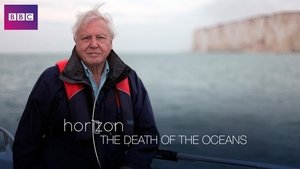
The Death of the Oceans?
Sir David Attenborough reveals the findings of one of the most ambitious scientific studies of our time - an investigation into what is happening to our oceans. He looks at whether it is too late to save their remarkable biodiversity. Horizon travels from the cold waters of the North Atlantic to the tropical waters of the Great Barrier Reef to meet the scientists who are transforming our understanding of this unique habitat. Attenborough explores some of the ways in which we are affecting marine life - from over-fishing to the acidification of sea water. The film also uncovers the disturbing story of how shipping noise is deafening whales and dolphins, affecting their survival in the future.
What Happened Before the Big Bang?
They are the biggest questions that science can possibly ask: where did everything in our universe come from? How did it all begin? For nearly a hundred years, we thought we had the answer: a big bang some 14 billion years ago. But now some scientists believe that was not really the beginning. Our universe may have had a life before this violent moment of creation. Horizon takes the ultimate trip into the unknown, to explore a dizzying world of cosmic bounces, rips and multiple universes, and finds out what happened before the big bang.
Is Seeing Believing?
Horizon explores the strange and wonderful world of illusions - and reveals the tricks they play on our senses and why they fool us. We show how easy it is to trick your sense of taste by changing the colours of food and drink, explain how what you see can change what you hear, and see just how unreliable our sense of colour can be. But all this trickery has a serious purpose. It's helping scientists to create a new understanding of how our senses work - not as individual senses, but connected together.
Miracle Cure? A Decade of the Human Genome
A decade ago, scientists announced that they had produced the first draft of the human genome, the 3.6 billion letters of our genetic code. It was seen as one of the greatest scientific achievements of our age, a breakthrough that would usher in a new age of medicine. A decade later, Horizon finds out how close we are to developing the life-changing treatments that were hoped for.
Asteroids - The Good, the Bad and the Ugly
Famed for their ability to inflict Armageddon from outer space, asteroids are now revealing the secrets of how they are responsible for both life and death on our planet.
Deepwater Disaster - The Untold Story
Horizon reveals the untold story of the 87-day battle to kill the Deepwater Horizon oil blowout a mile beneath the waves - a crisis that became America's worst environmental disaster. Engineers and oil men at the heart of the operation talk for the first time about the colossal engineering challenges they faced and how they had to improvise under extreme pressure. They tell of how they used household junk, discarded steel boxes and giant underwater cutting shears to stop the oil. It's an operation that one insider likens to the rescue of Apollo 13.
What Is One Degree?
Comedian Ben Miller returns to his roots as a physicist to try to answer a deceptively simple question: what is one degree of temperature? His quest takes him to the frontiers of current science as he meets researchers working on the hottest and coldest temperatures in the universe, and to a lab where he experiences some of the strangest effects of quantum physics - a place where super-cooled liquids simply pass through solid glass. Plus, Ben installs his very own Met office weather station at home. Ben's investigations in this personal and passionate film highlight the importance of measurement and accuracy in the 21st century.
What Is Reality?
There is a strange and mysterious world that surrounds us, a world largely hidden from our senses. The quest to explain the true nature of reality is one of the great scientific detective stories. Clues have been pieced together from deep within the atom, from the event horizon of black holes, and from the far reaches of the cosmos. It may be that that we are part of a cosmic hologram, projected from the edge of the universe. Or that we exist in an infinity of parallel worlds. Your reality may never look quite the same again.
Science Under Attack
Nobel Prize winner Sir Paul Nurse examines why science appears to be under attack, and why public trust in key scientific theories has been eroded - from the theory that man-made climate change is warming our planet, to the safety of GM food, or that HIV causes AIDS.
The Secret World of Pain
Horizon reveals the latest research into one of the most mysterious and common human experiences - pain. Breakthroughs have come from studying a remarkable woman in London who has felt no pain at all in her life, a man in the US who cut off his own arm to survive, and three generations of an Italian family who don't feel extremes of temperature. We witness a new treatment that involves a pioneering computer game 'snow world' that contains the power to banish pain. And we find how powerfully our moods and emotions shape what pain we feel.
Surviving a Car Crash
Horizon meets the scientists working to make fatal car crashes a thing of the past. A remarkable fusion of mechanical engineering and biology promises to save countless lives across the world. The programme has exclusive access to the secretive world of the most advanced car crash tests. Horizon reveals how the latest advances in trauma medicine, psychology and even extreme sport are transforming your chances of surviving on the roads. And the programme shows how researchers are creating a new virtual crash test dummy that could change how our cars are designed forever.
How to Mend a Broken Heart
Dr Kevin Fong finds out how close scientists are to being able to mend your heart if it stops working. He meets some of the people who have undergone pioneering heart operations and the scientists who are pushing the limits of cardiac treatment. We meet a man who has had his heart replaced with an artificial one powered by a mechanical pump he carries around in a rucksack, and witness a scientist bring a dead animal heart back to life on a workbench. Plus, the work of an American scientist who is using stem cells to turn what she calls a 'ghost heart' - the scaffold of a heart - into a replacement heart for humans.
Are We Still Evolving?
Dr Alice Roberts asks one of the great questions about our species: are we still evolving? There's no doubt that we're a product of millions of years of evolution. But thanks to modern technology and medicine, did we escape Darwin's law of the survival of the fittest? Alice follows a trail of clues from ancient human bones, to studies of remarkable people living in the most inhospitable parts of the planet, to the frontiers of genetic research to discover if we are still evolving - and where we might be heading.
Predators in Your Backyard
Across the world scientists are releasing predators, nature's ultimate killers, close to where people live. In Florida, a new population of panthers, feared as ambush predators, have been released near to the busy town of Naples. In the Italian Alps, bears have been reintroduced after they became virtually extinct, and now try to get into people's homes in the middle of the night. And in Yellowstone National Park, wolves have been brought back 70 years after they were exterminated. Horizon meets the scientist behind this radical scheme, and the people who now have to share their backyards with these predators.
Do You See What I See?
Documentary exploring the impact of colours on people's lives, and how perceptions of them can be influenced by age, gender and mood. The programme examines scientists' claims that different hues have hidden powers, from the winning properties of red to how blue seemingly makes time speed up.
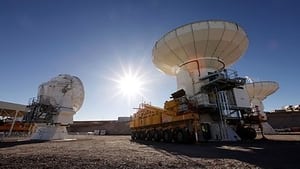
Seeing Stars
Around the world, a new generation of astronomers are hunting for the most mysterious objects in the universe. Young stars, black holes, even other forms of life. They have created a dazzling new set of super-telescopes that promise to rewrite the story of the heavens. This film follows the men and women who are pushing the limits of science and engineering in some of the most extreme environments on earth. But most striking of all, no-one really knows what they will find out there.

The Nine Months That Made You
Horizon explores the secrets of what makes a long, healthy and happy life. It turns out that a time you can't remember - the nine months you spend in the womb - could have more lasting effects on you today than your lifestyle or genes. It is one of the most powerful and provocative new ideas in human science, and it was pioneered by a British scientist, Professor David Barker. His theory has inspired a field of study that is revealing how our time in the womb could affect your health, personality, and even the lives of your children.
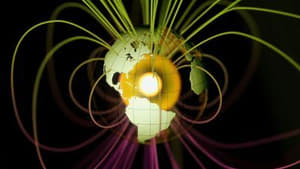
The Core
For centuries we have dreamt of reaching the centre of the Earth. Now scientists are uncovering a bizarre and alien world that lies 4,000 miles beneath our feet, unlike anything we know on the surface. It is a planet buried within the planet we know, where storms rage within a sea of white-hot metal and a giant forest of crystals make up a metal core the size of the Moon. Horizon follows scientists who are conducting experiments to recreate this core within their own laboratories, with surprising results.
Are You Good or Evil?
What makes us good or evil? It's a simple but deeply unsettling question. One that scientists are now starting to answer. Horizon meets the researchers who have studied some of the most terrifying people behind bars - psychopathic killers. But there was a shock in store for one of these scientists, Professor Jim Fallon, when he discovered that he had the profile of a psychopath. And the reason he didn't turn out to be a killer holds important lessons for all of us. We meet the scientist who believes he has found the moral molecule and the man who is using this new understanding to rewrite our ideas of crime and punishment.
Fukushima: Is Nuclear Power Safe?
Six months after the explosions at the Fukushima nuclear plant and the release of radiation there, Professor Jim Al-Khalili sets out to discover whether nuclear power is safe. He begins in Japan, where he meets some of the tens of thousands of people who have been evacuated from the exclusion zone. He travels to an abandoned village just outside the zone to witness a nuclear clean-up operation. Jim draws on the latest scientific findings from Japan and from the previous explosion at Chernobyl to understand how dangerous the release of radiation is likely to be and what that means for our trust in nuclear power.
Playing God
Adam Rutherford meets a new creature created by American scientists, the spider-goat. It is part goat, part spider, and its milk can be used to create artificial spider's web. It is part of a new field of research, synthetic biology, with a radical aim: to break down nature into spare parts so that we can rebuild it however we please. This technology is already being used to make bio-diesel to power cars. Other researchers are looking at how we might, one day, control human emotions by sending 'biological machines' into our brains.
The Truth About Exercise
Like many, Michael Mosley want to get fitter and healthier but can't face hours on the treadmill or trips to the gym. Help may be at hand. He uncovers the surprising new research which suggests many of us could benefit from just three minutes of high intensity exercise a week. He discovers the hidden power of simple activities like walking and fidgeting, and finds out why some of us don't respond to exercise at all Using himself as a guinea pig, Michael uncovers the surprising new research about exercise, that has the power to make us all live longer and healthier lives.
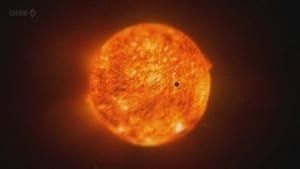
Solar Storms: The Threat to Planet Earth
Scientists are expecting a fit of violent activity on the sun which will propel billions of tonnes of superheated gas and pulses of energy towards our planet. They have the power to close down our modern technological civilization. Horizon meets the space weathermen who are trying to predict what's coming our way, and organistions like the National Grid which are preparing for the impending solar storms.
Out of Control?
We all like to think we are in control of our lives - of what we feel and what we think. But scientists are now discovering this is often simply an illusion. Surprising experiments are revealing that what you think you do and what you actually do can be very different. Your unconscious mind is often calling the shots, influencing the decisions you make, from what you eat to who you fall in love with. If you think you are really in control of your life, you may have to think again.

Global Weirding
Something weird seems to be happening to our weather - it appears to be getting more extreme. In the past few years we have shivered through two record-breaking cold winters and parts of the country have experienced intense droughts and torrential floods. It is a pattern that appears to be playing out across the globe. Hurricane chasers are recording bigger storms and in Texas, record-breaking rain has been followed by record-breaking drought. Horizon follows the scientists who are trying to understand what's been happening to our weather and investigates if these extremes are a taste of whats to come.

The Truth about Fat
Surgeon Gabriel Weston discovers the surprising truth about why so many people are piling on the pounds, and how to fight the fat epidemic. She discovers the hidden battles of hormones that control people's appetites, and sees the latest surgery that fundamentally changes what a patient wants to eat by altering how their brains work. Gabriel is shocked to find out that when it comes to being overweight, it is not always your fault you are fat.
Defeating Cancer
Over the past year, Horizon has been behind the scenes at one of Britain's leading cancer hospitals, the Royal Marsden in London. The film follows Rosemary, Phil and Ray as they undergo remarkable new treatments - from a billion pound genetically targeted drug designed to fight a type of skin cancer, to advanced robotic surgery. We witness the breakthroughs in surgery and in scientific research that are offering new hope and helping to defeat a disease that more than one in three of us will develop at some stage of our lives.
The Truth About Looking Young
Plastic surgeon Dr Rozina Ali leaves the operating theatre behind for the frontiers of skin science and asks if it is possible to make your skin look younger without surgery. She discovers the latest research about how the foods we eat can protect our skin from damage, and how a chemical found in a squid's eye is at the forefront of a new sun protection cream. She also finds out how sugar in our blood can make us look older, and explores an exciting new science called glycobiology which promises a breakthrough in making us look younger.
Mission to Mars
Horizon goes behind the scenes at NASA as they countdown to the landing of a 2.5 billion-dollar rover on the surface of Mars. In six days time, the nuclear-powered vehicle - the size of a car - will be winched down onto the surface of the Red Planet from a rocket-powered crane. That's if things go according to plan: Mars has become known as the Bermuda Triangle of space because so many missions there have ended in failure. The Curiosity mission is the most audacious - and expensive - attempt to answer the question: is there life on Mars?
Eat, Fast and Live Longer
Michael Mosley has set himself a truly ambitious goal: he wants to live longer, stay younger and lose weight in the bargain. And he wants to make as few changes to his life as possible along the way. He discovers the powerful new science behind the ancient idea of fasting, and he thinks he's found a way of doing it that still allows him to enjoy his food. Michael tests out the science of fasting on himself - with life-changing results.
How Big Is the Universe?
Cosmologists talk about their project to create a map of everything in existence, and also reveal that their research has some highly unexpected results, creating a picture stranger than anything they had ever imagined.
How Small Is the Universe?
Horizon plunges down the biggest rabbit-hole in history in search of the smallest thing in the Universe. It is a journey where things don't just become smaller but also a whole lot weirder. Scientists hope to catch a glimpse of miniature black holes, multiple dimensions and even parallel Universes. As they start to explore this wonderland, where nothing is quite what it seems, they may have to rewrite the fundamental laws of time and space.
Defeating the Superbugs
Across the world we are seeing the emergence of bacteria that have gone rogue. These are the superbugs, dangerous bacteria that are becoming resistant to our only defense; antibiotics. Horizon meets the scientists who are tracking the spread of these potential killers around the globe, and discovers the new techniques researchers are developing to help defeat these superbugs.
The Creative Brain: How Insight Works
It is a feeling we all know - the moment when a light goes on in your head. In a sudden flash of inspiration, a new idea is born. Today, scientists are using some unusual techniques to try to work out how these moments of creativity - whether big, small or life-changing - come about. They have devised a series of puzzles and brainteasers to draw out our creative behaviour, while the very latest neuroimaging technology means researchers can actually peer inside our brains and witness the creative spark as it happens. What they are discovering could have the power to make every one of us more creative.
How to Avoid Mistakes in Surgery
A&E doctor Kevin Fong finds out how doctors can avoid making mistakes in the high-pressure, high-stakes world of the operating theatre. He sets out to learn how other professionals make life and death decisions under pressure, from airline pilots facing emergencies, to the Fire Service dealing with lethal blazes, to the world of Formula One pit crews. Kevin discovers how all these fields are helping to make surgery safer.

The Truth about Taste
Taste is our most indulgent sense but it is only in recent years that we have started to understand why we really love the foods we do - and it is a lot more surprising than you might think. There may a way to make food taste sweeter without adding any extra sugar and it is all down to a trick that happens in your brain. Horizon meets the scientist who has grown the perfect tomato, that is sweeter and juicier than anything you are likely to find on a shelf, as well as the men and women hoping to become elite, professional tasters.
The Age of Big Data
In Los Angeles, a remarkable experiment is underway; the police are trying to predict crime, before it even happens. At the heart of the city of London, one trader believes that he has found the secret of making billions with math. In South Africa, astronomers are attempting to catalogue the entire cosmos. These very different worlds are united by one thing - an extraordinary explosion in data. Horizon meets the people at the forefront of the data revolution, and reveals the possibilities and the promise of the age of big data
The Secret Life of the Cat
Horizon discovers what your cat really gets up to when it leaves the cat flap. In a groundbreaking experiment, 50 cats from a village in Surrey are tagged with GPS collars and their every movement is recorded, day and night, as they hunt in our backyards and patrol the garden fences and hedgerows. Cats are fitted with specially developed cat-cams which reveal their unique view of our world. You may think you understand your pet, but their secret life is more surprising than we thought.
Little Cat Diaries
50 cats were fitted with GPS collars to track their every movement, and cat-cams to record their unique view of the world. In this groundbreaking experiment, a few cats stood out. They include the intruder cat, an unneutered tomcat, who comes into the village and seems to have no owner; the hunter, who prefers food that he can catch and kill to anything his owners might buy him; and the deserter cat who has abandoned his home in favour of a new set of owners. This film reveals that the relationship between cats and their owners isn't quite what we imagine.
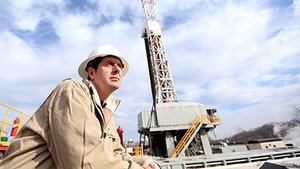
Fracking: The New Energy Rush
Iain Stewart investigates a new and controversial energy rush for the natural gas found deep underground. Sometimes, this is right under the places people live in. Getting it out of the ground involves hydraulic fracturing - or fracking. Iain travels to America to find to find out what it is, why it is a potential game changer and what we can learn from the US experience. He meets some of the people who have become rich from fracking as well as the communities worried about the risks.
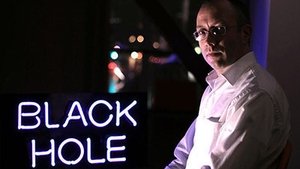
Swallowed by a Black Hole
This summer, the black hole at the centre of the Milky Way is getting ready to feast. A gas cloud three times the size of our planet has strayed within the gravitational reach of our nearest supermassive black hole. And across the globe, telescopes are being trained on the heart of our Milky Way galaxy, some 27,000 light years from Earth, in the expectation of observing this unique cosmic spectacle. For cosmic detectives across the Earth, it is a unique opportunity. For the first time in the history of science, they hope to observe in action the awesome spectacle of a feeding supermassive black hole.
What Makes us Human?
Professor Alice Roberts is making a new human being - she is pregnant with her second child. But before he is born, she wants to find out what makes a human, human? What is that separates us from our closest living relatives - the chimpanzees? We share 99% of our DNA with chimpanzees and yet from the moment of birth, our lives are completely different. So are we just another animal, or is there something special about being human? Before her new baby emerges into the world, Professor Roberts sets out to explore what it is about our bodies, our genes and ultimately our brains that set us apart from our furry cousins - what is it that truly makes us human?
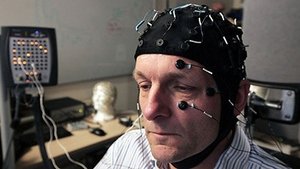
The Truth About Personality
Michael Mosley explores the latest science about how our personalities are created - and whether they can be changed. Despite appearances, Mosley is a pessimist who constantly frets about the future. He wants to worry less and become more of an optimist. He tries out two techniques to change this aspect of his personality - with surprising results. And he travels to the frontiers of genetics and neuroscience to find out about the forces that shape all our personalities.
Monitor Me
Dr Kevin Fong explores a medical revolution that promises to help us live longer, healthier lives. Inspired by the boom in health-related apps and gadgets, it's all about novel ways we can monitor ourselves around the clock. How we exercise, how we sleep, even how we sit.
Defeating the Hackers
Exploring the murky and fast-paced world of the hackers out to steal money and identities and wreak havoc with people's online lives, and the scientists who are joining forces to help defeat them. Horizon meets the two men who uncovered the world's first cyber weapon, the pioneers of what is called ultra paranoid computing, and the computer expert who worked out how to hack into cash machines.
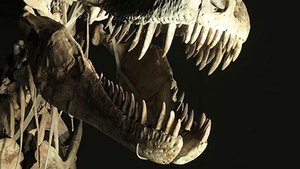
Dinosaurs: The Hunt for Life
The hunt for life within the long-dead bones of dinosaurs may sound like the stuff of Hollywood fantasy - but one woman has found traces of life within the fossilised bones of a T Rex. Dr Mary Schweitzer has seen the remains of red blood cells and touched the soft tissue of an animal that died 68 million years ago. Most excitingly of all, she believes she may just have found signs of DNA. Her work is revolutionising our understanding of these iconic beasts.
Sugar v Fat
What's worse for us: sugar or fat? To answer the hottest question in nutrition, twin doctors Chris and Xand Van Tulleken go on month long high-fat and high-sugar diets. The effects on their bodies are shocking and surprising. But they also discover that in the debate about fat and sugar, the real enemy might have been hiding in plain sight.
Swallowed by a Sink Hole
In February 2013, a hole opened up beneath a home in Florida, and swallowed a man. Jeff Bush was asleep when a sinkhole opened up beneath his bedroom. Despite the efforts of his brother to rescue him, Jeff was never seen again and his body was never recovered. Professor Iain Stewart travels to Florida to try and understand what killed Jeff, and why the geology of this state makes it the sinkhole capital of the world.

Man on Mars - Mission to the Red Planet
Horizon goes behind the scenes at Nasa to discover how it is preparing for its most ambitious and daring mission: to land men - and possibly women - on the surface of Mars. It's over 40 years since Neil Armstrong made the first human footprint on the moon. But getting to the red planet would involve a journey of at least three years. Horizon meets the scientists and engineers who are designing new rockets, new space suits and finding ways to help astronauts survive the perils of this long voyage. And it turns out that having the 'right stuff' for a mission to mars might not be quite what you expect.

The Power of the Placebo
As they contain no active ingredient, placebo medicines and pills should not really work, but they are now being shown to be effective in helping treat pain and depression and even alleviating some of the symptoms of Parkinson's disease. This programme explores why they work and how everyone could benefit from them.

How You Really Make Decisions
Horizon uncovers the truth about how you really make decisions. Every day you make thousands of decisions, big and small, and behind all them is a powerful battle in your mind, pitting intuition against logic. This conflict affects every aspect of your life - from what you eat to what you believe, and especially to how you spend your money. And it turns out that the intuitive part of your mind is a lot more powerful than you may realise.
Living with Autism
When pioneering developmental psychologist Professor Uta Frith started her training back in the 1960s, she met a group of beautiful, bright-eyed young children who seemed completely detached from the rest of the world. It turned out they had just been given the then-new diagnosis of autism. Uta passionately wanted to know more about these children, and they inspired her to dedicate the rest of her career to studying the autistic mind. On the eve of National Autism Day, Horizon reveals how Uta's lifetime study of people with autism has transformed our understanding of this mysterious condition. In this film Uta shows how people with autism perceive and interact with the world and how, for them, another kind of reality exists. She meets people with autism who have extraordinary talents, and explains why they often fail to understand jokes. She also explores whether many of us could be just a little bit autistic.

Where is Flight MH370?
Horizon tells the inside story of the search for Malaysia Airlines flight MH370. With access to the key players on the frontline in the southern Indian Ocean and the British satellite engineers who tracked the plane's final hours, Horizon breaks open the biggest mystery in aviation history. The film reveals how MH370 disappeared in a radar blind spot; what investigators believe happened to the aircraft in its last minutes; and how the area in which it could be found is still to be searched. Plus Horizon examines the new technologies, like black box streaming and enhanced air traffic surveillance, that mean an airliner should never vanish without trace again.

What's Wrong with Our Weather?
Over the last few years, our weather in Britain has become more extreme. Last winter was the wettest ever recorded, as deadly storms battered the country for weeks on end. But previous winters have seen bitter lows of -22, as Britain was plunged into a deep freeze. What everyone wants to know now is: why is our weather getting more extreme, can we expect to see more of it in the future, and has it got anything to do with climate change? In this episode of Horizon, physicist Dr Helen Czerski and meteorologist John Hammond make sense of Britain's recent extreme weather and discover that there is one thing that connects all our recent extreme winters - the jet stream, an invisible river of air that powers along 10 km above us. What's worrying is that recently it has been behaving rather strangely. Scientists are now trying to understand what is behind these changes in the jet stream. Helen and John find out if extreme winters are something we may all have to get used to in the future.

Should I Eat Meat? The Big Health Dilemma
Michael Mosley investigates the alleged danger in eating red and processed meat, and does a one month test on himself, doubling his meat intake.
Should I Eat Meat? How to Feed the Planet
Dr Michael Mosley seeks to establish the truth about meat. Every year, humans raise and eat 65 billion animals - nine animals for every person on the globe. In this eye-opening documentary, Michael examines the impact that this is having on the planet and finds out what meat eco-friendly carnivores should be buying. Is it better to buy free-range organic or factory-farmed meat? The answers are far from obvious.

Allergies: Modern Life and Me
Changes to the bacteria that live inside all of us are responsible for increasing the number of people with allergies, suggests new research. The show investigates this claim by conducting a unique experiment with two allergic families in order to find out just what it is in the modern world that is to blame. With a raft of mini cameras, GPS units and the very latest gene sequencing technology, the show discovers how the western lifestyle is impacting their bacteria. Why are these changes making people allergic? And what can be done to put a stop to the allergy epidemic?

Inside the Dark Web
Twenty-five years after the world wide web was created, it is now caught in the greatest controversy of its existence: surveillance. With many concerned that governments and corporations can monitor our every move, Horizon meets the hackers and scientists whose technology is fighting back. It is a controversial technology, and some law enforcement officers believe it is leading to 'risk-free crime' on the 'dark web' - a place where almost anything can be bought, from guns and drugs to credit card details.
Ebola - The search for a cure
The Ebola virus. No-one knows exactly where it comes from but one thing is certain - it's one of the most virulent infections known to science. This special episode of Horizon meets the scientists and doctors from all around the world looking for the cure and hears first-hand accounts of what it's actually like to catch - and survive - this terrible disease.
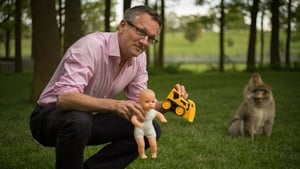
Is your Brain Male or Female?
Dr Michael Mosley and Professor Alice Roberts investigate if male and female brains really are wired differently.
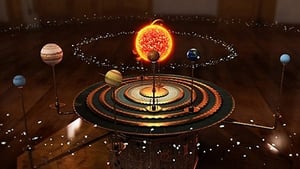
Secrets of the Solar System
New planets are now being discovered outside our solar system on a regular basis, and these strange new worlds are forcing scientists to rewrite the history of our own solar system. Far from a simple story of stable orbits, the creation of our solar system is a tale of hellfire, chaos and planetary pinball.
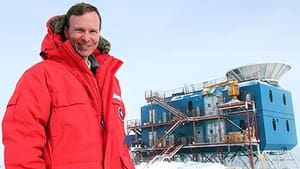
Aftershock: The Hunt for Gravitational Waves
Horizon travels to the South Pole to tell the inside story of the greatest scientific quest of our time. In March 2014, a team of astronomers stunned the scientific world when they announced that their BICEP2 telescope at the South Pole had possibly detected a signal of “gravitational waves” from the early universe. This is the inside story of the hunt for gravitational waves from the beginning of time. How the BICEP2 team came close to making one of the greatest discoveries of the century – and what happened when it all began to unravel...
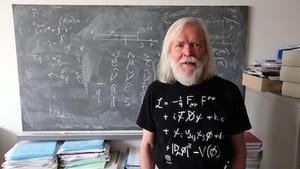
Dancing in the Dark - The End of Physics?
Scientists genuinely don't know what most of our universe is made of. The atoms we're made from only make up four per cent. The rest is dark matter and dark energy (for 'dark', read 'don't know'). The Large Hadron Collider at CERN has been upgraded. When it's switched on in March 2015, its collisions will have twice the energy they did before. The hope is that scientists will discover the identity of dark matter in the debris.
70 Million Animal Mummies: Egypt's Dark Secret
The team investigate the use of modern medical technology to scan Egyptian animal mummies from museums across the world. By creating 3-D images of their content, experts are discovering the truth about the strange role animals played in ancient Egyptian belief. This episode of Horizon meets the scientists working in Egypt who are exploring the ancient underground catacombs where mummies were originally buried to reveal why the ancient Egyptians mummified millions and millions of animals.
Is Binge Drinking Really That Bad?
How bad can our drinking pattern be for our health? Doctors and genetically identical twins Chris and Xand van Tulleken want to find out. With the current drinking guidelines under review, the twins embark on self-experimentation to see the effects of different drinking patterns on their health. With Chris drinking 21 units spread evenly across the week and Xand having his 21 in single weekly binges, how will their bodies differ after a month? Catching up with the latest research into alcohol drinking patterns, we ask if moderate drinking is genuinely good for us - and whether binge drinking is really that bad.
The Trouble with Space Junk
In 2014, the International Space Station had to move three times to avoid lethal chunks of space debris and there is an increasing problem of satellites mysteriously breaking down. With first-hand accounts from astronauts and experts, Horizon reveals the scale of the problem of space junk. Our planet is surrounded by hundreds of millions of pieces of junk moving at 17,000 miles per hour. Now the US government is investing a billion dollars to track them, and companies around the world are developing ways to clear up their mess - from robot arms to nets and harpoons. Horizon investigates the science behind the hit film Gravity and discovers the reality is far more worrying than the Hollywood fiction.
Are Health Tests Really A Good Idea?
Michael Mosley puts himself through a battery of health tests available to people who feel perfectly well. From an expensive heart scan to a new national screening procedure to detect the earliest signs of bowel cancer, Mosley sets out to discover which if any of the tests are worth doing.
First Britons
Horizon reveals how new archaeological discoveries are painting a different picture of the very first native Britons. For centuries it's been thought that these hunter-gatherers lived a brutal, hand-to-mouth existence. But extraordinary new evidence has forced scientists to rethink who these people were, where they came from and what impact they had on our early history. Now, our impression is of a hardy, sophisticated people who withstood centuries of extreme climate change and a devastating tsunami that was to give birth to the island nation of Britain. Their way of life may even have survived beyond its greatest ever threat - the farming revolution.
OCD: A Monster In My Mind
Most of us think that Obsessive Compulsive Disorder (OCD) is just over fussy tidying. But it's actually much more serious. Sophie has to check that she hasn't killed people, looking for dead bodies wherever she goes, Richard is terrified of touching the bin, and Nanda is about to have pioneering brain surgery to stop her worrying about components on her body - that her eyebrow might not be aligned or that she has bad breath. Professor Uta Frith meets the people living with OCD, looks at the therapy available and asks what neuroscience can offer by way of a cure.
Which Universe Are We In?
Imagine a world where dinosaurs still walk the earth. A world where the Germans won World War II and you are President of the United States. Imagine a world where the laws of physics no longer apply and where infinite copies of you are playing out every storyline of your life. It sounds like a plot stolen straight from Hollywood, but far from it. This is the multiverse Until very recently the whole idea of the multiverse was dismissed as a fantasy, but now this strangest of ideas is at the cutting edge of science.And for a growing number of scientists, the multiverse is the only way we will ever truly make sense of the world we are in. Horizon asks the question: Do multiple universes exist? And if so, which one are we actually in?
Cosmic Dawn: The Real Moment of Creation
Forget the big bang. The real moment of creation was the Cosmic Dawn - the moment of first light. This is the scientific version of the story of Genesis. The big bang gets all the credit for creating our universe. But in fact, the universe it gave was dark and boring. There were no stars, no galaxies, just a vast, black fog of gas - the cosmic dark ages. But, after a hundred million years of nothing, came a dramatic moment of transformation - the Cosmic Dawn. It's the moment the first stars were born, the moment that lit up the Universe, and made the first structure and the first ingredients of life. This was the real moment of creation. Astronomers are now trying to witness the cosmic dawn. For the first time they have the tools to explore the very first stars of the universe and to tell the scientific story of our creation.
Are Video Games Really That Bad?
The video game industry is a global phenomenon. There are over 1.2 billion gamers across the planet, with sales projected soon to pass $100 billion per year. But their very popularity fuels the controversy that surrounds them. They frequently stand accused of corrupting the young - of causing violence and addiction. But is this true? Horizon reveals a scientific community deeply divided. Some are convinced that video games incite aggression. Others insist they have no effect whatsoever on real-world violence. But away from the controversy, there is a growing body of evidence that suggests video games may help keep the brain sharp, and could soon revolutionize how we combat mental decline as we age.
The Immortalist
Investigating the story of how a Russian internet millionaire, Dmitry Itskov, is turning to cutting edge science to try to unlock the secret of living forever. The programme investigates the real science inspiring his bold plan to upload the human mind to a computer, and examines whether his goal of bringing about immortality for humans within thirty years is attainable.

Project Greenglow - The Quest for Gravity Control
Documentary exploring science's long-standing obsession with the idea of gravity control, including recent breakthroughs in the search for loopholes in conventional physics. The programme examines how the groundwork carried out by Project Greenglow in the mid-1990s by UK defence manufacturer BAE Systems (based on the work of Eugene Podkletnov[82]) has changed the understanding of the universe, making the dream of flying cars and journeys to the stars no longer quite so distant.

The Mystery of Dark Energy
Examining Dark Energy, the mysterious force that is unexpectedly causing the universe's expansion to speed up. Its effects were discovered in 1998, but physicists still do not know what it is, and its very existence calls into question Albert Einstein's General Theory of Relativity; the cornerstone of modern physics. The hunt for the identity of Dark Energy is on, and although experiments conducted on earth and in space generate data that might provide a clue, physics is hoping another Einstein might emerge and write a new theory that explains the mystery.
Oceans of the Solar System
The oceans define the earth. They are crucial to life and we used to think that they were unique to our blue planet. But we were wrong. It has recently been discovered that there are oceans all over our solar system and they are very similar to our own. And now scientists are going on an epic journey in search of new life in places that never seemed possible. Nasa is even planning to dive to the depths of a strange, distant ocean in a remarkable submarine. Horizon discovers that the hunt for oceans in space is marking the dawn of a new era in the search for alien life.
The End of the Solar System
This is the story of how our solar system will be transformed by the aging sun before coming to a spectacular end in about eight billion years. Astronomers can peer into the far future to predict how it will happen by analysing distant galaxies, stars and even planets in their final moments. In this film, Horizon brings these predictions to life in a peaceful midwestern town that has a giant scale model of the solar system spread out all over the city. As it ages, the sun will bloat into a red giant star, swallowing planets... as well as half the town. The fate of the Earth itself hangs in the balance. How will the solar system end?

Should We Close Our Zoos?
Liz Bonnin presents a controversial and provocative episode of Horizon, investigating how new scientific research is raising hard questions about zoos - the film explores how and why zoos keep animals, and whether they need to change to keep up with modern science or ultimately be consigned to history. Should zoos cull their animals to manage populations? Liz travels to Copenhagen Zoo, who killed a giraffe and fed it to the lions, to witness their culling process first hand. They think it is a natural part of zoo keeping that is often swept under the carpet. Should some animals never be kept in captivity? In a world exclusive, Liz visits SeaWorld in Florida and asks if captivity drove one of their orcas to kill his trainer. But could zoos be the answer to conserving endangered species? Liz examines their record, from helping breed pandas for the wild to efforts to save the rhinos. She meets one of the last surviving northern white rhinos and discovers the future of this species now lies in a multimillion-dollar programme to engineer them from stem cells. Veteran conservation scientist Dr Sarah Bexell tells Liz the science of captive breeding is giving humanity false hope.

How to Find Love Online
Dr Xand Van Tulleken is single and looking for love. Mathematician Dr Hannah Fry wants to use him as her guinea pig to test whether the algorithms that dating sites use to match people actually work. While Hannah builds a dating site, Xand meets the scientists investigating online dating - and learns what pictures to use and what to write in his profile. He tries out a 'bot' that has automated a swiping app and has an MRI scan to find out whether his brain is equipped for love. 50 members of the public take part in some mini experiments at a date night - and Xand goes on various dates to test whether the algorithm is better than him choosing randomly.
Ice Station Antarctica
Antarctica is the last great wilderness. It's the coldest, windiest, driest and most isolated place on Earth. And every winter, for over three months of the year, the sun never rises. But it's also home to the British Antarctic Survey's Halley Research Station. A veteran of living and working at Halley in the early eighties, BBC weatherman Peter Gibbs makes an emotional return to the place he once called home. A place that, during his time, was key to the discovery of the ozone hole. The journey starts with an arduous 12-day, 3000-mile voyage onboard the RRS Ernest Shackleton. Once on the ice shelf, Peter is delighted to finally arrive at the futuristic research station and marvels at the cutting edge science being done at Halley today. From vital discoveries about how our lives are vulnerable to the sun's activities, to studying interplanetary travel and the threat of man-made climate change. But Peter's journey is also something of a rescue mission. The research station's home is a floating ice shelf that constantly moves and cracks, and the ice shelf has developed a chasm that could cast Halley adrift on a massive iceberg.
Curing Alzheimer's
Horizon investigates a new era of Alzheimer's research, which is bringing hope to millions of sufferers across the world. New scanning and gene technology is allowing scientists to identify the disease at its earliest stages, often 15 years before symptoms appear and the brain cells are destroyed. A series of new drugs trials in Colombia, the USA and Europe are showing startling success in reducing beta amyloid, the protein which is a hallmark of the disease. It is also becoming clear that changes in lifestyle can prevent the development of the disease. A new system inside the brain has been discovered which clears amyloid when we are in deep sleep, but allows it to accumulate if we don't sleep well. The programme reveals that for sufferers in the early stages of the disease, brain connections, or synapses, can be strengthened and even replaced by absorbing enough of the right nutrients. A UK-wide trail helps sufferers in the early stages to concentrate on improving everyday tasks, and in the process not only make their lives easier, but helps to reactivate the planning and organisational parts of the brain. In an aging world, where the biggest risk of developing Alzheimer's is old age, the scientific breakthroughs in Alzheimer's disease are bringing hope where once there was despair.
E-Cigarettes: Miracle or Menace?
Michael Mosley investigates the dramatic rise in e-cigarettes. They're everywhere these days, but what does the latest scientific research on them reveal? Michael reveals what e-cigarettes are really doing to your health. Are they really better for you than cigarettes? What is actually in them? Is passive vapour harmful? And can they really stop you from smoking? Michael meets some of the scientists around the world studying them, asks a group of volunteers to try to give up smoking regular cigarettes using them, and even takes up 'vaping' himself, smoking an e-cigarette every day for a month to see the effects on his own health - no easy task for such a committed non-smoker.
Why Are We Getting So Fat?
Over 62% of adults in the UK are currently overweight or obese and this figure is set to rise. A common attitude is that obese people should be ashamed - it is their fault, they have no will power and if they could just 'eat less and exercise more', the problem would soon be solved. Yet, despite millions of pounds being spent on this simple message, the UK is getting fatter every year. Cambridge geneticist Dr Giles Yeo believes that for many obese people, simply eating less is a lot harder than you might think - and he is taking a road trip around the UK and America to uncover why. He meets the real people behind some of the more shocking newspaper headlines and, through their stories, reveals surprising truths which dispel commonly held myths about obesity. He gains access to scientists and doctors trialling cutting-edge techniques to tackle the crisis - from a 'miracle' hormone injection to a transfusion of faecal matter, and even learns a thing or two about his own size and relationship with food.
Sports Doping - Winning At Any Cost?
Dr Xand van Tulleken investigates the world of performance-enhancing drugs - from the athletes seeking the rewards of fame, glory and lucrative sponsorship deals to the hundreds of thousands of people in the UK now regularly taking anabolic steroids to look good and buff up. What are these drugs? What do they do to the body? And is it worth it? Xand's investigation reveals the extraordinary gamble dopers take with their health. Long-term effects include kidney failure, cognitive impairment and testicular shrinkage, and Xand witnesses how users are self-experimenting with drugs that have not yet been approved for human use. Horizon uncovers the new frontier of doping, from new molecules to gene therapy - where the genes that control muscle growth are altered. These new methods could be completely undetectable by the doping authorities. Finally, with the help of his twin brother Chris, Xand discovers the legal ways some athletes try to gain the edge.
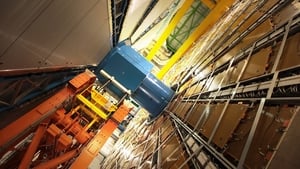
Inside CERN
With exclusive behind-the-scenes access, Horizon follows the highs and lows of an extraordinary story in particle physics. In June 2015, teams at CERN started running the large hadron collider at the highest energy ever. Rumours quickly emerged that they were on the brink of a huge discovery. A mysterious bump in some data suggested a first glimpse of a brand new particle that could change our understanding of how the universe works. A new particle could hint at extra dimensions and help us understand the very beginning of the universe - but first the team has to find it. Horizon follows the scientists as they hunt for the elusive signals that would prove if there is a new particle or if it is just noise from their machine.
My Amazing Twin
The acerbically witty and severely facially disfigured broadcaster Adam Pearson presents a personal film about genetics. He and his twin brother Neil are genetically identical and both share the same genetic disease, Neurofibromatosis 1 (Nf1) - yet they are completely different. Adam's face is covered with growths, whereas Neil has none. Neil has short term memory loss, whereas Adam is razor sharp. How can the same genetic disease affect identical twins so differently? Adam is on the cusp of a successful film and television career, but the disease has left tumours on his face that are growing out of control and he could lose his sight. For years, everyone thought Adam's brother Neil had escaped symptoms, but today his life is governed by epilepsy and a mysterious memory loss that suddenly came on during his teens. Determined to save their future, Adam tries to find out why the disease affects the twins so differently and see if there is anything he can do to stop it from tearing their lives apart.
The Lost Tribes of Humanity
Alice Roberts explores the latest discoveries in the study of human origins, revealing the transformation that has been brought about in this field by genetics.

The Wildest Weather in the Universe
We love talking about the weather - is it too hot or too cold, too wet or too windy? It's a national obsession. Now scientists have started looking to the heavens and wondering what the weather might be like on other planets. Today, we are witnessing the birth of extra-terrestrial meteorology, as technology is allowing astronomers to study other planets like never before. They began with our solar system, sending spacecraft to explore its furthest reaches, and now the latest telescopes are enabling astronomers to study planets beyond our solar system. Our exploration of the universe is revealing alien worlds with weather stranger than anyone could ever have imagined - we've discovered gigantic storm systems that can encircle entire planets, supersonic winds, extreme temperatures and bizarre forms of rain. On some planets, the temperatures are so hot that the clouds and rain are believed to be made of liquid lava droplets, and on other planets it is thought to rain precious stones like diamonds and rubies. We thought we had extreme weather on Earth, but it turns out that it is nothing compared to what's out there. The search for the weirdest weather in the universe is only just beginning.

Clean Eating: The Dirty Truth
Imagine if the food you eat could 'clean' your body and make you feel well. Dr Giles Yeo investigates the latest diet craze and social media sensation - clean eating. In a television first, Giles cooks with Ella Mills, the Instagram entrepreneur behind Deliciously Ella, one of the most popular brands associated with clean eating, and examines how far her plant-based cooking is based on science. She tells him clean has lost its way: "Clean now implies dirty and that's negative. I haven't used it, but as far as I understood it when I first read the term, it meant natural, kind of unprocessed, and now it doesn't mean that at all. It means diet, it means fad". Giles sifts through the claims of the Hemsley sisters, who advocate not just gluten-free but grain-free cooking, and Natasha Corrett, who popularises alkaline eating through her Honestly Healthy brand. In America, Giles reveals the key alternative health figures whose food philosophies are influencing the new gurus of clean. He discovers that when it comes to their promises about food and our health, all is not always what it appears to be. Inside a Californian ranch where cancer patients have been treated with alkaline food, Giles sees for himself what can happen when pseudoscience is taken to a shocking extreme.

Hair Care Secrets
The Horizon team have gathered together a team of scientists and doctors to investigate the incredible, natural material that is growing out of our heads - our hair. With access to the research laboratories of some of the world's leading hair care companies, including L'Oreal and ghd, the team explore the latest cutting-edge research and technology designed to push the boundaries of hair and hair care. Each one of us has a unique head of hair - an average of 150,000 individual hair strands growing approximately one centimetre every month. Over your lifetime, that is over 800 miles. The time and effort we put into styling, sculpting and maintaining this precious material has created a global hair care market worth a staggering £60 billion pounds. With such high stakes, it is inevitable that when developing hair-care products, science and business operate hand in hand. The team reveal how this industry science compares to the rigorous academic standards that they are used to. These investigations also reveal why we care so much about our hair, and whether or not it is worth splashing out on expensive shampoos. They uncover the magic ingredients found in conditioners and lay bare the secrets of the shiny, glossy hair seen in the adverts.
ADHD and Me with Rory Bremner
Comedian and impressionist Rory Bremner is on a personal mission to uncover the science of ADHD (attention deficit hyperactivity disorder), a condition which he has suspected he has. In this film, Rory learns about the science of ADHD, goes for a diagnosis and tries the drug methylphenidate (also known as Ritalin) for the first time - just before walking on stage.
Why Did I Go Mad?
Horizon follows three people living with voices, hallucinations and paranoia, to explore what causes this kind of phenomena. Providing a rare first-hand insight into these experiences, they reveal just what it is like to live with them day-to-day. They examine the impact of social, biological and environmental influences on conditions traditionally associated with insanity, such as schizophrenia and psychosis, and within the film they look at how new ways of understanding the brain are leading to a dramatic change in treatments and approaches and examine whether targeting the root causes of psychosis can lead to recovery. Above all, they try to uncover why it happened to them - and whether it could happen to you.
Strange Signals from Outer Space!
For decades some have suspected that there might be others out there, intelligent beings capable of communicating with us, even visiting our world. It might sound like science fiction, but today scientists from across the globe are scouring the universe for signals from extraterrestrials.
Space Volcanoes
Horizon follows an international team of volcanologists in Iceland as they draw fascinating parallels with the volcanoes on Earth and those elsewhere in the solar system. Through the team's research, we discover that the largest volcano of the solar system - Olympus Mons on Mars - has been formed in a similar way to those of Iceland, how a small moon of Jupiter - Io - has the most violent eruptions anywhere, and find out that a moon of Saturn called Enceladus erupts icy geysers from a hidden ocean. Computer graphics combined with original NASA material reveal the spectacular sights of these amazing volcanoes. Along the way, we learn how volcanoes are not just a destructive force, but have been essential to the formation of atmospheres and even life. And through these volcanoes of the solar system, scientists have discovered far more about our own planet, Earth- hat it was like when Earth first formed, and even what will happen to our planet in the future.
Antarctica - Ice Station Rescue
Filmmaker Natalie Hewit follows the everyday people battling in the most extreme environment on Earth to move Halley VI, a vital polar research station. Britain's state-of-the-art Antarctic research base Halley VI is in trouble. Built on the Brunt Ice Shelf, it sits atop a massive slab of ice that extends far beyond the Antarctic shoreline. But the ice is breaking apart and just 6km from the station is a ginormous crevasse, which threatens to separate Halley from the rest of the continent, setting the £28 million base adrift on a massive iceberg. So Halley needs to move. But this is probably the toughest moving job on Earth, and the team of 90 who have been tasked with the mission aren't just architectural or engineering experts. They are plumbers, mechanics and farmers from across the UK and beyond - ordinary men and women on an extraordinary adventure. Their practical skills will be what makes or breaks this move.
Cyber Attack - The Day the NHS Stopped
A few weeks ago, the National Health Service was hit by a widespread and devastating cyber attack - Horizon tells the inside story of one of the most challenging days in the history of the NHS. On the morning of 12 May the attack started. Appointment systems, pathology labs, x-rays and even CT scanners were infected - putting not just data but patients lives at risk, and on every screen a simple - some may even say polite - message appeared. 'Ooops, your files have been encrypted!' But what followed was far from civilised. It was very clear that all the data on an infected machine was now scrambled and only the hackers could unscramble it. For a price - and with an extra twist - after a few days the ransom money doubled, and if nothing was paid within a week, the hackers threatened to destroy all the data - forever

10 Things You Need to Know About the Future
This episode of Horizon looks at the issues that will change the way we live our lives in the future. Rather than relying on the minds of science fiction writers, mathematician Hannah Fry delves into the data we have today to provide an evidence-based vision of tomorrow. With the help of the BBC's science experts - and a few surprise guests - Hannah investigates the questions the British public want answered about the future.
Dawn of the Driverless Car
The car has shrunk the world, increased personal freedom and in so many ways expanded our horizons, but there is a flipside. Fumes from car exhausts have helped to destroy our environment, poisoned the air we breathe and killed us in far more straightforward ways. But all that is going to change. This episode of Horizon enters a world where cars can drive themselves, a world where we are simply passengers, ferried about by wholesome green compassionate technology which will never ever go wrong. And it is almost here. Horizon explores the artificial intelligence required to replace human drivers for cars themselves, peers into the future driverless world and discovers that, despite the glossy driverless PR (and assuming that they really can be made to work reliably), the reality is that it might not be all good news. From the ethics of driverless car crashes to the impact on jobs, it might be that cars are about to rise up against us in ways that none of us are expecting.
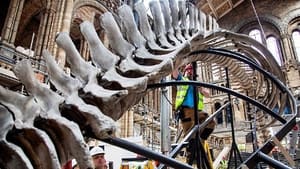
Dippy and the Whale
Over the last two years, the BBC's science strand Horizon has been behind the scenes at London's Natural History Museum, following the dramatic replacement of the iconic Dippy the Dinosaur skeleton cast with the real skeleton of a blue whale - the world's biggest animal. Narrated by Sir David Attenborough, this special film follows the teams involved in what has to be one of the world's most unique engineering challenges. Replacing Dippy is brave and bold - it is the first thing visitors see when they enter the grand Hintze Hall, but the Natural History Museum is changing, and the installation of the colossal blue whale skeleton is the start of a new chapter. The largest animal ever to have lived, blue whales were driven to the brink of extinction by hunting and were the first species humans decided to save, telling an inspiring story of hope for the natural world.
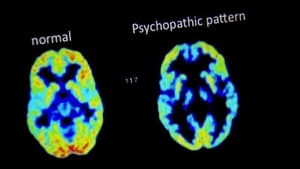
What Makes a Psychopath?
Psychopaths have long captured the public imagination. Painted as charismatic, violent predators lacking in all empathy, they provide intrigue and horror in equal measure. But what precisely is a psychopath? What is it that drives them to cause harm, even kill? And can they ever be cured? Presented by psychologist Professor Uta Frith, this is an in-depth exploration of the psychopathic mind including one of the most notorious of all, Moors murderer Ian Brady. Through an ongoing correspondence between the Horizon team and Brady, the film features some of the very last letters he wrote. The film also features a series of candid interviews with prison inmates who not only describe their crimes but why they think they committed them. Horizon explores not only how each individual's crimes were shaped by their own life experiences, but also gives an insight in to how these people think and behave. Working with the world's experts in the field, the film sheds light on the biological, psychological and environmental influences that shape a psychopath. And it looks to the future, with groundbreaking research that suggests a lifetime of incarceration is not the only option to manage violent and dangerous psychopaths.
Mars - A Traveller's Guide
The dream of sending humans to Mars is closer than ever before. In fact, many scientists think that the first person to set foot on the Red Planet is alive today. But where should the first explorers visit when they get there? Horizon has gathered the world's leading experts on Mars and asked them where would they go, if they got the chance - and what would they need to survive? Using incredible real images and data, Horizon brings these Martian landmarks to life - from vast plains to towering volcanoes, from deep valleys to hidden underground caverns. This film also shows where to land, where to live and even where to hunt for traces of extra-terrestrial life. This is the ultimate traveller's guide to Mars.
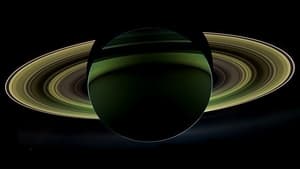
Goodbye Cassini - Hello Saturn
A billion miles from home, running low on fuel, and almost out of time. After 13 years traversing the Saturn system, the spacecraft Cassini is plunging to a fiery death, becoming part of the very planet it has been exploring. As it embarks on its final assignment - a one-way trip into the heart of Saturn - Horizon celebrates the incredible achievements and discoveries of a mission that has changed the way we see the solar system. Strange new worlds with gigantic ice geysers, hidden underground oceans that could harbour life and a brand new moon coalescing in Saturn's magnificent rings. As the world says goodbye to the great explorer Cassini, Horizon will be there for with a ringside seat for its final moments.
Being Transgender
How does a person know their gender? Do they see themselves as male or female, or somewhere in between? More and more people around the world do not identify with the gender they were assigned to at birth. Increasingly, people are expressing their gender identity outside of the 'norms', and the lines of gender are becoming more blurred than ever. This film explores what it actually means to be transgender, and what happens when a person transitions psychologically, physically and biologically. We follow a number of transgender people going through their own transition. From a socially transitioning transwoman to two young transmen embarking on hormones, to a transwoman going through gender confirmation surgery - we get a snapshot into what transitioning and being transgender is really like from those living it. We also hear from experts in the field of gender and find out how modern medicine is helping people to transition their gender. And we explore where gender identity actually comes from.
My Amazing Brain: Richard's War
The rarely seen journey back to recovery of Richard Gray after a life-changing catastrophic stroke. Initially bed bound and unable to do anything, including speak, the initial outlook was bleak, yet occasionally small glimmers of hope emerged. Armed always with her camera, his film-maker wife Fiona captures the moment Richard moves his fingers for the first time, and then over months she documents his struggle to relearn how to walk again.
Teenagers vs Cancer: A User's Guide
What is it like to be young and find out you have got cancer? What you will find out in this film may surprise you. This film, narrated by actor and comedian Jack Whitehall, tells 11 inspirational stories, revealing how a range of young people have dealt with their cancer diagnosis and the treatment process. We hear, primarily in their own words, about their fears, their hopes and their experiences - affirming the view that 'the best therapist for a teenager with cancer... is another teenager with cancer.'
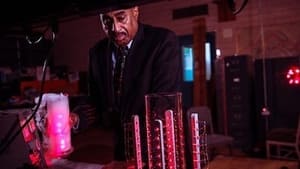
How to Build a Time Machine
Time travel is not forbidden by the laws of nature, but to build a time machine, we would need to understand more about those laws and how to subvert them than we do now. And every day, science does learn more. In this film Horizon meets the scientists working on the cutting edge of discovery - men and women who may discover how to build wormholes, manipulate entangled photons or build fully functioning time crystals. In short, these scientists may enable an engineer of the future to do what we have so far been only able to imagine - to build a machine that allows us travel back and forward in time at the touch of a button. It could be you! Science fiction? Watch this space.
Spina Bifida & Me
One in every 1,000 pregnancies in Britain has a spine or brain defect like spina bifida. 30 years ago, actress Ruth Madeley was one of them. Despite having spina bifida herself, it is a condition she doesn't fully understand. In this programme, Ruth sets out to discover why she has it, whether it could have been prevented and what it means for her future. Ruth meets the lord campaigning for a change in the law that he says could prevent thousands of birth defects. And she discovers that a pioneering surgery could offer a different future for babies diagnosed with spina bifida, by operating on them before they are even born. She discovers how this surgery was invented, meets the families whose lives it has changed and follows the team of British surgeons preparing to perform this extraordinary foetal surgery in the UK for the very first time. But Ruth also examines attitudes in Britain today and asks whether we should change the way we see disability.

Jupiter Revealed
'To send a spacecraft there is a little bit insane,' says Scott Bolton when talking about Jupiter, the largest planet in the solar system. But that is exactly what he has done, because Scott is head of Juno, the Nasa mission designed to peer through Jupiter's swirling clouds and reveal the wonders within. But this is no ordinary world. This documentary, narrated by Toby Jones, journeys with the scientists into the heart of a giant. Professor Kaitlin Kratter shows us how extreme Jupiter is. She has come to a quarry to measure out each planet's mass with rocks, starting with the smallest. Mercury is a single kilogram, and the Earth is 17. But Jupiter is on another scale entirely. It is seven tonnes - that is two and a half times the mass of all the other planets combined. On Kaitlin's scale it is not a pile of rocks, it is the truck delivering them. With extreme size comes extreme radiation. Juno is in the most extreme environment Nasa has visited. By projecting a 70-foot-wide, life-size Juno on a Houston rooftop, Scott shows us how its fragile electronics are encased in 200kg of titanium. As Scott puts it, 'we had to build an armoured tank to go there.' The team's efforts have been worthwhile. Professor Andrew Ingersoll, Juno's space weatherman, reveals they have seen lightning inside Jupiter, perhaps a thousand times more powerful than Earth's lightning. This might be evidence for huge quantities of water inside Jupiter. Prof Ingersoll also tells us that the Great Red Spot, a vast hurricane-like storm that could swallow the Earth whole, goes down as far as they can see - 'it could go down 1,000s of kilometres'. Deeper into the planet and things get stranger still. At the National Ignition facility in northern California, Dr Marius Millot is using powerful lasers normally used for nuclear fusion for an astonishing experiment. He uses '500 times the power that is used for the entire United States at a given moment' to crush hydrogen to the pressures inside Jupiter. Under these extreme conditions, hydrogen becomes a liquid metal. Juno is finding out how much liquid metallic hydrogen is inside Jupiter, and scientists hope to better understand how this flowing metal produces the most powerful aurora in the Solar System. But what is at Jupiter's heart? In Nice, Prof Tristan Guillot explains how Juno uses gravity to map the planet's centre. This can take scientists back to the earliest days of the solar system, because Jupiter is the oldest planet and it should contain clues to its own creation. By chalking out an outline of the Jupiter, Tristan reveals there is a huge rocky core - perhaps ten times the mass of Earth. It is now thought Jupiter started as a small rocky world. But there is a surprise, because Juno's findings suggest this core might be 'fuzzy'. Tristan thinks the planet was bombarded with something akin to shooting stars. As he puts it, 'Jupiter is quite unlike we thought'.
Stopping Male Suicide
Suicide is the biggest killer of men under 50 in the UK - causing more deaths in this group than car accidents, and even more than cancer. This means that the most likely thing to kill Dr Xand Van Tulleken is himself. And he wants to know why. In this sensitive film, Xand finds out what we know about why people develop suicidal thoughts, and whether there is anything that we can do about it.
A Week Without Lying - The Honesty Experiment
Deception is an integral part of human nature and it is estimated we all lie up to nine times a day. But what if we created a world in which we couldn't lie? In a radical experiment, pioneering scientists from across Europe have come together to make this happen. Brand new technology is allowing them to rig three British people to make it impossible for them to lie undetected. Then they will be challenged to live for a whole week without telling a single lie. It is a bold social experiment to discover the role of deception in our lives - to investigate the impact lying has on our mental state and the consequences of it for our relationships, and to ask whether the world would be a better or worse place if we couldn't lie.
The Placebo Experiment: Can My Brain Cure My Body?
Dr. Michael Mosley cures real pain with fake pills in Britain's largest ever placebo trial.
Body Clock: What Makes Us Tick?
We all have a biological clock ticking away inside us that governs our daily rhythms. This affects our health as much as our diet and whether we exercise. So what can we do to manage this internal clock better? To find out, evolutionary biologist Ella Al-Shamahi locks former commando Aldo Kane in an abandoned nuclear bunker with no way of telling the time - for ten days. Monitored around the clock by a team of scientists, he carries out a barrage of tests to uncover exactly what makes our body clock tick. Above ground, Ella meets two time-starved couples to test the latest thinking on how we can manage our body clocks better. In trying to improve their sleep, and their lives, she uncovers practical advice that we can all take on board. Studies on shift workers show that regularly disrupting our sleep makes us more at risk of diabetes, heart disease and even cancer. So getting to grips with our biological clock couldn't be more important.
Avalanche: Making a Deadly Snowstorm
Can we predict avalanches? How can we save more lives? A team of scientists led by Prof Danielle George create a massive avalanche to find out.

Vitamin Pills: Miracle or Myth?
Nearly half of us take a vitamin or mineral supplement every day, but what are these pills sold on every high street actually doing? Digging deeper than the eye-catching words on the packaging, Dr Giles Yeo investigates who really needs a supplement by putting our diets to the test.
Diagnosis on Demand? The Computer Will See You Now
Could a machine replace your doctor? Dr Hannah Fry explores the incredible ways AI is revolutionising healthcare - and what this means for all of us. This film chronicles the inside story of the AI health revolution, as one company, Babylon Health, prepare for a man vs machine showdown. Can Babylon succeed in their quest to prove their AI can outperform human doctors at safe triage and accurate diagnosis? Artificial intelligence is starting to transform healthcare beyond recognition - and tech companies large and small see almost limitless commercial opportunity. The ultimate vision is for accessible, affordable, better healthcare for almost everyone with a phone. In Britain this is already radically changing how some of us see our GPs. And in a world with a chronic shortage of doctors, but where even the very poor own mobile phones, it could be truly revolutionary. To witness this revolution from the inside, this film has privileged, behind-the-scenes access to ambitious British tech start-up Babylon Health, whose CEO Dr Ali Parsa declares with complete conviction 'we're going to do with healthcare what Google did with information.' Babylon launched its GP at Hand app in London in late 2017 and has already persuaded 30,000 Londoners to quit their old GPs to register instead for this NHS 'digital first' service, where patients discuss symptoms with an AI chatbot and see a doctor in minutes 24/7 via their phone. But GP at Hand's arrival has proved controversial - with many traditional GPs worried about the disruptive consequences for them and their patients, and others seeking to thwart its expansion nationwide. As this film reveals, there is a fundamental culture clash at play - between the 'move fast and break things' world of tech, and the cautious, diligent, often slow-moving world of medical science. So how will both camps respond when Babylon's AI attempts to pass the diagnostic sections of the Royal College of GPs exam? Amazingly, the NHS is today the largest purchaser of fax machines in the world - and the British government are eagerly embracing AI as the remedy for our public health system's antiquated inefficiencies. British health secretary Matt Hancock is an unabashed evangelist for tech - boasting Babylon's GP at Hand as his GP. Yet some scientists are increasingly alarmed, questioning the current hype and asking where is the proof that AI health apps, now in widespread use, are effective and safe. How should they be evaluated and regulated? And what needs to happen before we all trust our health to AI? As well as following a tumultuous year inside Babylon, both in the UK and Rwanda, the film also explores how another British AI Health start-up, Kheiron Medical, has successfully used deep learning to train its AI to detect breast cancer and now outperforms human radiologists at spotting the tell-tale signs of cancer in mammograms.

The Contraceptive Pill: How Safe Is It?
In recent years a groundbreaking new study has been released into the effects of the contraceptive pill. Research from Denmark claimed women on the pill and other forms of hormonal contraception were 70% more likely to be diagnosed with depression than those who were not. And another study has found hormonal contraception was linked to a seemingly dramatic risk of breast cancer. Negative headlines are nothing new for the contraceptive pill - first introduced in 1961, it has had a chequered history with early versions linked to cancer risk and life-threatening blood clots. Yet hormonal contraception remains Britain's most popular form of birth control, and today over three million women take regular doses of synthetic hormones. So should they be worried about its safety? GP Dr Zoe Williams gets behind the headlines in this Horizon investigation. A specially commissioned, nationwide survey reveals the areas of most concern to British women - from mental health to the risk of cancer and drop in libido. With the help of world leading scientists, Zoe finds out if these concerns are justified and by delving deep into the science around the pills side effects Horizon uncovers some striking revelations - from protecting women against cancer to increasing their risk of suicide.
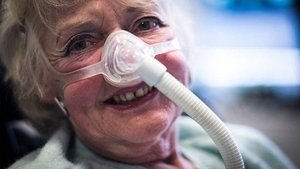
We Need to Talk about Death
Dr Kevin Fong makes a personal journey through the moral questions about death that face not just the medical profession, but each and every one of us.
Britain's Next Air Disaster? Drones
In the wake of the Gatwick drone crisis, high-risk specialist Aldo Kane investigates the threat drones pose to UK skies and tests the new technology we can use to keep ourselves safe.

The Honest Supermarket: What’s Really in Our Food?
We spend 190 billion pounds a year on groceries, but can we trust our supermarkets to tell us the truth about what we’re buying? Dr Hannah Fry and Priya Tew investigate the food we eat.

Inside the Social Network: Facebook's Difficult Year
Following the teams inside Facebook, revealing a hidden technological playground. The film tackles difficult questions, like how our data is used, and also shows how Facebook works.
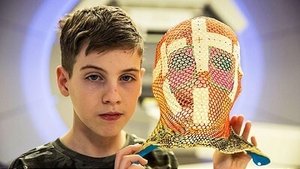
The 250 Million Pound Cancer Cure
Following the NHS as they start to implement proton beam therapy, an advanced but expensive cancer treatment, as well as following as the first children awaiting the lifesaving treatment.
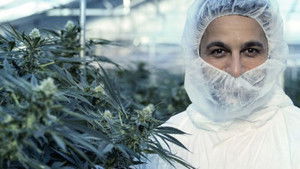
Cannabis: Miracle Medicine or Dangerous Drug?
At a pivotal moment in the history of one of the world’s oldest drugs, Dr Javid Abdelmoneim investigates the latest medical and scientific research into the effects of cannabis on the brain and body.

Addicted to Painkillers? Britain's Opioid Crisis
Dr Michael Mosley immerses himself on the frontline of our prescription painkiller habit. In America, it is an epidemic. Now, new evidence raises concern about the UK's use of prescription opioids.
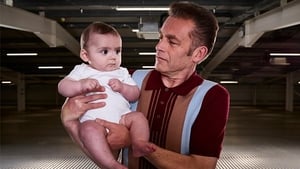
Chris Packham: 7.7 Billion People And Counting
Naturalist Chris Packham investigates the impact a growing human population is having on the planet, asking whether the earth can sustain predictions of ten billion people by 2050.

Toxic Town: The Corby Poisonings
The unknown story of the worst child-poisoning case since thalidomide, featuring a landmark legal battle by a group of mothers determined to uncover the truth.

The Restaurant that Burns Off Calories
Fred Sirieix and Zoe Williams open a restaurant with a difference, where every calorie eaten must be burned off by a secret gym team.
Hubble: The Wonders of Space Revealed
To celebrate the 30th anniversary of its launch, this film tells the remarkable story of how Hubble revealed the awe and wonder of our universe and how a team of daring astronauts risked their lives to keep it working.

The Great British Intelligence Test
Dr Hannah Fry and Michael Mosley put the public to the test, pitting young and old, males and females and tech lovers and readers against each other in a battle of wits.

What's the Matter with Tony Slattery
Comedian Tony Slattery meets experts to explore his psychological problems, finding out if he is definitely bipolar, confronting addiction and opening up about a childhood trauma.
Pluto: Back From the Dead
The incredible story of how Pluto has been propelled from an unremarkable ball of ice on the edge of the solar system to a world of unimaginable complexity - where some form of alien life might exist.

Feast to Save the Planet
Gregg Wallace and mathematician Hannah Fry invite five special guests to a unique dinner party where they are scored on the environmental impact of every dish they choose.

The Secret Science of Sewage
Dr George McGavin and Dr Zoe Laughlin set up base camp at one of the UK's biggest sewage works to investigate the revolutionary science finding vital renewable resources and undiscovered life in human waste. Teaming up with world-class scientists, they search for biological entities in sewage with potentially lifesaving medical properties, find out how pee can generate electricity, how gas from poo can fuel a car and how nutrients in waste can help solve the soil crisis. They follow each stage of the sewage treatment process, revealing what the stuff we flush can tell us about how we live today, and the mindboggling biotechnology being harnessed to clean it, making the wastewater safe enough to return to the environment.
Dolly: The Sheep That Changed the World
The story of the scientists who created Dolly, the sheep that changed the world in this documentary, part of the Horizon series. This Horizon branded documentary tells the full story for the first time with never-before-seen archive, revealing how on a small Scottish farm, a handful of the world’s best genetic scientists worked in secret to crack the holy grail of life: cloning.
The Vaccine
With unique access to five vaccine teams around the globe, this is the extraordinary inside story of the unprecedented quest to develop and make vaccines to fight Covid-19.

How to Sleep Well with Michael Mosley
As more people than ever report struggling with their sleep, Michael Mosley uses the latest science to explore how this impacts our health and what can be done to improve our sleep.
Fergal Keane: Living with PTSD
BBC News special correspondent Fergal Keane has covered conflict and brutality for more than 30 years and is known for reporting with humanity and extraordinary empathy, but in 2020 revealed he had been diagnosed with an acute form of post-traumatic stress disorder. In this Horizon documentary, he reveals the impact of PTSD on his life, exploring how it led him to consider withdrawing from reporting on conflicts, as well as investigating the latest scientific thinking behind its treatment.

Making Sense of Cancer with Hannah Fry
When she's diagnosed with cervical cancer at the age of 36, Hannah Fry explores the problematic issues surrounding how we screen for and treat cancer, asking if we could be overmedicalising it.

Super Telescope: Mission to the Edge of the Universe
The inside story of the James Webb Space Telescope, following the Nasa team building the £8 billion device and the scientists taking its first image of distant stars and galaxies.

Confessions of a Brain Surgeon
Top brain surgeon Henry Marsh is facing his own life-threatening diagnosis. He reveals the huge risks and emotional impact of a job filled with difficult life-and-death decisions. This heartwarming portrait of an eccentric surgical hero facing the end of his life reveals the truth about brain surgery and its human impact, with devastating emotional power and life-affirming honesty.
Disease X: Hunting the Next Pandemic
Virologist Dr Chris van Tulleken embarks on a global investigation into the hunt for the pathogen that could trigger the next pandemic and the cutting-edge science developed to tackle it. Known only as "Disease X", it is shrouded in uncertainty. Its origin is unknown, how it could spread is unclear, but its impact could be much more severe than Covid-19. To uncover what Disease X might be, where it could emerge and what traits it needs to spread, Chris follows the paths of past deadly viruses. He visits the ground zero of the Nipah virus in Malaysia, which inspired the film Contagion. He also heads to the front line of the ongoing bird flu outbreak in American dairy cattle in California.
Secrets of The Brain (1)
Theoretical physicist Professor Jim Al-Khalili goes on a journey through 600 million years of evolution to uncover how the human brain, the most complex structure known in the universe, came to exist. With some 100 billion neurons and over 100 trillion connections - more than all the stars in the Milky Way - the human brain is one of nature's greatest achievements. But how did something so incredibly sophisticated evolve from its simple beginnings?
Secrets of the Brain (2)
Jim watches primates in action to see how they tackle survival challenges, revealing the clever tricks that shaped the brain's thinking. But the real breakthrough came when brains learned to be social. Teaming up with his wife, Jim investigates how relationships and friendships made people more intelligent. With AI getting smarter by the day, Jim wants to know what makes biological brains so special. Through scans, fossil discoveries and cutting-edge research, he uncovers what makes the brain so hard to emulate.
Season Ratings
Main Cast
Streaming Platforms for Horizon
Trailer
Frequently Asked Questions (FAQ) about Horizon
Where can I watch Horizon streaming?
You can watch Horizon on various streaming platforms in the US: Check availability on major US streaming platforms like Netflix, Amazon Prime Video, Disney+, and other legal services.
Is Horizon available in English (dubbed/subtitled)?
Yes, Horizon is available with English audio and subtitles on most streaming platforms. Please check the availability of English dubbing on your preferred platform.
What is the plot of Horizon?
Horizon tells amazing science stories, unravels mysteries and reveals worlds you've never seen before.
Who are the main actors in Horizon?
The main cast of Horizon includes: Cast information not available at the moment.
What is the rating of Horizon?
Horizon has received a rating of 7.4/10 based on 33 user votes.
Explore similar content:
Reviews and Comments for Horizon
No public comments have been posted about this TV series yet. Be the first to share your opinion!
Add a Comment
Log in or create an account to add a comment.



💬 Have you seen Horizon?
Share your opinion! User reviews help us create the best community of movie and TV series enthusiasts in the US.
Sign up now to leave your review and help other users discover new content to watch!