
PokMovies your movie and series manager
Log in to add movies and series to your personal list
Details for The Private Life of a Masterpiece
The Private Life of a Masterpiece (2001) - TV Series Streaming, Cast & Reviews
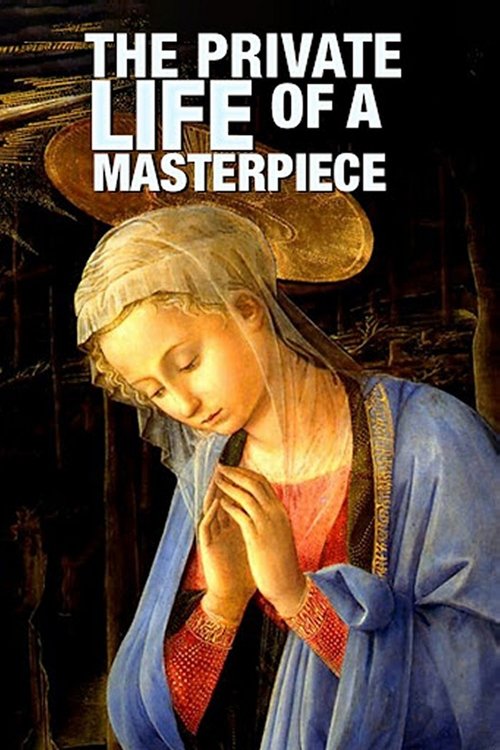
The Private Life of a Masterpiece (2001)
The Private Life of a Masterpiece (2001)
Private Life of a Masterpiece is a BBC arts documentary series that tells the stories behind great works of art reaching from the Renaissance to modern art. David by Michelangelo, The Scream by Edvard Munch, The Third of May 1808 by Francisco Goya, The Night Watch by Rembrandt van Rijn, Sunflowers by Vincent van Gogh, Les Demoiselles d'Avignon by Pablo Picasso, The Annunciation by Jan van Eyck, ... The Art of Painting by Johannes Vermeer. For behind the beautiful canvases and sculptures are tales of political revolution, wartime escapes, massive ego clashes, social scandal, financial wrangling and shocking violence. The series reveals the full and fascinating stories behind famous works of art, not just how they came to be created, but also how they influenced others and came to have a life of their own in the modern world.
Release Date:
Status: Ended
Genres: Documentary
Why Watch The Private Life of a Masterpiece?
The Private Life of a Masterpiece delivers an exceptional documentary experience across 9 compelling seasons, featuring outstanding performances from Samuel West. A proven favorite among Documentary enthusiasts.
Quick Facts About The Private Life of a Masterpiece
- Title: The Private Life of a Masterpiece
- Release Year: 2001
- Type: TV Series
- Rating: 5/10 (4 votes)
- Genres: Documentary
Discover The Private Life of a Masterpiece Streaming
Looking for where to watch The Private Life of a Masterpiece online? You're in the right place! On PokMovies, you'll find all the information about The Private Life of a Masterpiece streaming, including where to watch it legally, the full cast, user reviews, and the official trailer.
Released in 2001, The Private Life of a Masterpiece belongs to the genres Documentary and has received a rating of 5/10 on The Movie Database with 4 user votes.
This TV series, completed, has 9 seasons. The Private Life of a Masterpiece offers you a viewing experience that is unique in its genre.
Seasons and Episodes
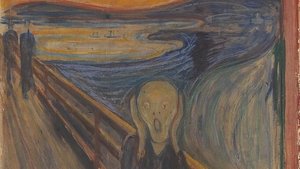
Edvard Munch: The Scream
First of two films on the stories behind famous artworks. This documentary traces the eventful existence of Edvard Munch's notorious piece, from its late-19th-century origins to its present-day significance. A disturbing image of an androgynous screaming figure, the work has nonetheless become one of the world's most familiar and reproduced pictures. Artist Tracey Emin is among those who testify to its continuing power.
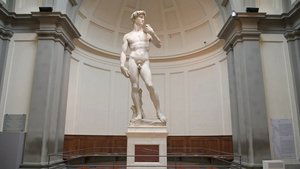
Michelangelo: David
It is one of art's most noted pieces, but it took failures by two sculptors before Michelangelo Buonarroti completed the work in the early 16th century. This documentary reveals the techniques Michelangelo used to re-create the human body so accurately on such a vast scale, and how contrasting interpretations view it as a symbol of either military might or of freedom.
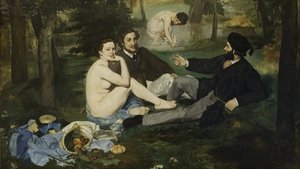
Édouard Manet: Le déjeuner sur l'herbe
Painted in 1863 by Edouard Manet , this radical work broke every rule in the book as it irrevocably changed the way nudes were painted. Then, as now, audiences were bemused by the bizarre depiction, fraught with curious detail and quotations from other paintings, prompting many to call it the first piece of art about art. An inspiration to many, Picasso created 180 versions of it.
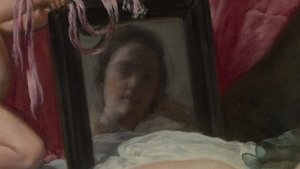
Diego Velázquez: The Rokeby Venus
One of the most widely reproduced images in the world is examined in the second of two films on famous works of art. The Rokeby Venus was painted by Diego Velazquez , court painter to the King of Spain in the 17th century. Described as one of the most erotic paintings ever created, it shows the back view of a woman looking at her reflection in a mirror being held by Cupid. Once forbidden by the Spanish Inquisition, and slashed seven times by a militant suffragette in 1914, today the painting is frequently imitated and admired.
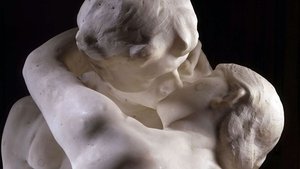
Auguste Rodin: The Kiss
Auguste Rodin 's Kiss has had a more colourful life than most sculptures. At the time of its conception 100 years ago the intertwined lovers' erotically charged embrace was seen as dangerous. Even in the last year its story has undergone twists and turns. Now housed in London's Tate Modern, this film recounts The Kiss's byzantine history.
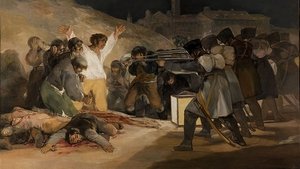
Francisco Goya: The Third of May 1808
Goya's greatest painting is a nightmarish image of anonymous men being shot at point blank range by a robot-like firing squad. Commissioned to commemorate a heroic moment in Spanish history, the king was not pleased with its brutal imagery and it was largely forgotten until artists such as Manet and Picasso saw it as the first masterpiece to put the victims of war centre stage.
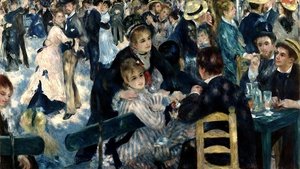
Auguste Renoir: Dance at the Moulin de la Galette
Was the Moulin de la Galette dance hall really the joyful haven depicted in Renoir's celebratory painting of 1876? Certainly, the Paris of the period was emerging from a violent, bloody political upheaval and Renoir appears to have been unique in depicting the renowned venue as a place of pleasure.
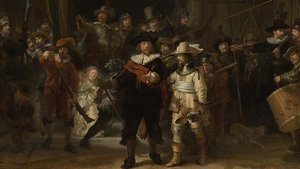
Rembrandt van Rijn: The Night Watch
The secrets behind the celebrated Rembrandt painting of a group of part-time soldiers are revealed. How did the artist achieve the extraordinary effects of his finished work? Plus the story of how it has survived attacks, mutilation and the danger of the German occupation to become the most famous painting in Holland.
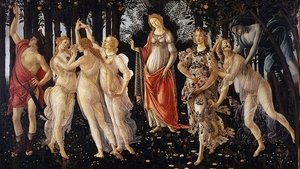
Sandro Botticelli: La Primavera
The title of the Florentine artist Sandro Botticelli 's exquisite painting translates as "Spring", yet this huge allegorical tableau, with its mythological characters and themes of rape and failing in love, contains some of the first erotic images of the Renaissance. Narrator Samuel West traces its origins.
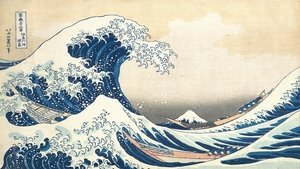
Katsushika Hokusai: The Great Wave
Arguably the most recognisable image in Far Eastern art, this Japanese magnum opus is an accurate portrayal of the waves sailors swore they had encountered, despite universal scepticism. One of a series of wood-block prints begun in the 1820s by Katsushika Hokusai , then in his 70s, The Great Wave has a fascinating history that speaks volumes in the 21st century.
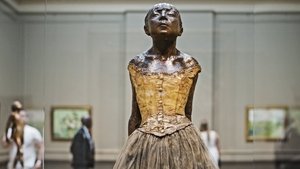
Edgar Degas: The Little Dancer
Edgar Degas 's bronze sculpture of a ballet dancer wearing a real tutu has become one of the most widely appreciated European works of art. But when the original tinted wax version was first exhibited in 1881 it caused consternation, with contemporary critics dubbing Degas's petite danseuse variously as "a monster' and a "flower of the gutter". This documentary reveals how Degas broke every rule in the book to create his modern masterpiece, and also tells the poignant life story of the sculpture's model.
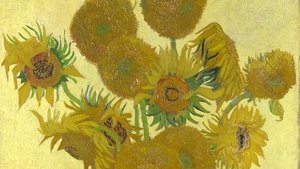
Vincent Van Gogh: The Sunflowers
Viewed as one of the most famous works of art in the world, few people know the history behind Vincent Van Gogh 's painting. Inspired by a bunch of flowers that the artist found lying in the gutter, Sunflowers became a personal favourite of the Dutch artist. A favourite so much that ten versions of the original were made, the first of which helped to form a fruitful yet ultimately fraught relationship with fellow artist Paul Gauguin. Revealing these stories and how Van Gogh 's passion for sunflowers followed him all the way to the grave, this documentary also looks to explain the enduring popularity behind the piece.
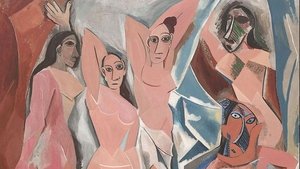
Pablo Picasso: Les Demoiselles d'Avignon
"My Brothel" is the title Pablo Picasso gave to his depiction of five prostitutes - a painting that shocked even his friends when they first saw it. But how did the piece arise from a rivalry between Picasso and Matisse? What influences did Picasso draw on for his allegory of sex and death? And why does it remain revolutionary to this day?
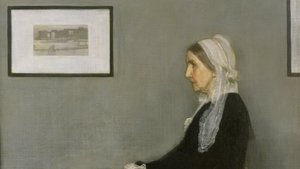
James McNeill Whistler: Portrait of the Painter's Mother
Whistler's portrait of his elderly Puritan mother is one of the most satirised paintings of all time. Yet when his sombre masterpiece was first unveiled, it was seen as a radical departure from the sentimental images beloved of the Victorians, and which Whistler loathed. How did the portrait, born of Whistler's complex relationship with his mother, change the course of painting so drastically?
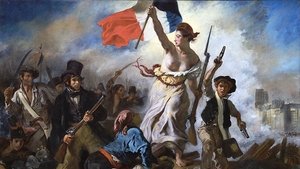
Eugene Delacroix: Liberty Leading the People
The series that reveals stories behind famous artworks returns, beginning with an examination of Eugene Delacroix 's response to the July revolution of in France. Delacroix's vibrant portrayal of the bare breasted figure of Liberty leading a rabble over a barricade was taken up as a symbol of revolution across the country. Its painter, however, later moaned that the trouble with revolutions was they got in the way of dinner parties.
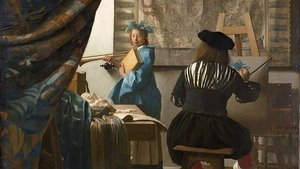
Johannes Vermeer: The Art of Painting
The series that reveals the stories behind famous artworks continues with an examination of the favourite picture of the artist who painted it - the 17th-century Dutch master Johannes Vermeer. This sublime symbol-laden interior remained in his possession until his death, despite the family being in dire financial straits. A later admirer was Adolf Hitler , who liked it so much that he bought it.
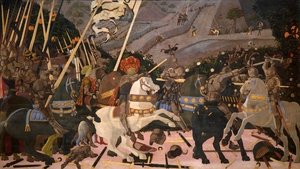
Paolo Uccello: The Battle of San Romano
An armoured knight in the thick of battle astride his white charger forms the central figure of a dramatic 15th-century masterpiece by Paolo Uccello. The painting, in three panels, depicts scenes from the battle of San Romano fought between Florence and Siena in 1432. Using one-point perspective Uccello achieved one of the greatest portrayals of men in close combat. Coveted through the centuries the panels became the victims of an extraordinary art crime.
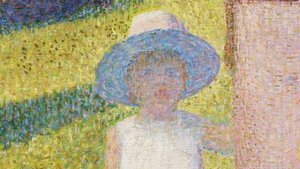
Georges Seurat: A Sunday on La Grande Jatte
"Bedlam", "scandal", and "hilarity" were some of the words used to describe Georges Seurat's portrayal of Parisians enjoying an outing on the banks of the River Seine. Now it is seen as one of the most popular paintings ever created, and hailed as a masterpiece of pointillism - or divisionism as Seurat preferred to call his technique. But there's even more to it than first meets the eye. Could the woman pictured fishing in fact be angling for something else? And what's the real significance of the woman leading the monkey?
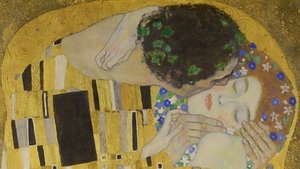
Gustav Klimt: The Kiss
This erotically charged and hugely popular example of Art Nouveau fused with Symbolism has been the subject of intense speculation since its unveiling in 1908. Who are the two lovers in a rapturous embrace? Is the man or woman in control? And, most tantalisingly, could it depict the artist, a man whose sexual appetite was on a par with Casanova's? Germaine Greer, John Malkovich and former Erotic Review editor Rowan Pelling share their thoughts.
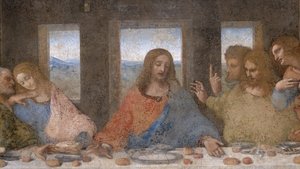
Leonardo da Vinci: The Last Supper
The stories behind three paintings that encompass traditional Easter themes. The Last Supper by Leonardo Da Vinci. Dan Brown 's blockbuster The Da Vinci Code may have brought the fresco to a new audience, but historian David Rosand argues that the book suffers from a basic misreading of the painting; here, he guides us through the work's life story.
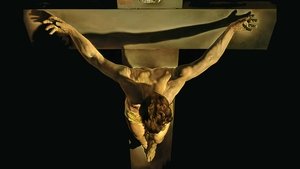
Salvador Dalí: Christ of Saint John of the Cross
This extraordinary crucifixion scene - inspired by a weird mix of Spanish mysticism and nuclear physics - is often called the 20th century's greatest religious painting. Yet the artist was a notorious blasphemer whose work had provoked outrage in the Catholic Church.
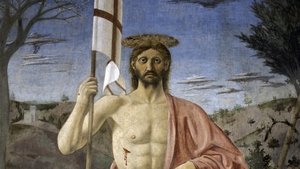
Piero della Francesca: The Resurrection
A masterpiece of composition, Francesca's widely admired painting depicts the risen Christ - wearing the expression of "a sturdy stevedore", as one art critic put it - while beneath him the guards slumber. Art experts explain the significance of this extraordinary work.
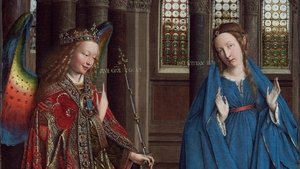
Jan van Eyck: The Annunciation
The first moment in the Christmas story is the arrival of the Archangel Gabriel to tell Mary that she has been chosen to give birth to the son of God. Many painters have depicted this miraculous event, but none better than the great Flemish painter Jan Van Eyck. As befits a man who seemed to mix espionage with painting for his patron, Eyck's picture is full of symbols and half-concealed messages.
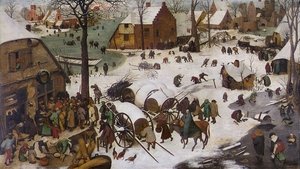
Pieter Bruegel the Elder: Census at Bethlehem
A closer look at the image that inspired a thousand Christmas cards: Brueghel's Census at Bethlehem. It depicts Mary and Joseph's arrival in the town - but also offers a glimpse into life in a Netherlands village under the rule of foreign invaders.
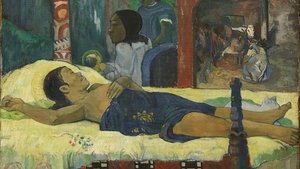
Paul Gauguin: God's Child
The series concludes with a look at Paul Gauguin 's interpretation of the Nativity scene, a distinctively modern piece in which he depicted the Madonna as a young Polynesian woman, using his pregnant mistress as his model. Far removed from traditional images, it has been hailed for its relevance to the contemporary world.
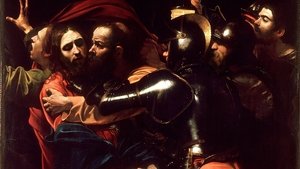
Caravaggio: The Taking of Christ
When Michelangelo Merisi da Caravaggio completed his portrayal of Christ's betrayal in the Garden of Gethsemane in 1602, the image became one of the most celebrated paintings of the age. Two centuries later, however, this most radical of religious images had apparently vanished from the face of the earth, leading it to become known as Caravaggio's lost masterpiece. This documentary tells the story of the painting and its dramatic rediscovery in 1990.
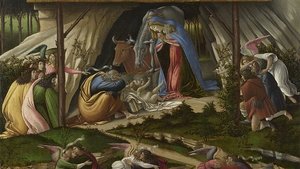
Sandro Botticelli: The Mystic Nativity
It's a painting that lovers of mystery fiction should love. Botticelli's Mystic Nativity is a Renaissance masterpiece crammed with cryptic symbols disguising a dangerous message. But it is much more besides. Painted in 1500, it is a supremely beautiful vision of maternal love, earthly harmony and heavenly ecstasy. However, the painting also has a dark side. Botticelli had to carefully conceal its dangerous meaning, and only a recent chance discovery by a scholar fully unlocked its message.
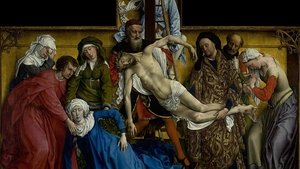
Rogier van der Weyden: The Descent from the Cross
The Descent from The Cross by Rogier Van der Weyden is a rich feast for art lovers, but what is the secret history of this world-renowned painting?
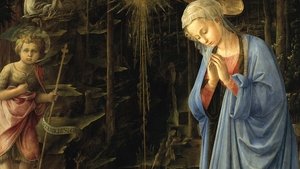
Filippo Lippi: The Adoration of the Christ Child
Examining Filippo Lippi's Adoration of the Christ Child. Its beauty inspired Michelangelo and Botticelli, but it also conceals a personal story.
Season Ratings
Main Cast

Streaming Platforms for The Private Life of a Masterpiece
Trailer
Frequently Asked Questions (FAQ) about The Private Life of a Masterpiece
Where can I watch The Private Life of a Masterpiece streaming?
You can watch The Private Life of a Masterpiece on various streaming platforms in the US: Check availability on major US streaming platforms like Netflix, Amazon Prime Video, Disney+, and other legal services.
Is The Private Life of a Masterpiece available in English (dubbed/subtitled)?
Yes, The Private Life of a Masterpiece is available with English audio and subtitles on most streaming platforms. Please check the availability of English dubbing on your preferred platform.
What is the plot of The Private Life of a Masterpiece?
Private Life of a Masterpiece is a BBC arts documentary series that tells the stories behind great works of art reaching from the Renaissance to modern art. David by Michelangelo, The Scream by Edvard Munch, The Third of May 1808 by Francisco Goya, The Night Watch by Rembrandt van Rijn, Sunflowers by Vincent van Gogh, Les Demoiselles d'Avignon by Pablo Picasso, The Annunciation by Jan van Eyck, ... The Art of Painting by Johannes Vermeer. For behind the beautiful canvases and sculptures are tales of political revolution, wartime escapes, massive ego clashes, social scandal, financial wrangling and shocking violence. The series reveals the full and fascinating stories behind famous works of art, not just how they came to be created, but also how they influenced others and came to have a life of their own in the modern world.
Who are the main actors in The Private Life of a Masterpiece?
The main cast of The Private Life of a Masterpiece includes: Samuel West
What is the rating of The Private Life of a Masterpiece?
The Private Life of a Masterpiece has received a rating of 5/10 based on 4 user votes.
Explore similar content:
Reviews and Comments for The Private Life of a Masterpiece
No public comments have been posted about this TV series yet. Be the first to share your opinion!
Add a Comment
Log in or create an account to add a comment.



💬 Have you seen The Private Life of a Masterpiece?
Share your opinion! User reviews help us create the best community of movie and TV series enthusiasts in the US.
Sign up now to leave your review and help other users discover new content to watch!